Asia's Co-Living Boom: How Shared Housing Is Reshaping Young Professionals' Budgets
From Singapore to Ho Chi Minh City, co-living operators are undercutting traditional leases on price and flexibility, but the trade-offs on space, contracts and community rarely make it into the brochure.
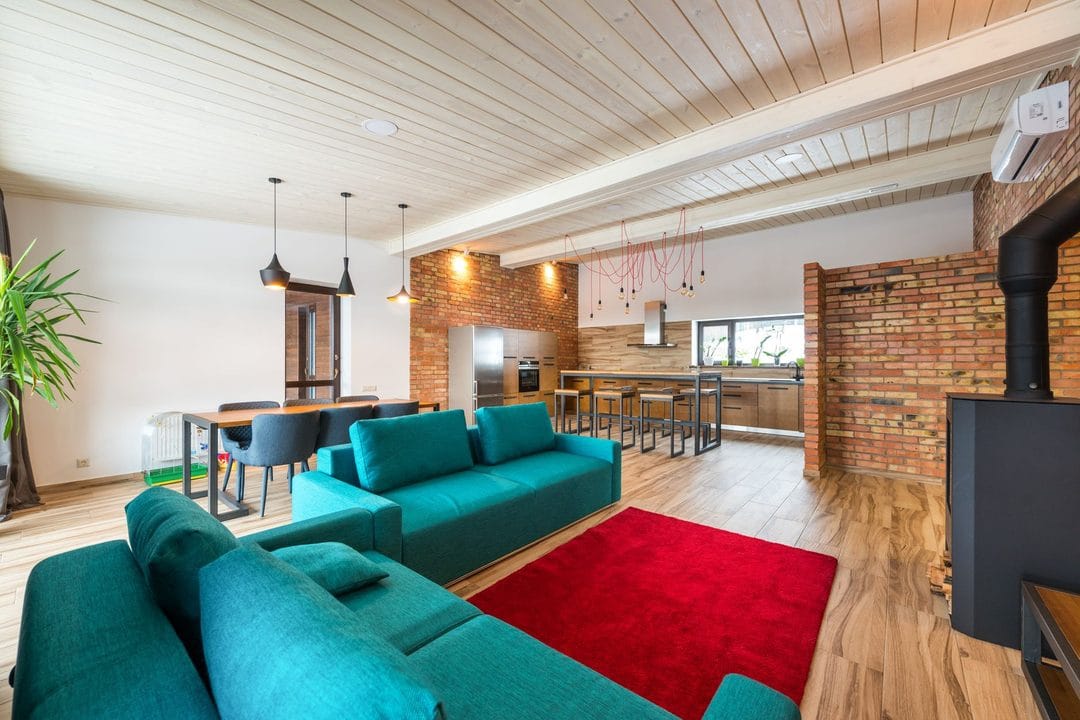
A one-bedroom apartment in Singapore's Tiong Bahru runs close to S$3,200 a month before utilities. A bed in a well-run co-living room two MRT stops away runs S$1,400, fully furnished, bills included, with a cleaner who shows up twice a week. For a 26-year-old earning a mid-level analyst's salary, that arithmetic is not a lifestyle choice anymore — it is the difference between saving and treading water.
The Numbers Behind the Shift
Weave Living, which now operates more than 4,000 units across Hong Kong, Tokyo, Singapore and several mainland Chinese cities, reported occupancy above 90% across its Asia portfolio through 2025, a figure the company's leasing team attributes largely to tenants aged 24 to 34 relocating for work rather than students. Hmlet, one of the earlier movers in Singapore's co-living scene before its 2022 merger with Le Concierge Asia to form Coliwoo, now manages roughly 3,000 beds islandwide, with monthly rates for a private room in a shared unit typically landing between S$1,300 and S$2,200 depending on the neighbourhood and whether the room includes an en-suite bathroom.
Bangkok tells a slightly different story, one shaped less by space scarcity than by a generation of Thai and expatriate professionals who simply do not want to furnish an apartment from scratch for a two-year posting. Cove, which expanded into Bangkok's Thonglor and Ekkamai districts in 2023, prices private rooms from roughly ฿18,000 to ฿32,000 a month, undercutting comparable unfurnished condos in the same buildings once furniture rental and setup costs are factored in. The company's Bangkok general manager told local press that average tenancy length has crept up from eight months to just over a year since 2024 — co-living stopped being a stopgap and became where people actually settle.
Ho Chi Minh City's Faster, Rougher Version
Ho Chi Minh City's co-living market looks less polished than Singapore's or Tokyo's, and that's mostly the point. Operators like Ecoxim and a handful of smaller local players have converted older shophouses in District 1 and District 3 into shared housing at rates from roughly 6 million to 12 million VND a month — a fraction of what a comparable serviced apartment costs, and priced for the wave of remote-working foreigners and young Vietnamese professionals moving from provinces for tech and finance jobs. The build quality varies enormously between operators, and tenants who've lived in more than one property tend to say so bluntly: some buildings feel genuinely well-run, others feel like a landlord noticed a trend and slapped a co-living label on an old rental.
What's Actually Driving the Demand
Three things are converging at once. Salaries for entry-to-mid-level professionals across the region's finance and tech hubs have not kept pace with rental inflation in the districts closest to major employment clusters — Singapore's Central Business District rents rose faster than private-sector wage growth in both 2024 and 2025, according to figures the Urban Redevelopment Authority publishes quarterly. At the same time, a growing share of the region's white-collar workforce moves between cities for two-to-three-year assignments rather than settling permanently, which makes furnishing a full apartment feel like wasted effort. And younger renters, across nearly every market operators serve, increasingly value the built-in social layer — shared kitchens, resident events, communal workspaces — over the privacy a traditional lease provides.
That third point deserves more scrutiny than co-living marketing usually gives it. A 2025 tenant survey conducted by Weave Living across its Hong Kong and Singapore properties found that "community" ranked third among reasons for choosing co-living, behind price and convenience — not first, as company press materials tend to imply. Convenience and cost are doing most of the work; the community angle is real for a meaningful minority of tenants, but it is not the primary driver the marketing suggests.
The Trade-Off Nobody Puts on the Brochure
Shared kitchens sound appealing until you're the third person that week to find someone else's dishes left in the sink for two days. Multiple tenants interviewed across Singapore and Bangkok properties raised the same friction point: co-living solves the furnishing and bill-splitting headache cleanly, but it does not solve the basic reality of sharing common space with strangers whose habits you didn't choose. The better-run operators have responded with weekly cleaning rotations and app-based chore tracking — Coliwoo's resident app, for instance, assigns kitchen cleaning slots automatically — but tenants who've lived in both the well-managed and poorly-managed versions describe the gap between the two as enormous.
The Visa and Contract Layer Most Reviews Skip
Traditional leases across most of the region demand something co-living operators have quietly removed as friction: a guarantor, a security deposit worth two or three months' rent, and often a local bank account already in place before a landlord will even consider an application. Coliwoo's standard contracts run month-to-month after an initial three-month minimum, with a deposit capped at one month's rent — a structural difference that matters enormously to someone who just landed on an employment pass and hasn't opened a local account yet. Cove offers similarly short minimum stays in Bangkok, typically three months, compared with the twelve-month minimum still standard on most unfurnished condo listings through agents like FazWaz or DDproperty.
That flexibility carries a real cost most tenants only notice on renewal. Month-to-month and short-minimum contracts routinely reserve the right to raise rates with 30 days' notice, and several operators across the region have used that clause more aggressively as occupancy climbed past 90%. A tenant in one Singapore property described a S$150 increase on renewal after eight months — not dramatic on its own, but enough to erode a meaningful chunk of the original savings versus a traditional lease locked at a fixed rate for a full year.
Who Should Actually Skip It
Co-living makes the least sense for anyone planning to stay in one city for more than three years. The monthly premium per square foot, once averaged over a longer stay, tends to exceed what the same tenant would pay furnishing a traditional unfurnished lease from scratch and amortizing that cost over the full tenancy. IKEA runs, secondhand furniture groups on Facebook Marketplace and a one-off setup cost of a few thousand dollars stop looking like a hassle once the time horizon stretches past two years — and a traditional lease gives tenants control over renewal terms that co-living operators reserve for themselves.
It also makes less sense for anyone bringing a family. Almost every co-living operator in this comparison targets single professionals and couples specifically — room sizes, shared common spaces and building rules are built around that demographic, and none of the major operators in Singapore, Bangkok or Ho Chi Minh City currently offer a family-sized unit within their co-living branding, pushing that segment back toward conventional rental listings regardless of price.
Where the Money Actually Goes
Property developers have taken notice, and not only the dedicated co-living operators. CapitaLand Ascott Trust added co-living-branded units to two of its Singapore properties in 2025, blending the format into what was previously a straightforward serviced-apartment portfolio — a sign that mainstream hospitality groups now see co-living less as a niche experiment and more as a durable rental category worth a line item on the balance sheet. In Tokyo, Oakhouse remains the dominant operator with well over 100 properties citywide, its share houses priced from roughly ¥55,000 a month in outer wards to ¥110,000 in central Tokyo locations near Shibuya or Shinjuku.
Skip the shared-room tier, though, and the math shifts. Private-room co-living in Singapore's prime districts can run close to what a modest one-bedroom condo costs once service charges are added — the savings are real mainly for tenants willing to accept smaller rooms or slightly further-out neighbourhoods, not for anyone chasing a Orchard Road address on a co-living budget.
For young professionals moving city to city across the region every few years, the calculation increasingly comes down to one question: is the time saved on furnishing, bill admin and finding a landlord worth the premium per square foot? For a growing share of tenants across Singapore, Bangkok, Hong Kong and Ho Chi Minh City, the answer has quietly shifted from "only for a few months" to "for as long as it makes sense."