The Locker Wall: How Parcel Lockers Quietly Became Asia's Newest Piece of City Infrastructure
The guard house pile-up used to be routine in Asia's high-rises. Smart-locker networks from Hive Box to PUDO to POPStation quietly made it obsolete.
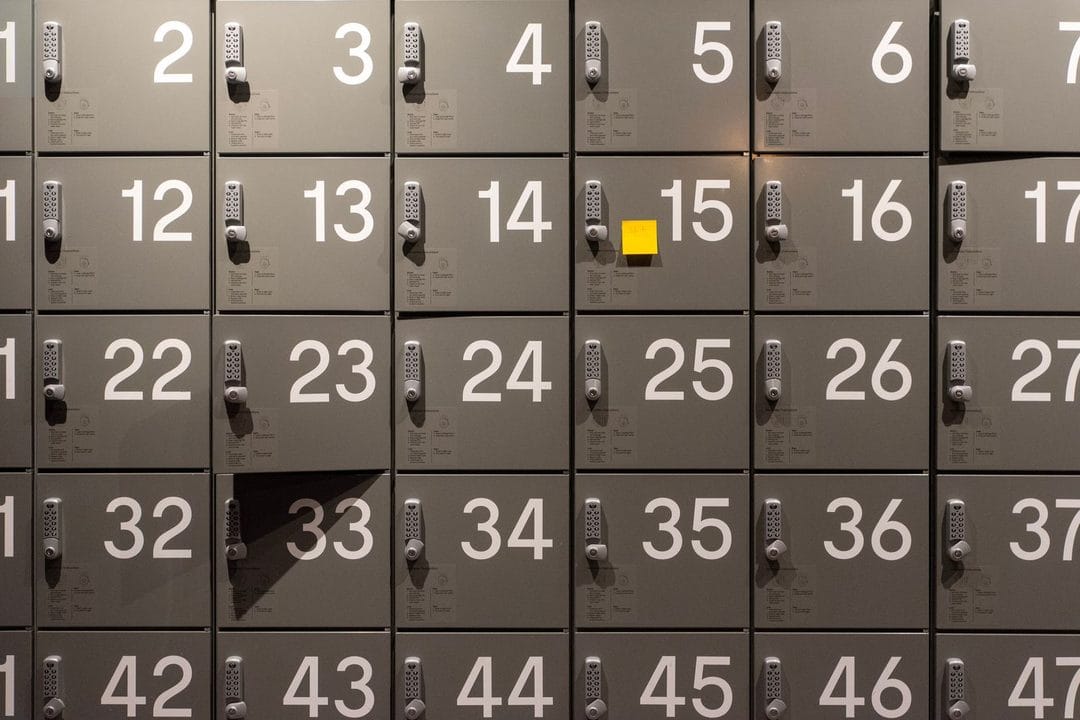
The guard at Block 12 stopped signing for parcels in March. Nobody posted a notice about it — residents just started finding out the hard way, when a Shopee package sat in the lobby for four days next to eleven others nobody claimed, all addressed to units whose owners were traveling, working late, or simply didn't check the group chat where the guard now posts photos of unclaimed boxes. Ask anyone who has lived in a mid-rise tower built after 2005, when developers stopped budgeting for full-time reception staff, and they'll tell you the guard-house pile-up wasn't an occasional inconvenience — it was the default state of the lobby by Thursday afternoon most weeks. This is the scene that smart-locker networks were built to erase, and across a dozen Asian cities they have mostly succeeded. The wall of steel compartments by the lift lobby — some illuminated, most just humming quietly — has become as unremarkable as the mailbox bank it replaced, which is exactly the point.
The Final 100 Meters
Chinese logistics engineers have a name for the last stretch between a courier's van and a resident's door: 最后100米, the final 100 meters. It sounds trivial next to the thousands of kilometers a parcel travels from a Yiwu warehouse, but it was the stretch that broke first. By 2015, Shenzhen compounds were seeing courier vans double-parked outside gates for twenty minutes at a time while drivers ran up six flights because the lift was reserved for residents during peak hours. Hive Box — 丰巢, backed by SF Express and several rival carriers who agreed, unusually, to share the same locker network — opened its first units that year specifically to get couriers in and out in under ninety seconds.
It worked almost too well. By 2020 Hive Box operated more than 170,000 stations nationwide, and it promptly overreached: a plan to start charging residents 0.5 yuan per twelve hours after a free grace period triggered a public backlash sharp enough that several residential committees in Hangzhou and Shanghai briefly ordered the boxes covered with cloth in protest. Hive Box backed down within a week and extended the free window to eighteen hours. Alibaba's rival network, Cainiao Post Stations, seized the opening and stayed free throughout, which is why plenty of Chinese residential compounds today run both networks side by side rather than picking a winner. The episode is worth remembering, because it's the clearest reminder that a locker wall isn't neutral infrastructure — someone owns it, and that someone eventually tries to monetize the thirty seconds of friction between you and your package.
Japan's Quiet Redesign of the Doorstep
Japan came at the same problem from the opposite direction — not too many parcels arriving, but too many failing to arrive on the first attempt. Yamato Transport, which still handles roughly 40% of Japan's parcel volume through its black-cat-liveried fleet, was absorbing a redelivery rate north of 15% through the mid-2010s, meaning one in seven-ish attempts found nobody home. Drivers were quietly burning out under the weight of second and third trips to the same address, a labor crunch serious enough that Yamato raised its base delivery rates in 2017 for the first time in decades. PUDO stations, jointly developed with the French firm Neopost and installed inside train stations, convenience stores, and apartment lobbies from Shinjuku to Fukuoka, gave commuters a way to grab a parcel on the walk home instead of waiting for a second attempt.
What makes the Japanese version distinct is how thoroughly it folded into infrastructure that already existed. A PUDO unit inside a Lawson or a JR East station concourse isn't a bolt-on — it reads as part of the furniture, no different from the ATM or the coin locker next to it. Residents in a Shibuya-ku apartment building without concierge staff, which describes most mid-rise blocks built after the 1990s, effectively get a 24-hour reception desk they never asked the landlord to fund.
Korea's Compounds Got There Early, Then Got Smarter
Seoul's apartment complexes — the sprawling 아파트 danji that house most of the metro population — had 무인택배함, unmanned parcel lockers, bolted into basement parking levels well before e-commerce made them essential, largely because Korean apartment management associations have run centralized delivery and mail systems since the 1990s. What changed is the software layer stacked on top. Coupang's Rocket Delivery still favors door drops timed with military precision, but CJ Logistics and Naver's fulfillment partners increasingly route overflow and off-hours parcels to locker banks, and CU and GS25 convenience stores — themselves open around the clock on nearly every block — now double as informal pickup counters when a locker bank is full.
Here's the part that doesn't fit neatly into a success story: locker density in Korea still tracks almost exactly with building age and HOA budget, so newer luxury towers in Gangnam get gleaming refrigerated compartments for grocery deliveries while older complexes in Incheon or Suwon make do with a single overworked bank of thirty boxes serving four hundred units. The gap isn't closing on its own.
Southeast Asia's Catch-Up Sprint
Singapore built its version early through the state postal operator — SingPost's POPStation network launched in 2010 and now anchors MRT stations and community clubs across the island, giving HDB residents a locker within a ten-minute walk almost anywhere on the map. The rest of the region has moved faster but less uniformly. Ninja Van, the Singapore-founded logistics firm now covering six Southeast Asian markets, built its own locker footprint specifically to route around the gated, guard-staffed condominium compounds common in Kuala Lumpur and Jakarta, where a courier without a resident's phone number and a gate code can lose fifteen minutes just getting past the boom barrier. Lazada and Shopee lean on both networks depending on the city, and Grab has started testing locker pickup points inside its GrabExpress hubs in Bangkok as a hedge against the sheer number of failed doorstep attempts in high-security compounds.
- Singapore: near-universal locker coverage through POPStation and condo-integrated smart mailrooms, largely solving the problem outright
- Kuala Lumpur and Jakarta: private-operator lockers built specifically to bypass gated-compound security friction
- Manila and Ho Chi Minh City still lean heavily on rider-to-hand delivery, and locker density there remains genuinely patchy — worth checking before assuming a locker exists near your address
Humidity is the unglamorous variable nobody in a pitch deck mentions. Locker units in Jakarta and Kuala Lumpur need better-sealed compartments and more frequent servicing than the same hardware in Seoul or Tokyo, and at least two SEA-based operators have quietly redesigned their door gaskets after early units let in enough moisture to warp cardboard packaging within a humid weekend.
What the Locker Wall Actually Replaces
This isn't really a convenience story.
Strip away the branding and the locker wall is doing one specific job: it's replacing a human being — a guard, a concierge, a neighbor holding a spare key — with a machine that never goes off shift, never loses a slip of paper, and never judges you for the 2 a.m. skincare haul. That's worth being blunt about, because most coverage of this trend stops at the "so convenient" headline and never asks whose job just quietly disappeared.
The buildings that will feel this shift hardest aren't the luxury towers already retrofitting refrigerated units — they're the mid-tier blocks that never had staffed reception in the first place and were quietly absorbing the chaos through an overworked guard or a resentful WhatsApp group. For anyone actually apartment-hunting in Shenzhen, Bangkok, or Seoul right now, a working locker bank in the lobby photos is a better signal of livability than a gym nobody uses. Skip the building that still relies on a guard scribbling names in a notebook; that system was already failing before the parcel volumes doubled. A building with no locker wall at all in 2026 isn't quaint — it's badly managed, full stop.
None of this is finished. Locker networks in China are consolidating hard — Hive Box absorbed a rival operator's stations in several second-tier cities through 2024 and 2025 — and consolidation tends to mean fewer choices and, eventually, a fee structure nobody loved the first time either. The wall of steel doors by the lift will keep expanding regardless. It's just a question of who ends up owning the keys.