Konbini Culture: How Asia's Convenience Stores Became the Neighbourhood's Real Kitchen
Across Japan, Taiwan, Korea and Southeast Asia, the convenience store has quietly become where a huge share of the region actually eats dinner — and that says more about city life than any restaurant trend.
It's 9 p.m. on a Tuesday in a Family Mart on a side street in Taipei, and the hot food counter — the one with the tea eggs, the braised pork rice, and a tray of fried chicken under a heat lamp — has a small queue. Nobody in it looks embarrassed. A delivery rider grabs a rice ball and a can of sugarcane tea. A woman in scrubs buys a container of stir-fried noodles and eats two bites of it standing at the window counter before she's back outside. This isn't a snack stop. For a huge number of people across East and Southeast Asia, this is dinner, and it has been for years.
Convenience stores didn't get here by accident. Japan's three big chains — 7-Eleven, Lawson and FamilyMart — between them run well over 50,000 stores nationwide, and each one has spent three decades quietly turning its back wall into a functioning kitchen: rice balls made fresh twice a day, bento boxes rotated on a schedule tight enough that stores mark down unsold stock by 8 p.m., and a fryer case that never really goes cold. Taiwan pushed the model even further. It now has one of the highest convenience-store densities per person anywhere in the world, largely thanks to 7-Eleven's roughly 6,000-plus outlets on an island of 23 million people — close enough that in most cities you're rarely more than a five-minute walk from a hot meal that costs less than a coffee.
From Quick Stop to Kitchen Counter
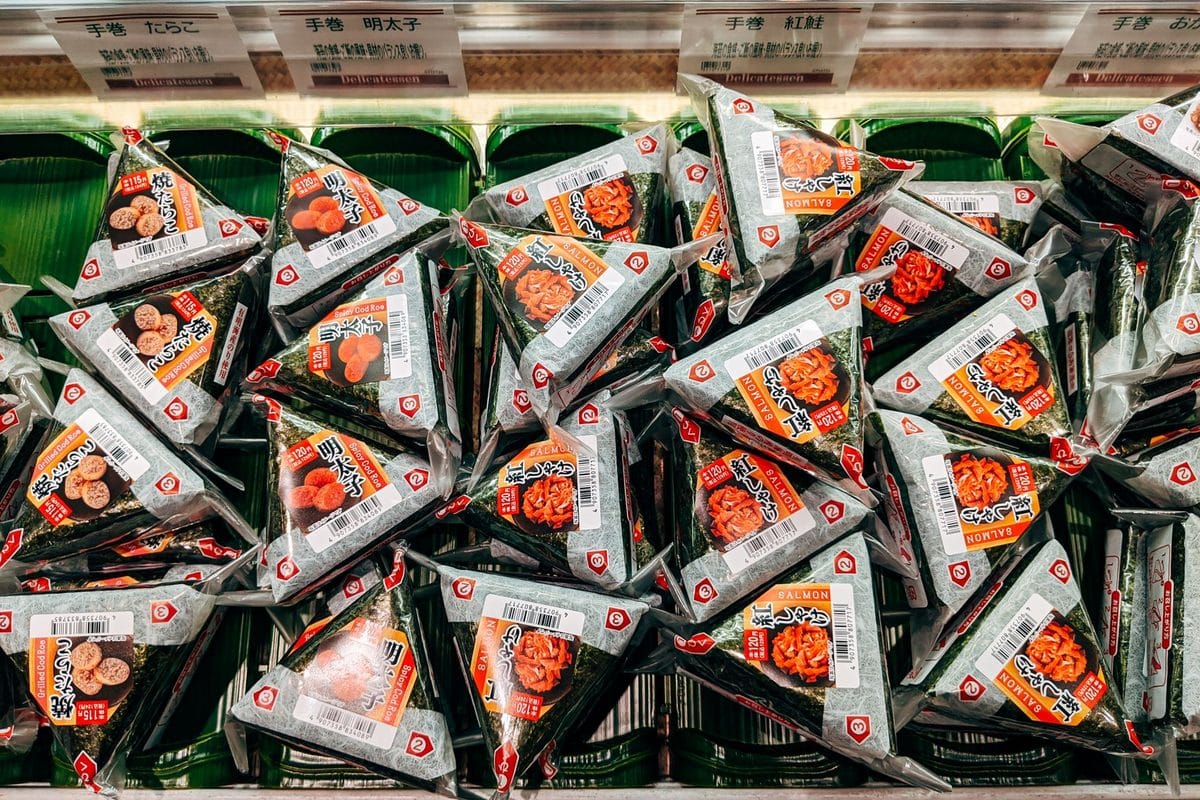
The shift didn't happen because convenience stores decided to compete with restaurants. It happened because they noticed nobody else was serving a very specific kind of customer well: someone eating alone, on a schedule they don't control, who doesn't want to sit through a full meal service and doesn't want to cook for one person in a kitchen the size of a closet. Japan's onigiri — the triangular rice ball wrapped around pickled plum, salmon or tuna mayo — costs somewhere between 120 and 160 yen and takes about ninety seconds to eat standing up. A full bento with rice, protein and two sides runs 400 to 600 yen, roughly the price of a bus fare, and comes with a microwave three steps away.
South Korea took a different route to the same destination. CU and GS25, the country's two dominant chains, built their dosirak — boxed meal — lines specifically around solo diners, pricing a full set with rice, kimchi, a protein and a side dish at somewhere between 4,500 and 6,500 won. Seating counters with power outlets and, in newer stores, actual bar stools facing the street turned the shopfront into something closer to a diner than a till. This wasn't subtle marketing. It was a direct response to a demographic fact: Seoul's single-person households now make up more than a third of the city's total, and that number has been climbing for over a decade.
The Rice Ball Economy
Nobody planned to build a parallel restaurant industry out of plastic-wrapped triangles, but that's roughly what happened.
Look at the actual mechanics of a Japanese konbini kitchen and you start to understand why it works better than a lot of small restaurants. Rice is cooked and shaped in regional factories, delivered twice daily so nothing sits on the shelf more than about twelve hours, and priced through a markdown system that pushes near-expiry stock to half price rather than letting it go to waste. Lawson's karaage-kun fried chicken nuggets and 7-Eleven's oden — the winter stew of fish cakes and daikon simmered in a broth pot right at the counter — aren't afterthoughts bolted onto a shop that sells magazines and phone chargers. They're the reason a meaningful share of customers walk in at all. Recommend the oden pot over almost any 500-yen izakaya small plate on a cold night; it's genuinely the better option, and locals treat it that way.
Built for One, Not for the Table
Restaurants are built around tables, and tables assume more than one person is coming. Convenience store food is built around the opposite assumption, and that single design choice explains most of why it fits modern Asian cities so well. A single-portion box doesn't ask you to split anything, doesn't produce leftovers you'll forget about in a shared fridge, and doesn't require you to plan a shopping trip around ingredients that only make sense in bulk. For someone renting a 20-square-metre studio in central Tokyo, Seoul or Singapore, that's not a lifestyle compromise — it's the only format that actually matches the space they live in.
You can see the same logic in how these chains have redesigned their floor plans over the past several years. Seating counters facing the street, once rare, are now standard in new FamilyMart and 7-Eleven builds across Taipei and Bangkok. Microwave banks doubled or tripled in size. Some Tokyo locations now run soft-serve machines, fresh coffee counters with baristas trained on actual espresso machines, and even small hot noodle stations — features that would have looked absurd in a convenience store fifteen years ago and now barely register as unusual.
Where the Model Splits: Not Every Market Does This the Same Way
It would be tidy to say this is one regional trend with one shape, but it isn't. Southeast Asia's convenience stores have leaned harder into ready-to-eat Western-style items — toasted sandwiches, fried snacks, packaged pastries — rather than building the same depth of hot, fresh, rotating meal service you see in Japan or Taiwan. Bangkok's 7-Elevens are everywhere and busy at all hours, but their food counters still lean toward reheated items rather than freshly made ones, and a lot of the daily-meal function that Tokyo's konbini perform is still handled by street food stalls instead. That's not a failure of the model — it's a sign that where cheap, fast, high-quality street food already exists at scale, the convenience store doesn't need to replace it. It just adds convenience at the margins.
The Trade-Off Nobody Puts on the Sign
None of this is free of cost, and it's worth being honest about what gets displaced when a convenience store becomes a neighbourhood's default kitchen. Small, independently run diners — the kind that used to anchor a block with a set lunch menu and an owner who remembered your order — have closed at a steady rate in Tokyo and Taipei over the past decade, and cheap, reliable konbini food is part of why. There's also a nutrition question that chains would rather not put front and centre: a diet built on rice balls, fried snacks and instant noodles from a shelf, however well merchandised, isn't the same as a home-cooked or restaurant-cooked meal, and sodium content on a lot of these products runs high by any standard. The convenience is real. So is the cost to the smaller, slower food culture it's quietly been replacing.
What makes konbini culture worth watching isn't the food itself — plenty of it is genuinely mediocre, reheated, and built for speed rather than pleasure. It's what the model reveals about how these cities actually run: dense, fast-paced, full of people eating on their own on schedules nobody designed around meal times. The convenience store didn't create that pattern of urban life. It just noticed it first, and built a kitchen for it while everyone else was still setting tables for four.