Someone Has to Carry the Soil Up: The Real Work Behind Asia's Rooftop Farming Boom
The rooftop farming trend swept through Asian cities fast. What decides whether a garden survives its second year has less to do with vegetables and more to do with load limits, water schedules, and who actually shows up to weed.
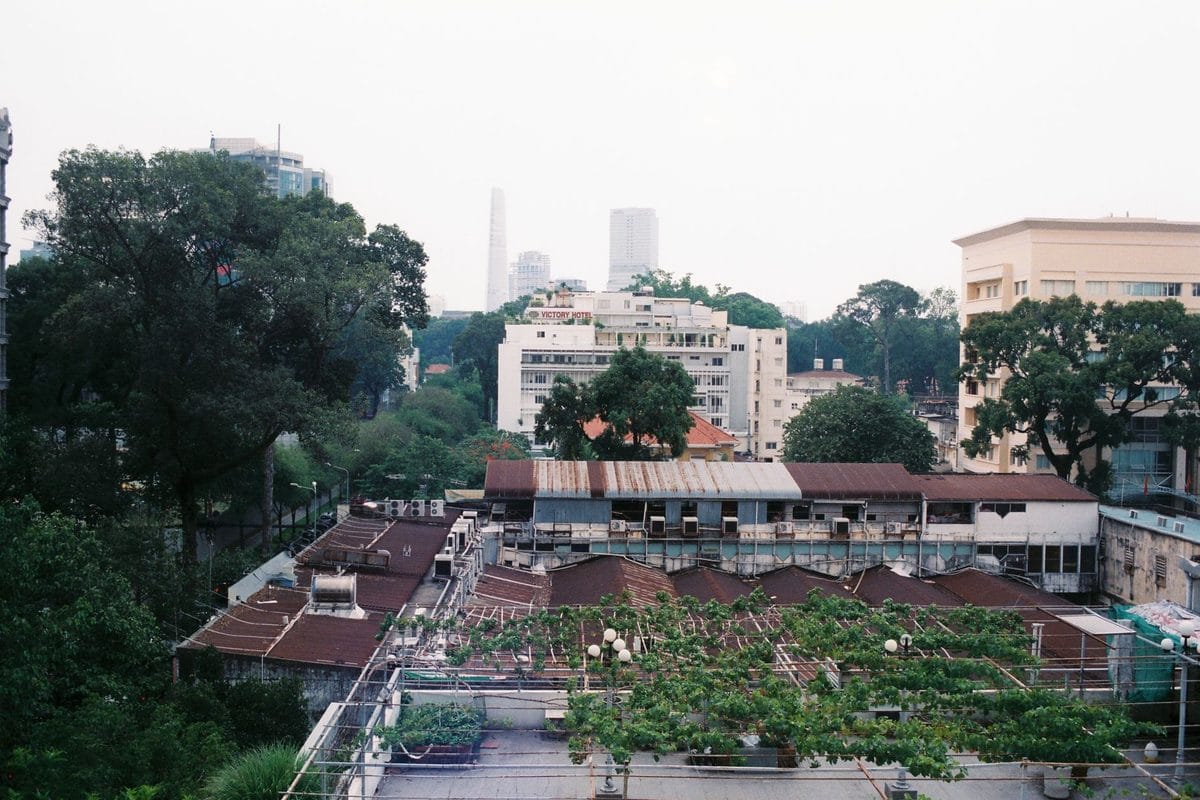
Before a single seed goes into a rooftop planter, someone has to answer a duller question first: how much can the roof actually hold? A structural engineer with a load calculator, not a gardener, is usually the one who decides whether a building gets a farm at all, because the number stamped into the original drawings — the slab's live-load rating — was written decades ago for foot traffic and the odd water tank, not for a foot of wet soil, forty planter boxes and a Saturday crowd of residents hauling watering cans.
That mismatch is the real story behind Asia's rooftop farming boom, and it rarely makes it into the glossy photos of tomato vines against a skyline. The gardens exist because cities from Hong Kong to Seoul have run out of ground-level space for parks, and putting soil eleven storeys up is, on paper, the cheapest new green space a dense city can create — no land purchase, no demolition, just a roof that was already sitting there doing nothing more useful than housing an air-conditioning unit. Getting from "on paper" to a working farm, though, is an engineering and logistics problem before it is a lifestyle one.
The number nobody asks about first
Older mid-rise buildings across the region were rarely designed with the idea that anyone would garden on top of them. A dry roof deck is built to a much lower load tolerance than a floor meant for furniture and people, and wet soil is heavy in a way most residents underestimate — a modest raised bed can add several hundred kilograms once it is saturated after rain. Retrofitting for that load usually means reinforcing the slab, redoing the waterproofing membrane so root systems and drainage trays do not puncture it, and adding a drainage layer that routes excess water away before it pools. None of that is cheap, and none of it is optional, which is why the buildings that pull off a genuinely functional rooftop farm are usually the ones that budgeted for an engineer before they budgeted for seedlings. Skip the retrofit and the failure shows up quietly, months later, as a damp patch on a ceiling three floors down that nobody can explain until someone finally checks the roof.
Building codes have started to catch up with the demand. Tokyo has required a share of usable rooftop space on larger new and renovated buildings to be planted since the early 2000s, and Singapore's Urban Redevelopment Authority offers extra buildable floor area to developers who replace the greenery a project displaces with skyrise gardens, rooftop plots included. Seoul runs its own rooftop-greening support schemes through city and district offices, subsidising part of the retrofit cost for buildings willing to convert bare roofs. The incentives matter because without them the retrofit math rarely closes — a strata committee weighing the cost of a structural survey against a handful of vegetable beds will usually vote no unless there is a grant or a tax break tipping the scale.
Who actually shows up to weed
The volunteer roster is where most rooftop farms quietly die.
Getting a rooftop farm structurally approved is, in hindsight, the easy half of the project. The harder half is deciding who keeps it alive once the ribbon-cutting photos are taken, and most buildings land on one of three arrangements. Some hand the plot to the building management committee, which treats it as shared amenity space and rents out individual planter boxes to residents much the way a condominium rents out parking bays. Others bring in a professional urban-farming operator on contract — a small but growing category of social enterprise that installs the beds, runs the irrigation schedule, and either sells the harvest to nearby restaurants or charges for weekend workshops to cover its costs. A third group leans on corporate tenants, where an office building signs its rooftop over to a staff wellness programme and whichever department drew the short straw that quarter ends up on the watering rota.
Each model works for a while. What tends to break it is the same thing that ends most volunteer projects everywhere: the first few months run on enthusiasm, and enthusiasm has a shelf life that rarely survives a rainy season, a pest outbreak, or three residents moving out at once. Buildings that treat the farm as a fixed line item — someone paid, even part-time, to check the irrigation timer and swap out dead plants — tend to still have a working garden two years later. The ones that ran entirely on volunteer goodwill usually end up with an overgrown box of weeds and a sign nobody has updated since the opening week.
The water nobody budgets for
Water is the other cost that catches building managers off guard. A rooftop with no shade and full sun exposure loses moisture fast, and a farm sized for a few dozen households can go through several hundred litres a week in the dry season — water that either comes from the building's own supply, at the building's own expense, or from a rainwater harvesting tank that adds yet more weight to the same slab the engineer already flagged. Drip irrigation on a timer solves the labour problem but adds hardware and a maintenance contract; hand-watering with cans is cheap and simple but depends entirely on whoever remembers to show up before eight in the morning, before the heat does the real damage.
You can build the most carefully engineered rooftop farm in the district and still lose half a bed to one unglued irrigation line during a heatwave — it happens more often than any opening-day press photo would suggest. The buildings that get this right invest in one unglamorous thing before any of the planting starts: a dedicated rooftop tap and a timer. Do that first, not months later once residents notice the soil is cracking by Wednesday afternoon.
The cooling effect is what actually sells it to owners
For all the community-garden framing in the marketing photos, the strongest argument for a green roof is thermal, not social. Bare concrete or bitumen on an unshaded roof can sit well above 60°C on a clear afternoon, radiating heat straight down into the top-floor units below it. A planted roof, cooled by the simple physics of water evaporating off soil and leaves, can run tens of degrees cooler at the surface on the same day — which is why the pitch to a building's finance committee increasingly leads with lower air-conditioning bills on the top floors rather than with fresh vegetables. It is a genuinely good trade: the plants need someone to water them, but the heat reduction needs nothing at all once the growing medium is established.
Why parks are not coming back to fill the gap
None of this exists because rooftop farming is trendy — it exists because the alternative, buying land for a new ground-level park in central Hong Kong, Singapore or Seoul, is no longer realistic at any price a city government wants to pay. A patch of rooftop that already sits inside a building's footprint costs nothing to acquire; it only costs money to make usable. That arithmetic is why rooftop greenery is one of the few kinds of urban green space actually growing in supply across the region's dense districts, even as ground-level parkland stays essentially flat or shrinks with every new development.
If you sit on a building committee weighing whether to greenlight one of these projects, get the structural survey done before you collect resident signatures, not after. Committees that build community excitement first and discover the load limit second end up walking back an approved proposal, and that is a worse outcome for morale than never raising the idea at all. The rooftop can absolutely hold a garden. It just needs someone to check the number before anyone plants a seed.