Cashless Night Markets: How Asia's Street Food Scene Went Digital Without Losing Its Chaos
Across Bangkok, Taipei, Jakarta and Seoul, street vendors traded cash boxes for QR codes almost overnight. The hawking, the haggling, and the chaos never left.
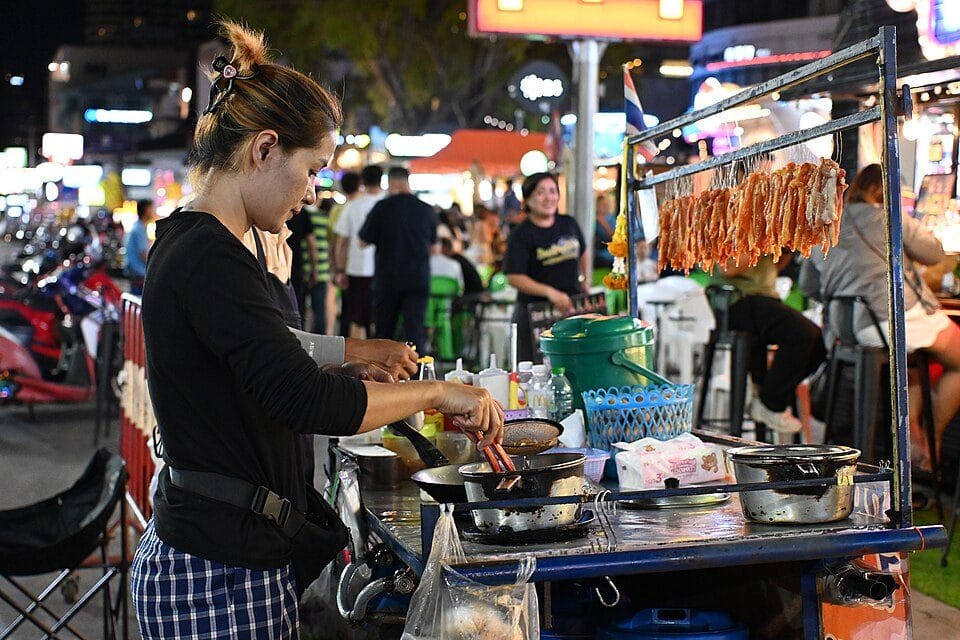
By nine at night, the fish ball stall at the corner of Bangkok's Yaowarat Road has a queue eleven people deep, and not one of them is holding a banknote. Phones tilt toward a laminated QR code taped to the cart's steel frame, PromptPay chimes ping in a ragged, overlapping rhythm, and the vendor never once looks up from her wok. Ten years ago this same corner ran entirely on crumpled hundred-baht notes and a metal cash box wedged under a stool. The cash box is still there. Nobody uses it anymore except to hold napkins.
The QR Code Became the New Cash Register
Street food in Asia digitised faster than almost anyone predicted, and it happened stall by stall rather than through any single grand rollout. Thailand's PromptPay, which ties a payment straight to a vendor's national ID or phone number, turned a laminated paper QR code into the cheapest point-of-sale system a hawker could ever own — no card reader, no monthly fee, no bank visit required beyond opening the account once. Indonesia went a step further with QRIS, the national standard that forces every e-wallet — GoPay, OVO, Dana, ShopeePay — to scan into the same code, so a vendor in a Yogyakarta night market doesn't need six different stickers taped to the same cart. Vietnam's MoMo did something similar without any government mandate behind it, becoming so dominant among motorbike-riding street vendors in Ho Chi Minh City that some now print a MoMo number on their menu board before they print their phone number. None of this needed a subsidy programme or a fintech evangelist standing at the stall. It needed a generation of vendors who'd rather spend thirty seconds scanning a phone than count change under a single bare bulb.
Older vendors were the last holdouts, and for good reason — a seventy-year-old noodle seller who has run the same cart for three decades doesn't automatically trust a phone screen with her income. What changed their minds wasn't a training seminar. It was watching a granddaughter or a nephew set up the QR code in an afternoon and realise there was no more chasing after customers who'd wandered off owing forty baht. Numbers did the convincing that pamphlets never could.
Not Every Market Made the Leap the Same Way
Adoption split hard along lines nobody quite predicted, and the differences are still visible block by block across the region.
- Kuala Lumpur's Jalan Alor is still mostly cash — most stallholders there will tell you outright that scanning a QR code slows down a satay grill running twenty skewers at once.
- Singapore's hawker centres went the other direction by regulation rather than preference: the National Environment Agency pushed PayNow and NETSPay QR codes into nearly every stall as part of its digitalisation drive, and cash is now the exception at places like Maxwell Food Centre.
- Ho Chi Minh City sits in the middle — MoMo dominates among younger vendors selling bánh mì and chè near District 1, while the grandmothers running phở carts near Bến Thành still prefer notes folded into an apron pocket, among others.
If you're visiting a market that's gone fully digital, download the vendor's preferred wallet before you arrive — GrabPay covers most of Malaysia and Singapore, LINE Pay is standard across Taipei's night markets, and Kakao Pay works at nearly every stall in Seoul's Gwangjang Market. Do it the night before, not while eleven people are waiting behind you at the grill.
Seoul is its own case study in how generational the split really is. Gwangjang Market, which has run since 1905 and still bills itself on tradition, now has Kakao Pay and Naver Pay stickers next to nearly every mayak gimbap stand in the food alley, but the older ajummas running the bindaetteok griddles often keep both a phone and a cracked plastic coin tray within arm's reach. Ask them why and the answer is practical rather than sentimental: card-reading apps occasionally freeze mid-transaction during the lunch rush, and a customer holding up the line while a screen buffers is worse for business than a coin dropped on the counter.
The Chaos That Digital Payment Didn't Fix
A vendor's phone battery matters now as much as her wok does.
This works beautifully until the signal drops. A sudden downpour that knocks out 4G across a market district turns a QR-only stall dead in the water within a minute — no fallback, no float, nothing but a queue of hungry customers and a vendor apologising in three languages. During the heavy monsoon storms that roll through Taipei's night market districts most summers, cart owners who've fully switched to LINE Pay and JKoPay describe watching customers simply walk to the next stall that still keeps a coin jar under the counter. The lesson stuck: keep a float, even a small one, because chaos doesn't wait politely for the network to reconnect.
There's also a quieter cost to all of this. Elderly vendors without a smartphone, or without enough Mandarin, Malay, or Thai to make sense of a wallet app's settings menu, increasingly struggle to run a stall at all in the markets that have digitised hardest — landlords and market associations in some Bangkok sois now treat a working QR setup as an unofficial condition for renewing a pitch. That's rarely what gets mentioned when travel writers praise how convenient cashless dining has become.
What the Cash Box Used to Do That the App Doesn't
Cash carried more than money at these stalls — it carried a flexibility that a fixed QR transaction doesn't replicate. A regular customer running short by ten baht could settle up the following week with a nod and no paperwork; that kind of informal tab sits awkwardly inside PromptPay, where every transaction lands as a discrete, timestamped record tied to a real name. Rounding a bill down to a clean number, tossing in an extra skewer because a customer looked hungry, or accepting a slightly torn note without complaint — none of that survives a system built for exact figures. Vendors who've kept a hybrid setup, cash box and QR sticker side by side, say the app wins for the rush-hour crowd, but the cash box is still where the actual relationship with regular customers lives.
Carry small notes anyway, no matter how digital a market looks on the surface. Every seasoned market-goer in Bangkok will tell you the same thing: a folded hundred-baht bill gets you through the five minutes when the connection drops and nobody around you is calm about it.
The Super-Apps Are Already Circling
Malaysia shows what happens when a government pushes the same shift from the top down. Touch 'n Go eWallet and GrabPay both expanded aggressively into pasar malam stalls after Bank Negara Malaysia's e-payment incentive scheme handed out RM30 credits to encourage first-time digital users, and within two years a market that once ran almost entirely on ringgit notes had QR stickers on every second cart. It didn't kill the cash economy outright — durian sellers and fruit stalls, where a single transaction can run into hundreds of ringgit, still overwhelmingly prefer notes changing hands directly. But the everyday stuff, a plate of char kway teow or a cup of teh tarik, moved to the phone almost entirely.
The next phase is already visible in China, where a night market crowd rarely thinks of WeChat Pay and Alipay as separate tools anymore — both are folded into a single scan-to-pay habit so automatic that vendors in cities like Chengdu have begun trialling China's digital yuan, e-CNY, directly at their carts as part of local pilot programmes, testing whether a state-backed digital currency can slot into a payment culture that skipped credit cards entirely. Grab and GoTo are chasing a similar integration across Southeast Asia, folding food delivery, ride-hailing, and now street-stall payments into one super-app login so a diner in Jakarta can order from a fine-dining restaurant and a roadside satay cart through the identical interface. Whether that consolidation is good for the vendors themselves is a separate question entirely — a super-app that controls the payment rail can also set the fee, and a two or three percent cut on every transaction adds up fast for someone selling forty-baht skewers all night.
Walk through Yaowarat after midnight and the wok fires are still going, the smoke still rolls thick over the street, and the queue still moves in fits and starts the way it always has. The only thing missing is the sound of coins.