Dadaocheng: How Taipei's Herbal Medicine District Became a Coffee-and-Linen Neighbourhood Without Losing Its Dried Goods
In Taipei's Dadaocheng, century-old herbal medicine shops and dried seafood wholesalers now sit beside single-origin coffee bars and linen boutiques — and neither side is pretending the other doesn't exist.
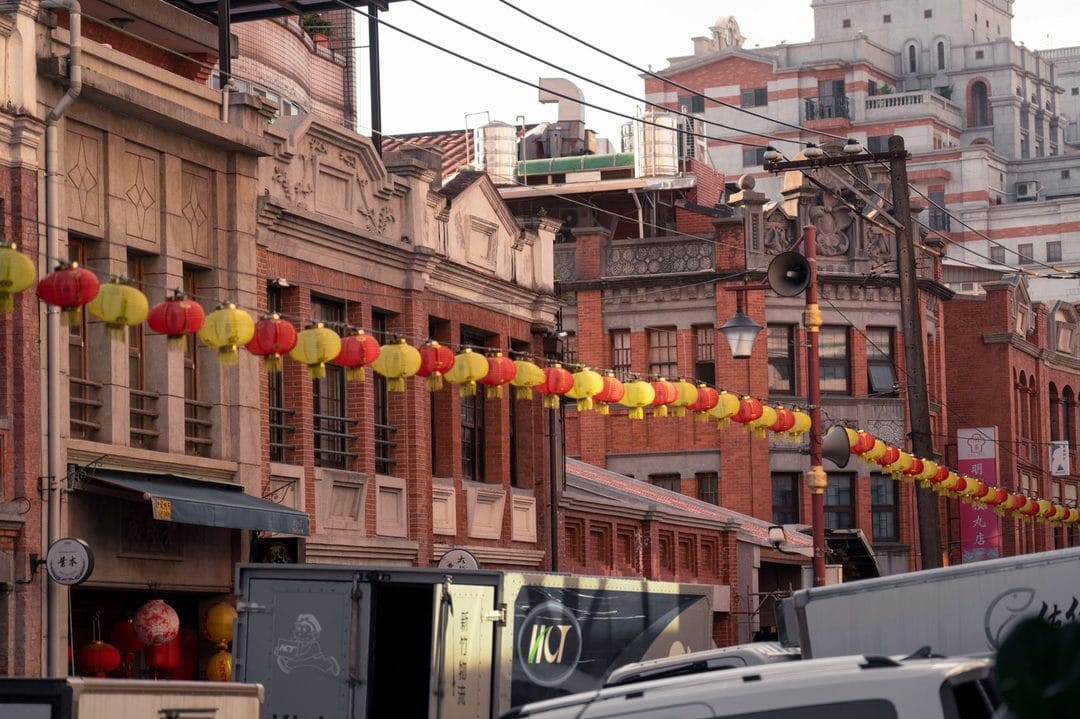
Walk down Dihua Street on a Tuesday morning and the first thing you smell is dried scallops, not oat milk. Dadaocheng, the riverside district that made Taipei rich on tea and Chinese medicine in the 19th century, still runs its wholesale trade the way it has for generations, and the routine hasn't changed much to accommodate anyone. Burlap sacks of goji berries get stacked outside shopfronts before the street properly wakes up. Ledger books, not point-of-sale tablets, still track most of the transactions between wholesalers who've known each other for thirty years. Deliveries start before 7am and wrap up by the time most of the rest of the city is settling into its desk, which means that if you show up looking for the neighbourhood you saw on Instagram, you'll walk straight through the actual economy that funds it without noticing.
What's changed is what happens after lunch. Since roughly 2022, the same red-brick arcades that housed dried-goods wholesalers have been filling in with specialty coffee bars, linen and ceramics stores, and small galleries that open at noon and close near midnight, running an entirely separate shift inside the same buildings. Sometimes it's literally the same address with two different signs stacked above the door — a Chinese medicine dispensary at street level, a stationery studio one flight up, both trading under names that have nothing to do with each other. The two economies aren't blended so much as stacked, taking turns with the same square footage. Locals who grew up around the wholesale trade tend to notice the shift before visitors do, since it shows up first in delivery schedules and parking, not signage.
The shophouse split-shift
The arrangement works because Dihua Street's shophouses were built deep and narrow, with the street-facing room reserved for trade and a courtyard or loft further back that wholesalers rarely used past mid-afternoon. Operators like Boalu Coffee and Yong Le Fang have leased those back sections directly from the herbal shops and dry-goods sellers still trading at the front, splitting rent and foot traffic instead of competing for either. A bag of dried mushrooms and a flat white can now come from the same doorway, forty minutes apart.
That's a different model from the one that hollowed out Seoul's Ikseon-dong or Bangkok's Charoenkrung, where original tenants were priced out within a few years of the first café opening. Dadaocheng's shophouse leases are largely still held by families who've traded there for three or four generations, and Taipei's Urban Regeneration Station has offered restoration subsidies since 2000 specifically to keep the building fabric intact — carved wooden shutters, Baroque façades from the 1920s reconstruction era — rather than gutted for open-plan retail. The subsidy comes with a catch that most write-ups skip over: owners have to keep at least part of the original ground-floor business running to qualify, which is the actual mechanism holding the split-shift model together, not goodwill. The upshot is that rent here has risen, noticeably, but not the kind of vertical spike that forces a wholesale seller out inside eighteen months the way it did in Ikseon-dong.
What to actually visit, and what to skip
Yongle Market, the fabric wholesale building at the street's southern end, is worth the climb to the second and third floors even if there's no plan to buy bolts of silk — the shops there have supplied costume houses and tailors since the 1970s, and several will cut a metre or two for personal use if asked directly. Skip the ground-floor souvenir stalls near the Xiahai City God Temple entrance; they're aimed squarely at tour groups and the markup shows immediately.
Dihua 27, spread across three renovated shophouses, does a better job than most heritage-conversion projects of not turning the building into a museum of itself. The ceramics studio on the second floor runs actual working classes rather than a gift shop dressed up as one, and the exhibition space on the ground floor rotates roughly every six weeks, usually featuring Taiwanese textile or lacquer artists rather than imported curation. For coffee, Fujin Tree 353 Café draws the longer queue on weekends, but Boalu, tucked one alley back from the main strip, pours a better cup and does it without the fifty-minute wait — the better choice on a tight schedule, no real debate there.
A detail most visitors miss
The dried-goods shops post their prices per catty (斤, roughly 600 grams) rather than per kilogram, a holdover from Qing-era measurement that most of Taipei abandoned decades ago. Ask for a price in kilos and some vendors will do the conversion without blinking; others will just look at you, and it's worth knowing that neither reaction means anything about the price itself.
Dadaocheng isn't spotless nostalgia, either. The wholesale trade that anchors the street's identity is aging along with its operators — several longtime herbal shop owners interviewed by local outlet The Reporter in 2025 said none of their children plan to take over the business, which means the split-shift model currently balancing old and new could tip fully toward cafés and boutiques within a decade regardless of the subsidy program's requirements. Worth seeing the overlap while both shifts are still actually running side by side, because it won't necessarily still look like this in ten years.
Where the neighbourhood is still under-visited
Most guides stop at Dihua Street itself and miss Yanping North Road, one block over, where a handful of print shops and seal-carving workshops have operated since the 1950s without any coffee-bar equivalent moving in yet. It's a useful contrast point — walk it before Dihua Street to see what a wholesale district looks like with zero adaptive reuse happening, then walk Dihua Street immediately after and the split-shift model becomes obvious in a way that reading about it doesn't quite convey.
The Taipei Wuji Health Temple, a short walk north past the market, gets almost no foreign visitors despite sitting five minutes from streets that are increasingly full of them — locals treat it as a genuine place of worship rather than a photo stop, and it's worth keeping that distinction in mind if visiting: quieter footsteps, no drone shots, camera down unless a monk waves it's fine.
Getting there and timing your visit
Take the MRT to Beimen Station and walk roughly ten minutes north, or catch the free Dadaocheng shuttle bus that loops from Taipei Main Station on weekends. Morning belongs to the wholesale trade — arrive by 9am if watching the dried-goods market open matters — and the café-and-boutique layer takes over from around noon through early evening. Late April through May brings a smaller, quieter seasonal tea market that draws far fewer crowds than the Lunar New Year goods fair, and is, frankly, the better time to go if crowds aren't the point of the trip.
Sunset over the Tamsui River from Dadaocheng Wharf, a five-minute walk west of Dihua Street, closes the day better than any rooftop bar the newer district has produced so far. Bring a folding chair if there's one to spare, because the public benches fill fast on clear evenings and nobody's building more of them anytime soon — a small, telling sign that the neighbourhood's older half still isn't quite designed around the visitors its newer half has started attracting.