The Four-Cut Takeover: How a Korean Photo Booth Trend Rewrote Asia's Street-Level Retail
Korean four-cut photo booths have spread from Hongdae to Harajuku, Ximending and Causeway Bay — turning fifteen-square-metre storefronts into some of the most fought-over retail units in urban Asia.
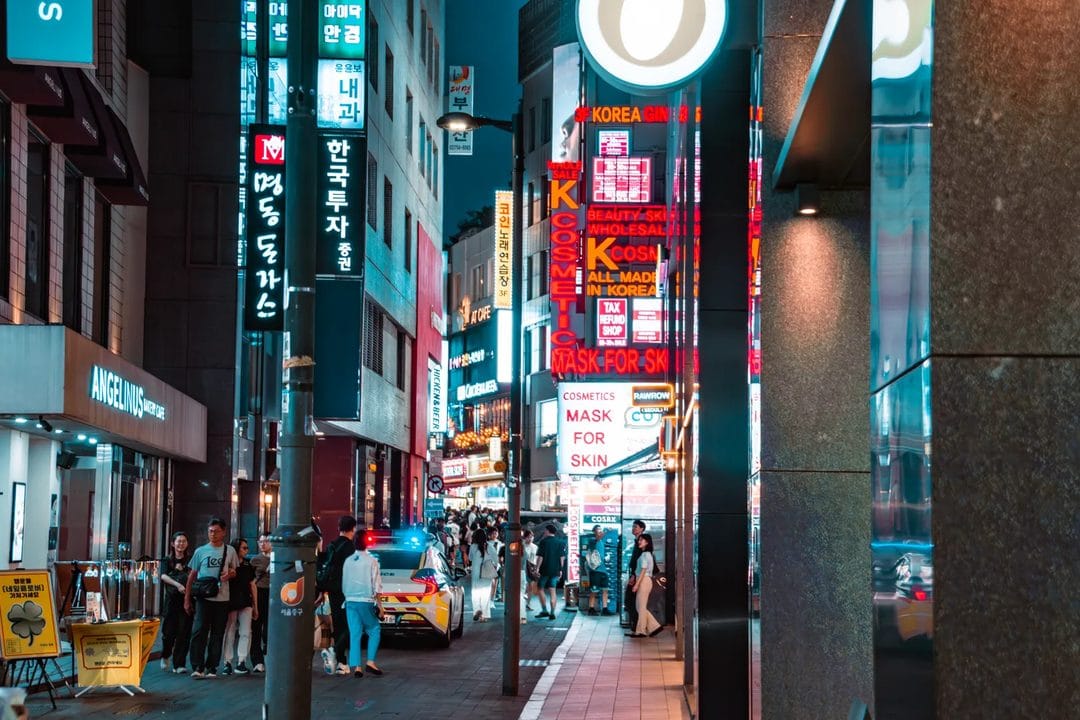
It's past eleven on a Friday in Hongdae, and the queue outside a narrow storefront wrapped in pink neon isn't for a bar or a bubble tea counter. It's four people deep, phones out, waiting for a turn inside a booth roughly the size of a walk-in closet. Ninety seconds later they'll walk out holding a strip of four small photos, already uploading the digital copy to a group chat before the paper has finished cooling. This is a Life Four Cuts, and there are versions of it on nearly every commercial block from Hongdae to Harajuku to Ximending now — a business built on a fifteen-square-metre footprint that has quietly become one of the most contested pieces of retail real estate in urban Asia.
From Sticker Photo to Four-Cut: A Trend That Refused to Stay Dead
Korea had photo booths long before this wave. The sticker-photo machines of the early 2000s — cramped, gaudy, plastered with cartoon stickers and beauty filters that shaved twenty percent off everyone's face width — were a staple of Myeongdong arcades for a decade before smartphone cameras made them redundant almost overnight. What's happening now is a deliberate reversal of that aesthetic. Brands like Life Four Cuts (인생네컷), Photoism (포토이즘), and Haru Film (하루필름) strip out the cartoon overlays and lean into a flat, slightly underexposed film look — closer to a disposable camera strip from 1998 than anything Instagram's filter library offers. The retro imperfection is the entire pitch: a photo that looks like it wasn't optimised by an algorithm, at a moment when every other photo a teenager takes has been.
The format is rigid by design. Four frames, one strip, a handful of prop choices (usually a plastic sign, a filter toggle, sometimes seasonal backdrops), and a price that has crept from roughly 4,000 won per session in 2021 to 6,000–9,000 won today depending on the branch and add-ons — somewhere between $3 and $6.50. Compare that to a coffee at a Hongdae café, which runs 5,000–6,500 won and takes up a table for forty minutes, and the appeal to a landlord starts to make sense before the appeal to a customer even enters the conversation.
Why Landlords Actually Prefer This Tenant
This is the part that doesn't show up in the trend pieces about Gen Z nostalgia: four-cut booths are a genuinely attractive commercial tenant, and that's reshaping which businesses survive on Seoul's secondary retail strips. A booth needs no kitchen, no ventilation duct, no water line, and often no staff at all beyond a card-payment terminal and a phone number taped to the glass for jams. It can run in a space too narrow for a convenience store and too shallow for a clothing rack — the kind of leftover unit that used to sit empty between a phone-case kiosk and a nail salon. Turnover per square metre, measured in sessions rather than covers, beats almost anything else that fits in the same footprint. Landlords in Seongsu-dong and Hongdae have told local property brokers they'll take a photo booth over a café application now, because a café needs a fit-out loan and eighteen months to break even, while a booth franchise can be running within three weeks of signing.
That math is exactly why the format has been merciless on the businesses it displaced. Phone-case kiosks, cheap accessory stalls, and the smaller nail bars that used to fill these leftover units are the ones losing the bidding war — not because four-cut booths pay dramatically higher rent, but because they can absorb short leases and awkward floor plans that scared off everyone else. Walk down Wausan-ro in Hongdae today and count the storefronts under fifteen square metres; a striking number of them are now some variation of a photo booth, sometimes two competing brands within sight of each other.
The Export: Tokyo, Taipei, Hong Kong
Japan already had its own photo-booth culture — purikura, the heavily edited, doe-eyed sticker machines that have anchored arcades in Shibuya and Ikebukuro since the late nineties. What's arrived from Korea in the past three years is deliberately positioned against that tradition rather than alongside it. Life Four Cuts opened a storefront on Takeshita Street in Harajuku, steps from purikura arcades that have been there for two decades, and the contrast is the entire marketing angle: purikura sells transformation, four-cut sells documentation. A Japanese customer walking out of one with an unretouched strip of four photos is making a small statement about which trend they're following.
Taipei took to the format even faster than Tokyo did. Ximending, already the city's densest concentration of youth retail, now has multiple Korean-brand booths within a five-minute walk of each other, several converted from stores that used to sell K-pop merchandise — a fitting handoff, since much of the initial customer base overlapped almost entirely. Hong Kong's version has clustered around Causeway Bay and Mong Kok, where rents are steep enough that the booth's tiny footprint isn't just convenient, it's close to the only way a new retail concept can afford to enter those streets at all. None of this happened through a coordinated international rollout in the way a coffee chain expands — it happened because franchise operators in each city saw what was working in Seoul and licensed or copied the format within a matter of months.
Not every attempt has worked. A wave of copycat booths opened in Bangkok's Siam Square in 2023 using cheaper, unbranded equipment, and most had closed within a year — the print quality was noticeably worse, the software glitched under humidity, and without the brand recognition of Life Four Cuts or Photoism, customers had no reason to wait in a queue for a strip of photos they could take on their own phone for free. The format travels well. The execution, evidently, does not always survive the trip.
What You Actually Get for Your Money — and What You Don't
If you're trying one for the first time, skip the flagship Photoism branch in Myeongdong on a Saturday afternoon — the wait regularly runs past forty minutes and the booths themselves are no different from the quieter locations. Haru Film's smaller outposts in Euljiro or Yeonnam-dong deliver the same print quality with a fraction of the queue, and the backdrops rotate more often because the branches are small enough that staff actually notice when a set looks tired.
There's a real trade-off worth naming here: the paper strip fades. Most four-cut prints are thermal-printed, the same technology as a supermarket receipt, and without lamination the image visibly yellows and softens within eighteen months to two years — something almost nobody mentions when they tape the strip to a dorm wall or a wallet. The digital copy, sent via a QR code or a linked app, survives indefinitely; the physical object that makes the whole ritual feel meaningful does not. A few branches now offer lamination for an extra 1,000–2,000 won, and it's worth paying for if you actually plan to keep the thing.
A New Kind of Third Place, Sized for a Five-Minute Attention Span
What the four-cut boom really represents is a third place stripped down to its minimum viable version — no seating, no menu, no reason to linger beyond the ninety seconds the machine takes. That's precisely what makes it compatible with rents that would kill a café, and it's why the format keeps finding leftover storefronts across the region instead of purpose-built retail units. A group of friends doesn't plan an evening around a photo booth the way they'd plan one around dinner; they duck into one on the way somewhere else, and the ritual takes less time than deciding where to eat next.
Whether that's a sustainable retail category or a five-year fad dressed up as nostalgia is still an open question, and the Bangkok closures suggest the format's economics are more fragile than the queues in Hongdae make them look. But for now, in a growing list of Asian cities, the fifteen-square-metre storefront that used to sell phone cases is doing brisker business selling four small photographs of people who'll probably never print a fifth.