The Mamak Stall: How Malaysia's 24-Hour Diners Became Kuala Lumpur's Real Meeting Ground
Halal, cheap, and open all night, Kuala Lumpur's mamak stalls became the one table where Malay, Chinese, and Indian Malaysians actually sit together.
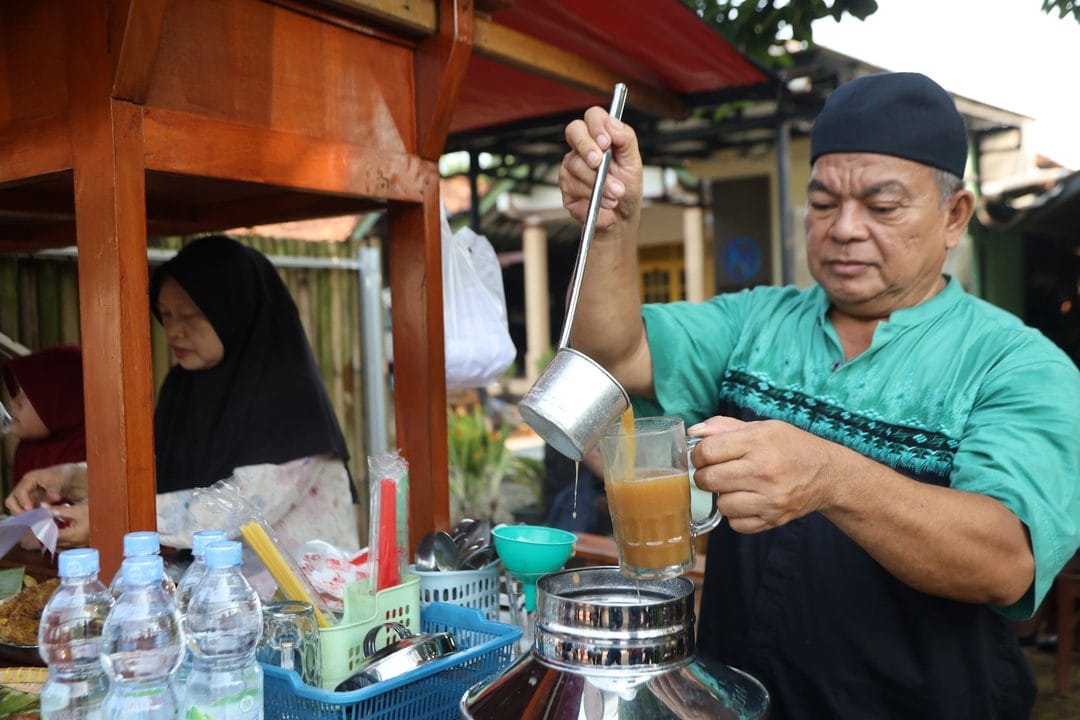
At half past midnight on a Tuesday, the mamak stall on Jalan SS2/64 in Petaling Jaya is doing better business than most restaurants manage at lunch. A waiter pours tea between two stainless-steel cups held a metre apart, stretching the stream into a long amber ribbon that froths on impact — teh tarik, pulled tea, the closest thing Malaysia has to a national theatrical act performed on demand. Three tables over, a group of students has commandeered a corner with laptops and a single plate of roti canai they ordered two hours ago and never finished. A television bolted to the wall is showing Arsenal against Newcastle, and nobody in the room seems to notice that it's a Tuesday at all. This is not a special occasion. It's just what a mamak stall looks like at any hour that ends in the wrong side of midnight.
Where the Word Comes From
"Mamak" is Tamil, and it means something close to maternal uncle — an informal, respectful term that got attached to the Tamil Muslim traders who arrived on the Malay Peninsula from the Coromandel Coast of South India, many of them through Penang and Malacca, over the eighteenth and nineteenth centuries. These traders and their descendants became one of the most economically visible minority communities in colonial and postcolonial Malaya, running textile shops, moneylending stalls, and eventually the food businesses that would define the term for later generations. By the time Malaysia existed as a country, "mamak" had shifted from describing a person to describing a type of restaurant — halal, South Indian–Malay in its menu, and almost always run by someone from that same Tamil Muslim community, whether the sign out front says Restoran Yusuf, Restoran Ali, or nothing legible at all.
The food itself tells the migration story better than any plaque could. Roti canai — a laminated flatbread fried on a flat griddle and torn apart with your hands — descends from the Indian paratha but has become so thoroughly Malaysian that most locals would be surprised to learn it isn't indigenous. Thosai, murtabak stuffed with minced meat and egg, and nasi kandar — rice ladled with a rotating cast of curries, a Penang mamak specialty associated with shops like Line Clear — sit on the same laminated menu as unmistakably Malay dishes: nasi lemak, mee goreng mamak fried with a signature sweetish-spicy sauce, and maggi goreng, the instant-noodle stir-fry that barely exists outside mamak kitchens. Nobody at the table asks whether a dish is "really" Indian or Malay. The menu solved that argument decades before anyone thought to have it.
The Ritual at the Centre of the Table
Teh tarik is not just a drink order — it's a small performance, and mamak waiters take visible pride in the pull. The technique exists for a practical reason: pouring condensed-milk tea back and forth between two vessels from a height cools it to drinking temperature while whipping air into the liquid, giving it a frothy head closer to a cappuccino than a cup of tea. Regulars order it "kurang manis" (less sweet) or "o" (without milk, just black tea), and the vocabulary around variations — teh ais, teh halia with ginger, kopi-o kosong for someone avoiding sugar entirely — is its own small dialect that every mamak waiter speaks fluently regardless of which language the table is speaking.
What makes the ritual worth writing about is what it signals rather than what it tastes like. Ordering teh tarik at 2am doesn't mark you as someone doing something unusual; it marks you as someone doing exactly what the building was built for. The stool matters too — mamak stalls are furnished almost uniformly with red plastic chairs (the Niko brand became so ubiquitous it's practically synonymous with the format) and Formica-topped tables bolted or simply too heavy to bother moving, because nobody designed these spaces to look good in photographs. They were designed to survive spilled curry, monsoon humidity, and eighteen-hour operating days without falling apart, and on that measure they've succeeded for longer than most branded furniture lines have existed.
A Table Everyone Can Sit At
Malaysia's population splits roughly between Malay, Chinese, and Indian communities, plus smaller groups in East Malaysia, and much of the country's social infrastructure — schools, housing patterns, even entertainment — has historically sorted people along those lines more than politicians like to admit. The mamak stall is one of the few genuinely mixed spaces in that landscape, and the reason is structural rather than sentimental. Because the food is halal, Malay Muslim customers can eat there without a second thought. Because it isn't a private club or an alcohol-serving bar, Chinese and Indian customers who might feel out of place in a strictly Malay or strictly Chinese establishment don't feel that friction either. And because it's open when almost nothing else is, it becomes the default answer to "where do we go now" for any group, at any hour, regardless of who's paying.
That neutrality is not an accident of good intentions. It's a byproduct of a halal-certified, all-hours business model that happened to remove every friction point that keeps Malaysia's communities eating in separate rooms elsewhere. Skip the argument about whether this makes mamak culture more important than it looks — it does, and Malaysians who've spent time overseas tend to say so unprompted the moment they're asked what they miss.
Ninety Minutes of Extra Time
Nowhere is the mamak stall's role as neutral ground more visible than during an English Premier League match. Malaysia has one of the most fervent EPL fan bases outside the UK, and mamak stalls — with their late hours, cheap seating, and multiple wall-mounted televisions — became the default venue for watching matches that kick off well after midnight local time because of the time difference. Manchester United and Liverpool support in Malaysia runs deep enough to be a genuine subcultural identity, and on a big match night a popular mamak stall will fill up the way a sports bar does elsewhere, minus the beer and minus the cover charge. Waiters keep pouring teh tarik through stoppage time; nobody's asked to leave when the match ends at 3am, because the kitchen never really closes anyway.
Politics at Plastic Tables
The stalls have also earned a reputation, only half-jokingly, as Malaysia's most honest parliament. Malaysian journalists and commentators have long used "mamak talk" as shorthand for the loose, unfiltered political and social debate that happens over teh tarik among people who'd never share a stage but will happily argue across a plastic table until 4am. It's cheap enough that nobody's excluded by price, public enough that nobody's performing for cameras, and informal enough that positions can shift mid-conversation without anyone losing face. Whether that actually shapes policy is a different question — but as a pressure valve for a society that doesn't always have many informal venues for cross-ethnic argument, the mamak stall does real work that no white paper has managed to replicate.
Where to Find the Real Thing
Skip the mall food courts and head straight for a street-level strip — Petaling Jaya's SS2 neighbourhood built its identity partly around its mamak strip, a cluster of stalls, several of them decades old, that locals still argue over by name rather than by location. Section 17 in PJ carries a similar reputation among an older crowd, and Bangsar's mamak corners sit a short walk from bars charging five times the price for a fraction of the atmosphere. In Penang, the nasi kandar tradition — mamak in spirit but distinct enough in its rice-and-curry format to count as its own genre — centres on old-guard names like Line Clear, operating out of a converted alley stall for generations before health authorities eventually moved it into a proper shoplot.
- SS2, Petaling Jaya — the closest thing Malaysia has to a mamak pilgrimage site, especially after midnight
- Section 17, Petaling Jaya — older, quieter, favoured by a generation that remembers when SS2 looked the same way
- Bangsar — mamak stalls operating in the shadow of the neighbourhood's pricier bar scene
- Jalan Alor and the wider KL city centre — tourist-facing, louder, and worth it anyway for the sheer density of choice
- Georgetown, Penang — the nasi kandar heartland, where Line Clear and its rivals do a version of the format the Klang Valley never quite replicated
The Franchise Era
Standardisation was inevitable.
What started as family-run roadside stalls has, over the past two decades, produced genuine chains. Nasi Kandar Pelita grew from a single Kuala Lumpur outlet into a multi-branch operation with locations across the Klang Valley and franchised outposts as far as the Middle East, proof that the format travels once someone standardises the supply chain behind it. That scale brings the predictable trade-off: a Pelita branch in a shopping mall food court delivers consistency but rarely the specific, slightly burnt-edge char of a roti canai made by the same uncle who's been flipping dough on the same griddle since before the customer was born. Malaysians debate this the way people everywhere debate chain versus original — loudly, and without resolution.
Go to the original over the franchise if you have the choice; the difference in the roti alone justifies the extra ten minutes it takes to find a proper stall instead of a food-court outlet. What hasn't changed, chain or not, is the shape of the evening itself — plastic chairs, a pot of tea pulled too high for comfort, a screen showing a match nobody in the room has a direct stake in, and a room full of people who wouldn't necessarily eat together anywhere else in the city, doing exactly that, at an hour when the rest of Kuala Lumpur has long since gone quiet.