The Private Room Economy: How Karaoke Boxes Run Asia's After-Hours Social Life
The bar counter lost. Across Tokyo, Seoul, Taipei and Hong Kong, the real after-hours social life happens behind a soundproofed door, booked by the hour.
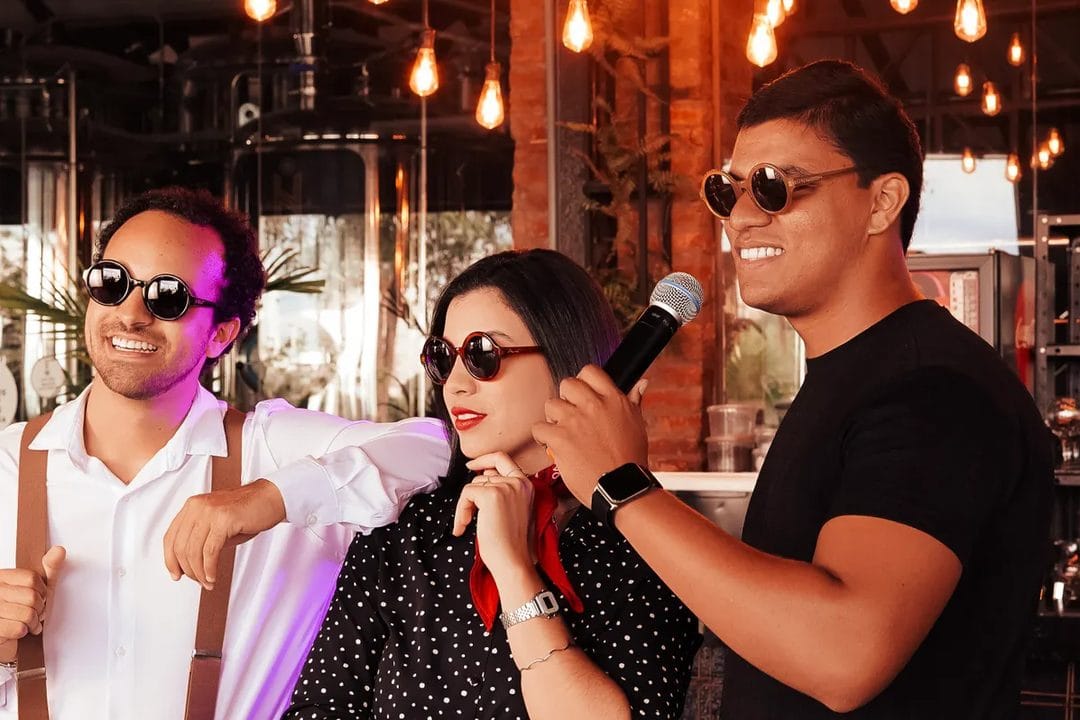
Nobody in Shibuya arranges a night out around a bar stool anymore. They arrange it around a room number. Walk past Karaoke Kan on Dogenzaka after 9pm on a Friday and the queue isn't for a table — it's for the lift, because every one of the building's eight floors is a separate booking, and the front desk is running a waitlist on a tablet the way a restaurant runs one for brunch. This is not a niche habit. It's the default unit of a night out in half the cities this network covers, and almost nobody writing about Asian nightlife in English treats it as the main event instead of a novelty stop before "real" drinking starts.
Tokyo: The Box That Built the Category
Big Echo and Karaoke Kan are the two chains that actually matter in Tokyo, and they behave completely differently depending on the hour. A weekday afternoon booking at Big Echo runs about ¥1,500 an hour with the drink bar included — cheap enough that university students use the rooms as informal study lounges between classes, which the chains quietly tolerate because it fills daytime capacity that would otherwise sit empty. Push the same booking to 9pm on a Friday and the price roughly doubles, the drink bar switches to a version with actual cocktails, and the room becomes something closer to a private nightclub for six people. Karaoke Kan's Shibuya branch gets tourist traffic for one reason — it's the building from Lost in Translation — but the locals booking rooms there on a Tuesday couldn't care less about the film reference. What they care about is that a party of eight can rent a room with a sofa, a microphone each, and zero risk of anyone eavesdropping on the conversation, for less than the cost of a round of drinks at an izakaya. That's the actual value proposition, and it has nothing to do with singing ability.
Hitokara: Solo Booking Is Not a Compromise
Solo karaoke — hitokara — stopped being a slightly sad fallback around the time Big Echo started building single-occupancy rooms with better acoustics than the group ones. Ichiban Boshi and several smaller chains in Shinjuku now run dedicated solo floors, and the booking patterns show up most heavily right after work, between 7 and 9pm, before the commute home. Nobody there is performing for anyone. It's forty minutes of decompression that costs less than a beer.
Seoul: Two Completely Different Products Share a Name
Coin noraebang and standard noraebang are not the same experience, and conflating them is the fastest way to spot someone who's never actually lived in Seoul. A coin room in Hongdae takes ₩1,000 for roughly two songs, no reservation, no time limit beyond how much cash is in your pocket — it's built for a five-minute detour between bars, not a planned night. A booked room in Gangnam runs ₩15,000–25,000 an hour split between however many people show up, and comes with a customary bonus — service time, an extra ten or twenty minutes tacked on free at the end, which every regular knows to ask for and every tourist forgets to.
The unwritten rule in a group booking is that nobody sings alone unless they're clearly enjoying it — Korean karaoke etiquette treats the room as collective property, and someone hogging the microphone through three consecutive ballads gets a look, not applause. Go in a group of six or more and split a room in Gangnam or Konkuk University over one in Itaewon, where the same square footage costs noticeably more because the crowd skews toward expats willing to pay it.
Taipei: The Afternoon Package Nobody Outside Asia Understands
錢櫃 (Cashbox) and 好樂迪 (Holiday KTV) run Taipei's karaoke economy almost as a duopoly, and both built their business model around a slot nobody else on this list bothers with — the 下午場, the afternoon package. Book a room between roughly 1pm and 6pm on a weekday and the per-person rate at a Ximending branch drops to somewhere around NT$150–250 for a three-hour block, buffet included at some locations. Push the same booking into a Friday evening slot and it climbs past NT$500 per person, no buffet, higher deposit.
- Ximending branches skew toward students and after-school groups, loud, low-stakes, cheap.
- Zhongxiao Dunhua locations pull an office crowd doing team dinners disguised as karaoke, and the buffet spread there is genuinely worth showing up hungry for.
- A handful of smaller independent KTVs near Shida still take walk-ins with no reservation at all, which the two big chains stopped doing years ago — and there are quieter branches out in Neihu and Banqiao worth checking too, among others, if the group is already on that side of the city.
Skip Cashbox on a Saturday night unless the booking was made at least a day in advance — walk-in availability on weekend evenings is close to zero at the popular branches, and the front desk will say so without apology.
Hong Kong: Smaller Rooms, Sharper Price Split
Neway and Red MR dominate Hong Kong the way Cashbox dominates Taipei, but the room sizes run smaller and the pricing logic is stricter about time blocks rather than flat packages. A weekday afternoon room at a Causeway Bay Neway runs roughly HK$100–150 an hour per room — not per person — which makes it genuinely cheap for a pair, absurdly cheap split six ways. Friday and Saturday evening bookings at the same branch can hit HK$400–500 an hour, and Red MR's flagship at K11 Musea trades on being the nicer, newer option with better sound isolation, which matters more than it sounds like it should in a city where the room next door is audible through most older KTV walls.
Here's the part that surprises people who've only done karaoke in Tokyo or Seoul: Hong Kong rooms rarely include a proper drink bar in the base price. Drinks get added separately, sometimes at a real markup, so a group that budgets only for the room ends up paying more than expected once the bill for beer and snacks lands. Factor that in before comparing sticker prices across cities — Hong Kong's headline hourly rate looks cheapest on paper and often isn't, once the drinks tab is added.
Why the Room Wins Over the Bar
Rent a living room by the hour and the whole calculus of a night out changes.
That's the entire mechanism, and it solves a problem that Asia's dense, expensive cities create structurally: there's nowhere else to be loud, unfiltered and among only the people you chose, without either paying nightclub-level cover charges or crowding into someone's actual apartment. A karaoke room has better acoustics than most real flats in Tokyo, Hong Kong or Seoul, and split among a group it beats the cost of a single round at most bars in those same cities. It also explains a generational split that regional operators have quietly noticed but rarely discuss on the record — younger groups increasingly book rooms specifically to avoid alcohol-centred socialising, ordering soft drinks and snacks instead of the beer package, using the private space for conversation and games rather than performance. Not every group treats the room the same way, though: a birthday party of twelve at a Gangnam noraebang and a pair of coworkers decompressing after a bad week at a Big Echo solo floor are using the identical product for opposite reasons, and the room accommodates both without changing anything about how it's built.
Booking It Right
If you're weighing which of these four cities gives the better deal, run the afternoon-versus-evening math first — the price gap between a 2pm and an 8pm booking at Cashbox, Neway or Big Echo is large enough to change which city feels cheaper, and it's the single biggest lever available to anyone actually paying attention to the bill. Treat the group size as a pricing decision too, not just a social one: Hong Kong and Taipei price by the room, so a group of eight splitting a Neway booking pays a fraction of what two people would pay per head, while Seoul's per-hour room rate plus service-time bonus rewards exactly the same math.
The one thing that doesn't change across any of these four cities is the etiquette around walking in mid-song during someone else's turn — don't, regardless of how well you think you know the group. Beyond that, the format is flexible enough to fit a first date, a work team-building session forced by HR, or a solo hour of decompression on a Tuesday, and the room itself never asks which one it's hosting.