Inside Thao Dien: How Saigon's River District Became Vietnam's Coworking and Cafe Capital
Villas turned into coworking hubs, a coffee scene that rivals Melbourne's, and rent that still undercuts most of Southeast Asia -- Thao Dien is Saigon's most-discussed ward for a reason.
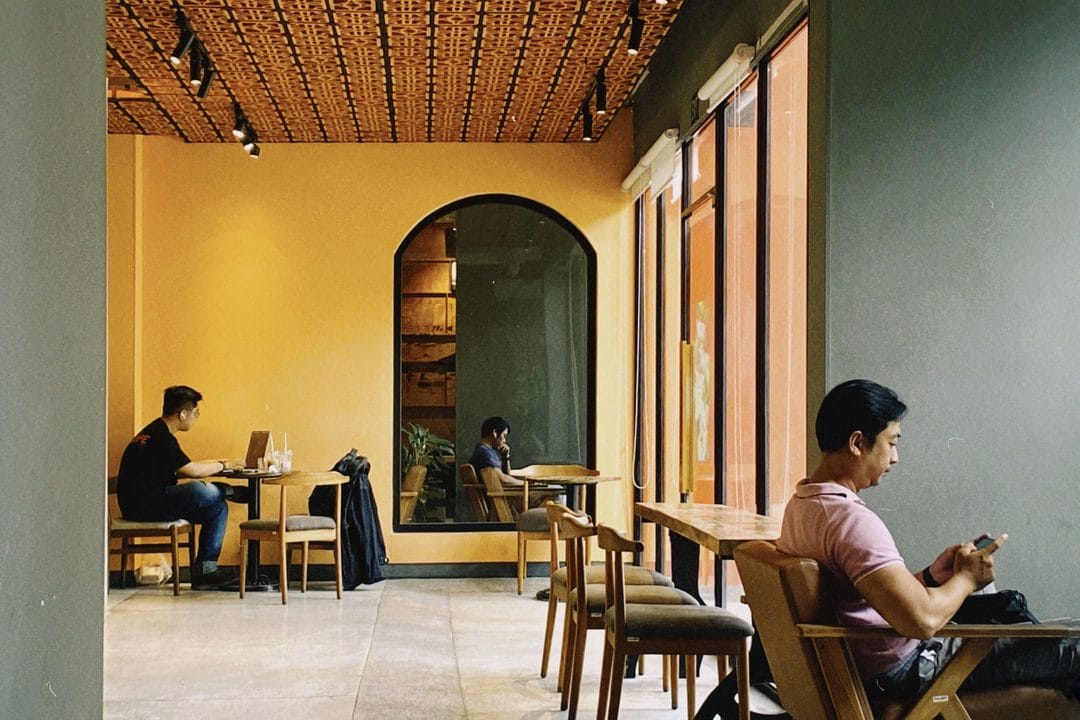
Cross the Thao Dien pedestrian bridge at eight on a weekday morning and you'll pass three laptops before you reach the other side — freelancers claiming a bench seat with a flat white before the coworking spaces fill up. A decade ago this stretch of Thu Duc City, on the east bank of the Saigon River, was still mostly rice-paddy villas and quiet lanes favoured by a handful of long-term expats. Today it's the ward every relocation agent in Ho Chi Minh City name-drops first, and the reason has less to do with the river views than with what moved into the villas along Xuan Thuy and Nguyen Van Huong streets.
The ward that outgrew District 2
Thao Dien was folded into Thu Duc City when Ho Chi Minh City merged Districts 2, 9, and Thu Duc in 2021, but locals still call it "D2" out of habit — the same way people in London still say "the City" instead of the postcode. What makes the ward distinct from the rest of Thu Duc is density of a very specific kind: international schools within walking distance of each other, a villa-to-apartment ratio unmatched anywhere else in the city, and a business registry that reads like a directory of boutique agencies, design studios, and single-founder consultancies. British International School and Australian International School both sit inside a fifteen-minute walk of the river, and that school catchment is precisely why so many mid-career professionals with families settled here first and only later noticed the neighbourhood had turned into a workspace of its own.
The transformation wasn't planned by any single developer. It happened villa by villa, as landlords realised that converting a ground floor into a café or a shared office earned more per square metre than renting the whole house to one family. Walk down Thao Dien Street today and you'll see the pattern repeat: a French colonial-style villa with a coworking sign bolted to the gate, a specialty coffee roaster next door, a yoga studio above a nail salon two doors down. Some of the original owners still live upstairs, renting out the ground floor while keeping the family quarters above — a version of mixed-use zoning nobody drew up on paper but that works well enough that city planners rarely intervene. None of it was zoned this way in any formal sense — it simply became the most profitable use of the housing stock, and the ward followed the money rather than a masterplan. That distinction matters more than it sounds: unlike the purpose-built commercial strips of District 1, Thao Dien's layout still traces the footprint of a residential suburb, which is exactly why it feels more like a garden campus than a business district.
Coworking desks with river views
Toong, the Vietnamese coworking chain that started in Hanoi, runs one of its largest Ho Chi Minh City locations in Thao Dien, and it's built around exactly the villa-conversion logic described above — high ceilings, garden courtyards, meeting rooms that used to be bedrooms. Dreamplex, the other major domestic player, keeps a presence in the district too, catering to the same crowd of small teams who'd rather pay for a hot desk than sign a two-year office lease during a period when remote hiring makes long commitments feel unnecessary. Day passes at the mid-tier spaces run somewhere in the $10–15 range, with monthly hot-desk memberships typically landing between $80 and $150 depending on how much meeting-room time is bundled in — cheap enough that a solo consultant billing in USD or EUR barely notices the line item.
What's easy to miss if you've only read about Thao Dien online is how much of the actual work happens outside the formal coworking spaces. The café-as-office model is not a fallback here — it's the default, and it shapes how the whole ward is built. Reliable fibre internet, unlimited seating time as long as you keep ordering, and air conditioning strong enough to need a jacket by noon mean a surprising share of the ward's freelancers never bother with a membership at all. Ask around and you'll hear the same handful of café names repeated as unofficial "offices" — regulars who've claimed the same corner table for months, baristas who know their order before they sit down. Skip the coworking pass if your work doesn't require confidential calls or a fixed desk; a decent café chair and a $3 iced coffee will get you through most days just fine. The maths only breaks down once you need a proper meeting room or a mailing address for business registration, which is when the formal coworking memberships start to earn their keep.
The café circuit that built a reputation
The Deck Saigon anchors the riverside end of the ward — part restaurant, part all-day workspace, with a deck literally suspended over the water and a menu that swings from Vietnamese breakfast to modern Australian brunch. It's touristy by local standards now, but it earned that status the hard way, having operated in roughly the same spot since well before Thao Dien became a name outsiders recognised. A few streets inland, the specialty roasters do the quieter, more serious work: single-origin beans sourced from Da Lat's Cau Dat plateau and Dak Lak's Robusta belt, pour-over menus that would look at home in Melbourne or Seoul, baristas who'll talk you through processing methods if you ask.
Vietnamese-style egg coffee and coconut coffee still outsell the third-wave pour-overs by a wide margin, and that's worth sitting with for a second — the café scene here isn't a Western import that replaced local taste, it's local taste that absorbed a Western format and kept its own drinks on top of the menu. A flat white runs $2.50–3.50 at most of the ward's better-known spots, noticeably higher than a $1 phin coffee from a street vendor three minutes away, and both survive because they're serving different rituals, not competing for the same customer.
Weekend rhythm: markets, river walks, and villa gardens
Saturday mornings belong to the farmers' markets that rotate through villa courtyards and community spaces — organic produce trucked in from Da Lat, small-batch kombucha, imported cheese stalls that cater to the school-run crowd as much as anyone chasing a specific ingredient. Thao Dien Village, the open-air retail and dining cluster near the river, fills up by early evening with a mix of long-term residents, weekend visitors from District 1, and increasingly, young Vietnamese professionals who've started treating the ward as a destination rather than an expat enclave to observe from a distance.
- Sunday brunch spots along Quoc Huong and Thao Dien streets get a genuine queue by 10am — arrive before 9:30 or expect a 20-minute wait, and don't bother booking, most don't take reservations.
- The riverside promenade near Thao Dien Pearl is the closest thing the ward has to a proper waterfront walk, though it's short — plan fifteen minutes, not an hour.
- Bike rental stalls near the market cluster charge roughly $2–4 for a half-day, and the flat villa streets make it one of the few genuinely pleasant cycling pockets in the entire city.
What it actually costs to live here
Rent is where Thao Dien's reputation gets complicated. A one-bedroom apartment in one of the newer towers — Masteri Thao Dien, The Vista, or Thao Dien Pearl — typically lists between $600 and $1,000 a month, while a full villa with a garden can run $1,800 to $3,500 depending on size and how recently it was renovated. That's meaningfully above the citywide average for Ho Chi Minh City, where a comparable one-bedroom in District 7 or Binh Thanh often comes in a few hundred dollars cheaper. Choose the towers over a villa if budget matters more than square footage — the newer buildings include amenities like pools and gyms that would otherwise cost extra, and the maintenance headaches of an ageing villa (leaky roofs, unreliable plumbing) aren't included in that "aspirational" rent figure.
What doesn't scale up with the rent is daily spend once you're settled: a full lunch set at a local eatery still costs $3–5, a Grab ride across the ward rarely exceeds $2, and the fibre internet packages that make the café-office model possible run under $15 a month for speeds that would embarrass most Western providers. It's this gap — premium housing cost sitting on top of otherwise low running costs — that explains why Thao Dien attracts a specific kind of resident: people whose income arrives from outside Vietnam and whose spending happens almost entirely inside it.
The trade-off nobody puts in the brochure
None of this comes without friction. Rainy season flooding on Nguyen Van Huong and a handful of low-lying lanes still catches out delivery drivers and pedestrians every year between June and September, and the single road bridge connecting the ward to District 1 backs up hard enough during evening rush hour that a five-kilometre trip can take forty minutes. Longtime residents grumble, accurately, that the villa gardens which gave the ward its identity are shrinking year over year as developers buy up adjoining plots for taller, denser builds — the same commercial logic that turned ground floors into cafés is now turning entire villa compounds into mid-rise apartments, and nobody's certain how much of the original character survives the next decade of that math.
Even so, the ward keeps absorbing new residents faster than the infrastructure catches up, and that tension is arguably the clearest signal of how Ho Chi Minh City's urban geography is being redrawn. Thao Dien didn't get planned into existence by a masterplan or a government zoning decision — it got built, café by café and villa by villa, by people who needed a place to work that felt more like a garden than an office block, and who were willing to pay the premium that came with it.