Tokyo Just Cracked the World's Top 10 Most Liveable Cities. Osaka Still Beats It.
Tokyo entered the EIU's world top 10 most liveable cities for the first time in 2026, but Osaka still outranks it. Here's what the numbers actually mean on the ground.
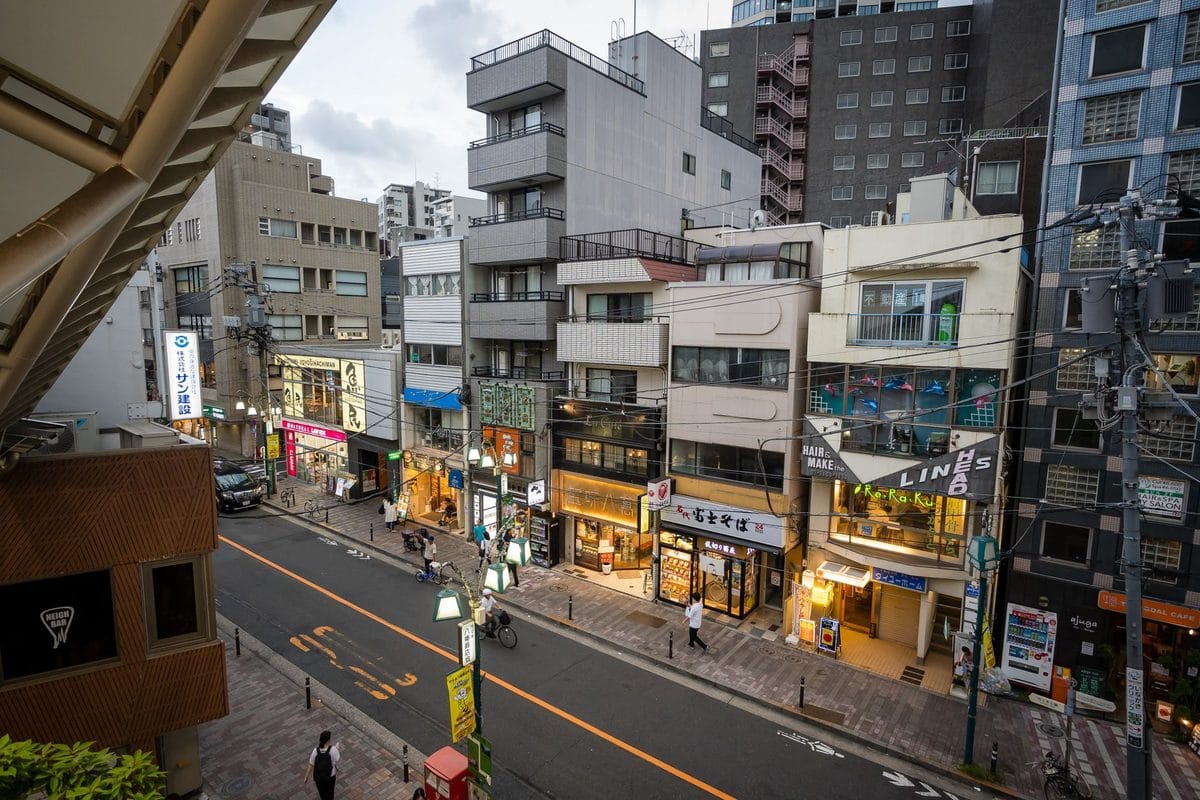
Walk from the quiet backstreets of Yanaka down toward Nishiogikubo on a weekday evening and you'll pass maybe four convenience stores in fifteen minutes, each one lit, staffed, and stocked at 9pm on a Tuesday like it's the middle of the day. Nobody in Tokyo thinks twice about this. It's just the city working the way it's supposed to. The Economist Intelligence Unit apparently agrees: on July 7, 2026, the EIU released its Global Liveability Index for 173 cities worldwide, and for the first time ever, Tokyo cracked the top 10 — climbing from 13th place to 10th with an overall score of 96 out of 100.
Osaka, three hundred miles down the Tokaido line, wasn't impressed. Japan's third-largest city held onto 7th place for a second consecutive year, also scoring 96, which means two Japanese cities now sit inside the world's top 10 for the first time in the index's history. Copenhagen topped the ranking at 98, with Vienna, Melbourne, Sydney, Zurich and Geneva filling out the rest of the top six before Osaka, Adelaide, Vancouver and Tokyo close out the list. Every single city in that top 10 shares one thing: a perfect 100 for education. Beyond that, though, the two Japanese entries diverge in a way that says a lot about what actually makes a city livable versus what makes it merely well-scored.
What "Culture and Environment" Looks Like on the Ground in Tokyo
The EIU weighs five categories — Stability (25%), Culture and Environment (25%), Healthcare (20%), Infrastructure (20%) and Education (10%) — and Tokyo's jump into the top 10 came specifically from a rise in its culture-and-environment score, which now sits at 89 against Osaka's 87. On paper that's a two-point gap. On the street, it's the difference between a city that has quietly become one of the cleanest, safest, and most culturally dense places on the planet and one that's already excellent but slightly behind on the margins.
Start with the obvious: Japan's homicide rate hovers around 0.2 per 100,000 people, among the lowest of any developed nation, and it shows in how the city actually feels after dark. Women walk home alone through Koenji and Sangenjaya at midnight without a second thought — something visitors from most other capital cities never quite get used to. Add roughly 56,000 convenience stores nationwide, split between 7-Eleven, FamilyMart, and Lawson, and you get a city where a hot meal, a phone charger, or an ATM is never more than a few minutes' walk away, at any hour, in any ward. Green space isn't an afterthought either — Yoyogi Park and the forested grounds of Meiji Jingu sit a ten-minute walk from Harajuku's crowds, and teamLab Borderless, which relocated to Azabudai Hills in early 2024, now pulls over a million visitors a year into a former office-tower basement turned art installation. None of this is new information to anyone who's lived there. What's new is that an index built on hard metrics — air quality readings, crime statistics, cultural infrastructure counts — finally caught up with what residents have been saying for years.
Why Osaka Still Wins on the Numbers
Osaka's infrastructure score came in at 93, comfortably ahead of Tokyo's in the same category, and that single figure explains most of the gap between the two cities' final rankings.
Speaking to reporters after the release, EIU's head of livability Akshay Rathi framed the distinction plainly: both cities have excellent services and an excellent quality of life, but Osaka's edge comes down to accessibility rather than availability — not what a city offers, but how easily residents can actually reach it. That distinction plays out block by block. Osaka's downtown core is compact and flat, built on a grid that lets you walk between Umeda and Namba — its two major commercial hubs — in under thirty minutes, or cover the same distance on the Midosuji subway line in roughly ten. Tokyo's twenty-three wards sprawl across a metro area more than four times Osaka's size, and getting from, say, Kichijoji to Kinshicho can eat the better part of an hour even with a well-timed Chuo Line transfer. Rent tracks the same pattern: a one-bedroom apartment in central Osaka typically runs 20 to 30% cheaper than an equivalent unit in Minato or Shibuya, according to listings tracked by major Japanese rental platforms like SUUMO and HOME'S.
The Trade-Off Nobody Puts on a Scorecard
Here's the catch the index doesn't measure: Osaka's accessibility advantage doesn't translate into career opportunity. Tokyo still dominates as Japan's headquarters city — most multinational offices, the bulk of finance and tech hiring, and the highest salary ceilings in the country all cluster inside the Yamanote Line loop, and that gap hasn't narrowed just because Osaka scored two points better on infrastructure this year.
If salary trajectory and international job access matter more to you than a shorter commute, Tokyo is still the better bet, full stop. But for anyone weighing quality of daily life against career ceiling — remote workers, retirees, small-business owners who don't need a Tokyo address to operate — Osaka is the smarter place to actually settle, and the EIU's own accessibility framing backs that up even if the final score doesn't reflect it directly.
Both Cities Hit the Ceiling on the Basics
Tokyo and Osaka posted identical, maxed-out scores of 100 in stability, healthcare, and education — the three categories where Japan's national systems apply more or less uniformly regardless of which city you're in. Universal healthcare coverage, a low-crime national baseline, and a standardized education system mean that wherever you live in urban Japan, you're starting from the same floor. The real competition between the two cities happens entirely inside the remaining categories: culture and environment, where Tokyo's density of museums, parks, and cultural programming narrowly wins out, and infrastructure, where Osaka's tighter, more walkable footprint takes the prize.
Asia's Broader Climb Up the Index
Tokyo and Osaka's results aren't happening in isolation. The EIU singled out Asia as 2026's most-improved region overall, with the average score across the index's 58 Asian cities rising 0.3 points to 73.9 — enough to edge past Eastern Europe for the first time. Much of that gain came from healthcare: all 19 Chinese cities tracked in the index improved their healthcare scores this year, a reflection of years of hospital investment and infrastructure spending in cities like Nanjing, which posted some of the sharpest single-year gains anywhere in the report. Culture and environment scores in most Chinese cities remain comparatively low, which the EIU attributes directly to restrictions on political freedoms — a category where investment alone can't move the needle.
The pattern extends well past Japan and China. Time Out's 2026 Best Cities survey, released separately from the EIU index, put Singapore, Hong Kong, and Shanghai among Asia's top performers for affordability and happiness, with Seoul residents reporting some of the highest life-satisfaction numbers in the region — 79% said the city actively contributes to their happiness. Shanghai in particular claimed the number-two global spot in that survey, ahead of London, Paris, and New York, largely on the strength of its affordability scores. Put together, these rankings tell a consistent story: the gap between Asia's best cities and Western Europe's long-dominant capitals is closing faster than it has in years, and Tokyo's arrival in the EIU top 10 is just the most visible marker of a trend that's been building across the whole region.
What This Actually Means If You're Choosing Between Them
Neither city needs the index's validation to justify a move — people have been choosing between Tokyo and Osaka for career versus lifestyle reasons long before the EIU put numbers on it. What the 2026 index does is confirm something residents already sensed: the two cities aren't competing on the same axis anymore. Tokyo wins on scale, culture, and career ceiling. Osaka wins on how little friction stands between you and the life you're actually trying to live day to day. Neither of those is a consolation prize, and pretending otherwise misses the point of why both cities made the list at all.