The Asian Park Bench Hour: Why Urban Asia Built Its Best Public Spaces Around the Late Afternoon
Across Tokyo, Seoul, Taipei, Singapore and Hong Kong, the late afternoon park bench is the secret architecture that makes Asian cities liveable.
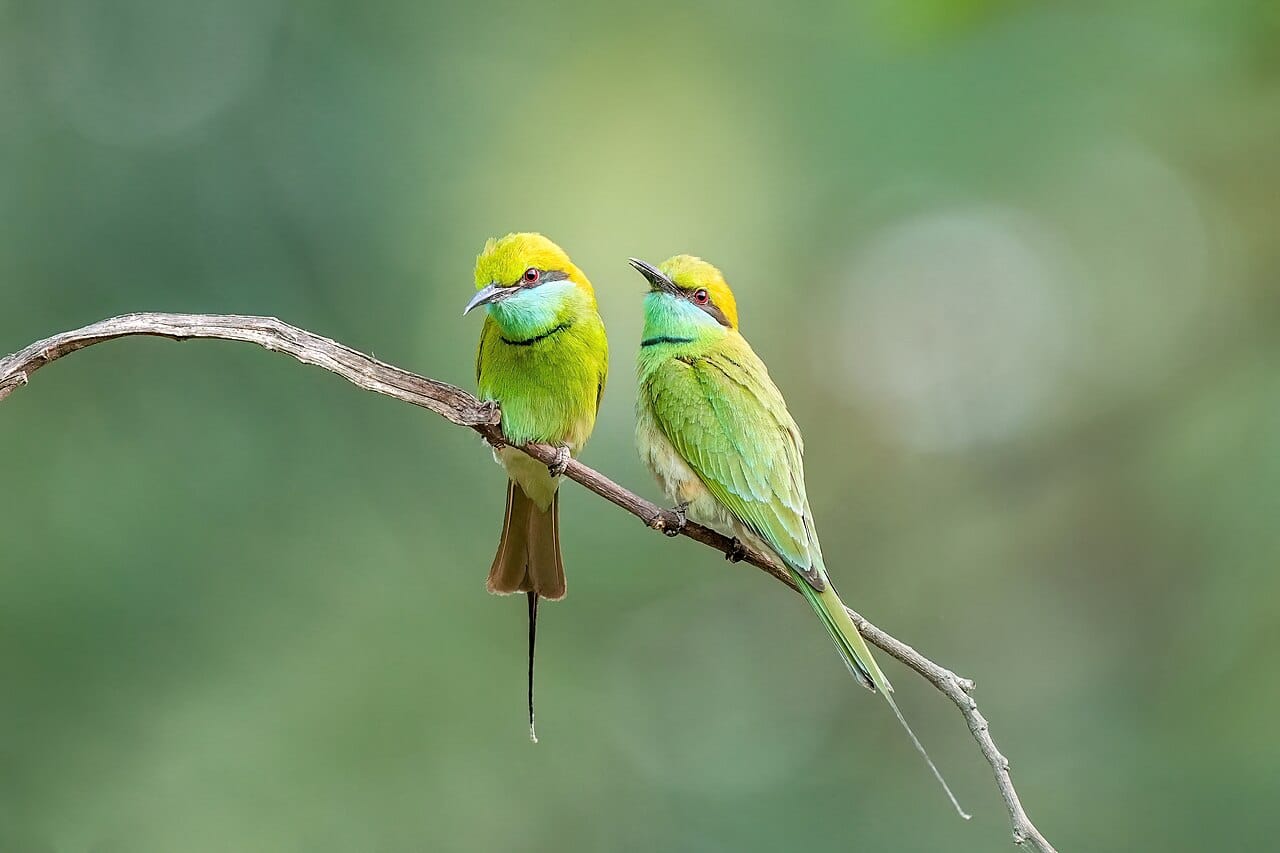
Between 16:30 and 18:30, in roughly that order: Singapore's East Coast Park fills with old men playing chess on portable boards, Taipei's Da'an Forest Park acquires a soundtrack of erhu and saxophone practice from amateurs who refuse to compete with each other, Tokyo's Yoyogi Park draws a slow-moving river of strollers wheeling toddlers between the cherry stumps, Seoul's Hangang riverside benches collect office workers loosening ties before dinner, and Hong Kong's Victoria Park benches host the elderly who have been waiting since 14:00 for the heat to break. None of this is coordinated. All of it happens, every day, with a regularity you can almost set a watch by.
The Asian park bench hour is, I have come to believe, one of the most underappreciated achievements of urban design in the modern world. While European cities celebrate their plazas and American cities argue about their parks, Asia has quietly built something subtler: a daily window in which dense, expensive, exhausting cities offer their inhabitants a free, predictable, almost ritual access to public space. The hour is short. The hour is sacred. The hour is, for hundreds of millions of people, the actual reason their city is liveable.
The geometry of the bench
Pay attention to the benches themselves. In Singapore, they are concrete with teak slats, oriented toward water or shade. In Tokyo, they are unpainted wood, often without backs, designed for short stops rather than long sittings. In Seoul, they are increasingly steel and recycled plastic, branded with district logos. In Taipei, they are eclectic, a mix of municipal benches and private offerings outside cafes and convenience stores. In Hong Kong, they are dense, plentiful and surprisingly comfortable for a city famous for its hostility to lingering.
The shared quality, across all five cities, is that the benches are placed for use. They face useful things: the water, the children's playground, the chessboard tables, the path, the view. They are sized for two to three adults sitting close, not the four-to-five-adult European park bench. They are spaced at intervals of roughly 30 to 50 metres, close enough to feel populated, far enough to allow private conversation.
What the benches are not
They are not, importantly, anti-homeless. The hostile architecture that has spread across Western cities, with armrests every 60 centimetres, slanted seats and motion-activated speakers, is largely absent in East Asian parks. Tokyo and Seoul have introduced limited armrest interventions in specific neighbourhoods, but the underlying design philosophy still treats the bench as public infrastructure rather than as a defensive perimeter.
The choreography of the late afternoon
Watch a Tokyo park between 16:00 and 18:00 over a week and you begin to see a choreography. The earliest arrivals, between 15:30 and 16:00, are mothers with very small children who have just woken from a nap. By 16:30, the elderly arrive in groups of three or four, the chess players first, the gossip groups second. By 17:00, the salaryman commute begins to bleed into the parks, with men in suits eating konbini onigiri on benches before continuing home. By 17:30, the joggers and stretchers arrive. By 18:00, the dog walkers. By 18:30, the parks are emptying for dinner, and by 19:00, in most neighbourhoods, the benches are largely empty again until the next morning.
The pattern repeats, with local variations, across the region. In Singapore, the heat shifts the timing earlier in cooler weather and later in hotter months. In Seoul, winter compresses the hour to roughly 15:00 to 16:30, when sunset arrives by 17:15. In Hong Kong's wet season, the hour fragments into rain-shaped pieces, with everyone retreating to the covered footbridges that effectively serve as parks-of-last-resort.
What people actually do
- Listen to the radio on small portable speakers, often news or Cantonese opera, often at volumes that surprise visitors but rarely irritate locals.
- Eat snacks, particularly fruit, sunflower seeds, dried squid, mochi, or whatever the season has produced.
- Read newspapers, in cities where the printed press is still alive, and increasingly read smartphones in cities where it is not.
- Hold long, slow conversations with neighbours encountered by chance who turn out to be the same neighbours encountered yesterday.
- Watch other people exercise, particularly the morning tai chi groups that double their visibility in late afternoon.
- Wait, simply, for the dinner hour, the cooler air, the spouse to finish work, the grandchild to be released from cram school.
Why the hour exists at all
The Asian park bench hour is not an accident. It is the product of three converging conditions that Western cities have largely lost.
The first is density. When you live in 35 square metres with two children and a grandparent, the apartment is the bedroom, the park is the living room, and the bench is the sofa. The hour exists because the home cannot absorb the late afternoon. This is true in Hong Kong, in Tokyo, in much of Seoul, in Singapore's older HDB estates, and in central Taipei.
The second is heat. East Asian summers are physically punishing in ways that European summers are not. The late afternoon, when the sun has dropped enough to cast long shade and the hottest hours have passed, is the only outdoor window for the elderly and for many caregivers with small children. The cities that have understood this (Singapore most thoroughly, Taipei most pragmatically, Tokyo most aesthetically) have built their parks around the late-afternoon shade pattern.
The third is age structure. Japan, South Korea, Taiwan, Singapore and Hong Kong have median ages above 42, with rapidly aging populations who are healthier and more active than any previous generation of elderly in human history. The park bench hour is, in part, a geriatric institution. It is where the over-70s exercise, socialise, observe their neighbourhood and refuse to disappear from public life.
The economic logic
- The benches are cheap to build and maintain, often funded by district budgets in the low tens of thousands of dollars per kilometre.
- The parks generate no direct revenue, but they produce enormous indirect value through reduced loneliness, improved physical health, and lower per-capita demand for indoor leisure.
- The convenience stores nearby benefit substantially, with 7-Eleven, Lawson, FamilyMart and equivalents across the region effectively functioning as the supply chain for the bench hour.
- Property values within 200 metres of usable parks consistently price 10 to 18 per cent above comparable units further away, according to multiple Asia-Pacific real estate studies.
What the West has not understood
For the past 25 years, Western urbanism has pursued the spectacular: the High Line, Superkilen, the cleaned-up canal, the converted industrial site. These are wonderful and important and have transformed neighbourhoods. But they are also expensive, dependent on programming, and oriented toward visitors rather than residents. They are designed to be looked at, photographed and walked through.
The Asian park bench hour is none of these things. It is designed to be sat in. It does not require programming. It does not require photography. It requires only benches placed sensibly, paths kept walkable, shade left where it is, and a cultural understanding that public space is something used, not something visited.
The lesson, for any city outside Asia thinking about how to make its public realm work harder, is this: build benches in the right places, do not over-design them, do not install hostile features, and let the late afternoon happen. The hour will arrive on its own. The neighbourhood will populate the hour. The benches will become, over years, the most important public infrastructure the city owns.
It is now 17:48 in the Taipei park where I am writing this. The man on the bench across from me has been there since 16:15. He has eaten one mango, read one newspaper, watched two of his neighbours practice tai chi, and answered one phone call. In a few minutes, his wife will arrive on her electric scooter and they will walk home together for dinner. He will be back tomorrow at 16:15. The bench will be ready.