Tokyo's Toranomon Hills After the Final Phase: How One Mori Project Quietly Made Central Tokyo Walkable Again
The Toranomon Hills complex, fully complete in May 2026 after 24 years of phased development, did something Tokyo hadn't seen in central business districts since the 1980s: it made eight square blocks fully walkable. Urban planners across Asia have arrived to study it.
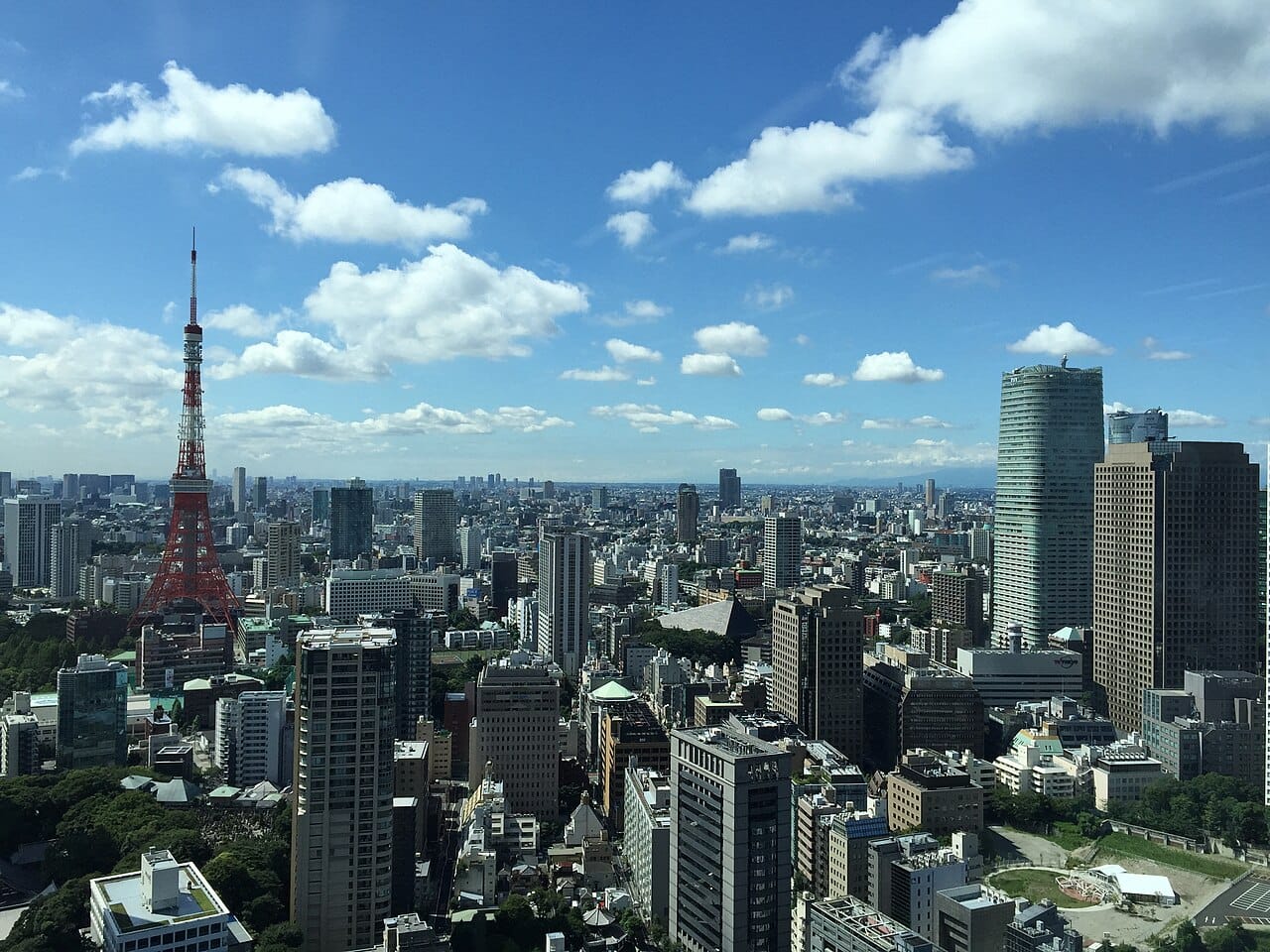
Mori Building's Toranomon Hills complex held its final-phase opening ceremony on 11 May 2026, marking 24 years since the Tokyo Metropolitan Government approved the master plan that would eventually demolish 17 blocks of postwar low-rise mixed-use buildings and replace them with five connected high-rises, an elevated pedestrian network, two underground rapid transit stations, and 3.2 hectares of publicly accessible green space. The result is the most ambitious urban-design experiment in central Tokyo since the Marunouchi redevelopment of the early 2000s — and the most successful by the metric that matters most: people actually walk there.
What "walkable Tokyo" used to mean
For decades, central Tokyo was a paradox: the largest urban transit system in the world delivered passengers from one rail station to another, but the spaces between stations were often hostile to pedestrians. The Toranomon district specifically, until the early 2010s, was an eight-block zone south-east of the Imperial Palace that was busy with cars, dominated by single-purpose office buildings, dead at street level after 7pm, and disconnected from the surrounding Akasaka and Shimbashi neighbourhoods by elevated highways and large boulevards designed for vehicle throughput.
The Mori thesis
Mori Minoru, the founder of Mori Building who died in 2012, articulated a thesis through the 1990s that was unusual in Asian urban planning: density without walkability is failure. His company's earlier projects — Roppongi Hills (2003), Akasaka Sacas (2008), Toranomon Hills Mori Tower (2014) — were trials of the approach. The full Toranomon Hills complex represents the matured implementation.
The five design moves that actually delivered
- Pedestrian deck network at 7 metres elevation: a continuous elevated walkway connects the five Toranomon Hills towers to Toranomon Station, Toranomon Hills Station (new in 2024), Kamiyacho Station, and Onarimon Station. This isn't a covered shopping mall — it's a public deck with seating, plantings and direct access to the towers and street levels. The deck doesn't replace ground-level walkability; it adds a second pedestrian layer that bypasses the worst traffic intersections.
- Toranomon Hills Station integration: the new Hibiya Line station opened in October 2024 with platforms that emerge directly into the complex's public square. Passengers move from train to square in 90 seconds; from square to office building in another 90 seconds. The 'last mile' problem that plagues most CBDs is structurally absent.
- Ground-level retail diversity: ground floors throughout the complex are occupied by a deliberately curated retail mix — independent cafes, two large bookstores, a Don Quijote 24-hour discount store, several stand-and-eat soba and ramen places, a Hanzomon Diner-style 24-hour Japanese diner. This is not luxury retail; it is the daily-life retail that creates 18-hour activity on the streets.
- 3.2 hectares of public green space: this is the surprising element. In a Tokyo neighbourhood where the dominant prior land use was surface parking and undistinguished office plazas, 3.2 hectares of accessible green space — including the new Toranomon Hills Garden Park with mature ginkgo and Japanese maple — creates an actual destination for residents from across central Tokyo.
- Mixed-use programming above retail: the residential component (the Mori Tower Residence and Station Tower Residence) puts approximately 4,000 residents into the complex. The Andaz Tokyo hotel adds 24-hour transient population. International schools (the Toranomon International School opened 2024) add family-scale daytime activity. The result: foot traffic at midnight is materially comparable to foot traffic at 8pm — unusual for a CBD.
What other Asian cities are studying
Three Asian-cities planning delegations have visited Toranomon Hills in spring 2026 to study specific elements: Singapore's Urban Redevelopment Authority on the pedestrian deck and station integration, Seoul Metropolitan Government on the residential mixed-use ratios, and Bangkok's Mass Rapid Transit Authority on how to retrofit station-and-precinct integration into already-built CBDs. The Singapore delegation in particular has been candid that Marina Bay's pedestrian experience underperforms by comparison and that Mori's approach is being explicitly studied for application to Greater Southern Waterfront planning.
What it doesn't solve
The Toranomon Hills success is contained. The blocks immediately west (toward Shimbashi) remain unimproved and pedestrian-hostile. The Akasaka side has its own walkability through Sacas but the connection between the two is still discontinuous. Tokyo's overall CBD walkability is gradually improving block by block through similar large-scale Mori-style projects, but it remains an archipelago of walkable precincts rather than a continuous walkable city.
For visitors in May 2026, the practical recommendation: arrive at Toranomon Hills Station around 4pm on a weekday, walk the pedestrian deck across all five towers, descend to street level for a coffee, then walk through Toranomon Hills Garden Park as the after-work hours peak. You're seeing the most successful demonstration anywhere in Asia of how to retrofit walkability into a hostile postwar urban fabric.