The Disappearing Asian Wet Market: Why Hong Kong, Taipei and Bangkok Are Quietly Losing the Stalls That Defined Their Cities
Wet markets shaped how Asian cities cooked, ate and met each other for a hundred years. They are closing faster than most residents realise, and the replacements feel different.
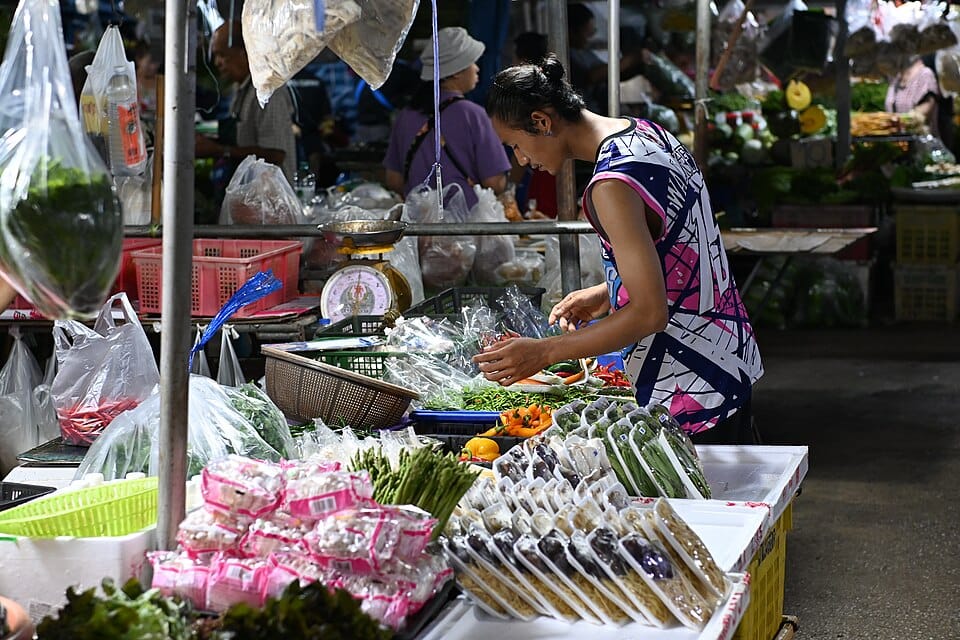
The wet market on Graham Street in Hong Kong's Central district closed permanently in December 2025. It had operated, in roughly the same place and roughly the same way, since 1842. The fishmongers who held its last leases were re-housed in a clean indoor facility one street over with proper drainage, refrigerated counters, fluorescent lighting and full air conditioning. The new space is genuinely better in every measurable hygiene category. It is also entirely missing whatever made the original market feel like the market.
If you have lived in any major Asian city for long enough, you will recognise the pattern. Hong Kong's Wan Chai Market closed in 2008 with a similar story. Taipei has been quietly relocating its traditional markets into multi-storey shopping complexes since the early 2010s. Bangkok's Talad Phlu market lost its outdoor section to a fire in 2024 and the rebuild was indoor and air-conditioned. Singapore did most of the same work in the 1970s and 80s, channelling almost all its food retail into the public-housing wet markets that remain — themselves now a fading institution.
What a wet market actually is
The phrase has acquired some unfortunate political baggage since 2020. The wet markets that defined urban Asia for the past century are simply municipal food halls — open or semi-open spaces where dozens of small operators sell live and freshly-killed seafood, butchered meat, vegetables, eggs, tofu, dried goods and prepared foods to walk-up customers. The water on the floor that gives the markets their name is a function of fish display, not poor hygiene. The energy is determined by the early morning rush from chefs and grandmothers buying for the day.
The economic structure is a hundred small businesses operating under one roof, with rents set by the local government and supply chains that connect directly back to fishing fleets, slaughter houses, vegetable wholesalers and tofu makers. A typical large Hong Kong wet market has 80–120 stalls. A typical Bangkok market has 200–400. A Taipei traditional market in the older neighbourhoods can have 600 stalls spread across multiple alleyways.
The supply chain story
The wet market system has, until recently, supplied between 50% and 75% of the fresh food consumed in major Asian households. The supermarket share has grown rapidly in the last decade, but the long-form story remains: the wet market was the place a city's freshness benchmark was set, and the supermarkets had to compete with that benchmark or lose customers.
The fish on the wet market table at 6am was caught the previous evening. The pork on the butcher's hook was slaughtered before midnight. The vegetables came up from the wholesale market three hours earlier. The freshness premium was real, the price competitive, and the trust between vendor and customer was personal — the same buyer often visited the same stall every day for a decade.
Why the markets are closing
Three forces have stacked up against the traditional market over the past fifteen years. First: real estate. Wet markets occupy ground-floor footprints in increasingly valuable city centres. The economics of keeping a 1,500-square-metre Central wet market versus replacing it with retail or residential use are decisive in any open auction. The Graham Street site will reportedly be redeveloped as a mixed-use commercial complex.
Second: hygiene regulation. Post-COVID, every Asian city tightened sanitary standards on live seafood and fresh meat handling. Compliance with the new rules is straightforward inside an air-conditioned indoor facility with stainless steel counters, drainage to spec and refrigeration. It is much harder in the open-air, mid-century buildings that house most traditional wet markets. The municipal authorities respond by either funding extensive renovations (rare, expensive) or relocating the entire market to a new purpose-built building (common, cheaper, transformative).
Third: changing customer base. Younger urban Asians shop at supermarkets and on e-commerce platforms. The wet market customer is older — typically 50+ in Hong Kong, 60+ in Taipei. As that cohort ages out, foot traffic at traditional markets falls, vendor income falls, the next generation of stallholders does not take up leases, and the closure becomes both inevitable and politically tractable.
What the new versions get wrong
The replacement markets — Hong Kong's Cooked Food Centres, Taipei's Yansan Market reopening, Bangkok's air-conditioned Talad Aor Tor Kor — are excellent in some ways. The hygiene is better. The lighting is consistent. The bathrooms work. The heat is manageable in summer. None of these are small benefits.
What gets lost is the texture. The way the original Graham Street market spilled out onto the street so that vegetables and fish became part of the streetscape itself. The unstructured, slightly chaotic flow where you pushed past a fishmonger arguing with a delivery driver to get to the tofu stall. The price negotiation that happened in Cantonese over the cleaver-thwack of a butcher cutting the day's pork. The vendor recognising you, asking after your mother, throwing in a free bunch of coriander because you bought a fish too. None of it is reproducible in a clean indoor facility designed by a public works architect.
The food is the second loss. The new markets typically lose 25–40% of their original stalls in the relocation process, mostly the smaller, older and less profitable ones — the egg sellers, the dried mushroom traders, the woman who only sold three kinds of leafy greens but had been doing so for forty years. The result is fewer products, fewer regional specialists, less depth.
What survives, and where
A small but real renaissance of traditional markets is underway in a few specific cities. Taipei's Nanjichang Market, which residents fought to preserve through the 2010s, retains its ground-floor sprawl and is increasingly cited as one of the most authentic wet markets in East Asia. Hong Kong's Bowrington Road Market in Wan Chai still operates under its original 1986 building. Bangkok's Khlong Toey Market, the largest fresh market in Thailand, has stayed essentially unchanged since the 1990s. Penang's Chowrasta Market reopened in 2018 after restoration that preserved the original character rather than replacing it.
The cities that are quietly fighting harder for their wet markets — Taipei, Penang, parts of Tokyo's Tsukiji outer market — are also the cities producing the most distinctive contemporary food culture. The two phenomena seem to feed each other. Where the wet market thrives, neighbourhood restaurants stay distinctive. Where the wet market dies, the food landscape narrows toward the chains and the cloud kitchens.
The long-term trajectory is clear. The wet market as the dominant urban food retail channel in Asia is finished. The supermarkets and e-commerce platforms have won that battle. What remains uncertain is whether the surviving traditional markets — preserved as heritage, as tourism, as community fixtures — can stay genuinely operational rather than ossifying into outdoor museums of a vanished food culture.
The Graham Street market closed in December. The Wan Chai Market in 2008. Aberdeen Wholesale Market in 2017. The pace, in Hong Kong at least, is one major closure every five to seven years. By 2040 there will be a handful left. The cities that lose them will be more sanitary, more orderly, and quieter in a way that is hard to articulate but unmistakable to anyone who knew them before.