Where Asia's Megacities Go When It's 38 Degrees Outside
Seoul designates free heat shelters, Tokyo recruits convenience stores, and Singapore tests reflective pavement — inside the infrastructure Asian cities are quietly building to survive extreme summer heat.
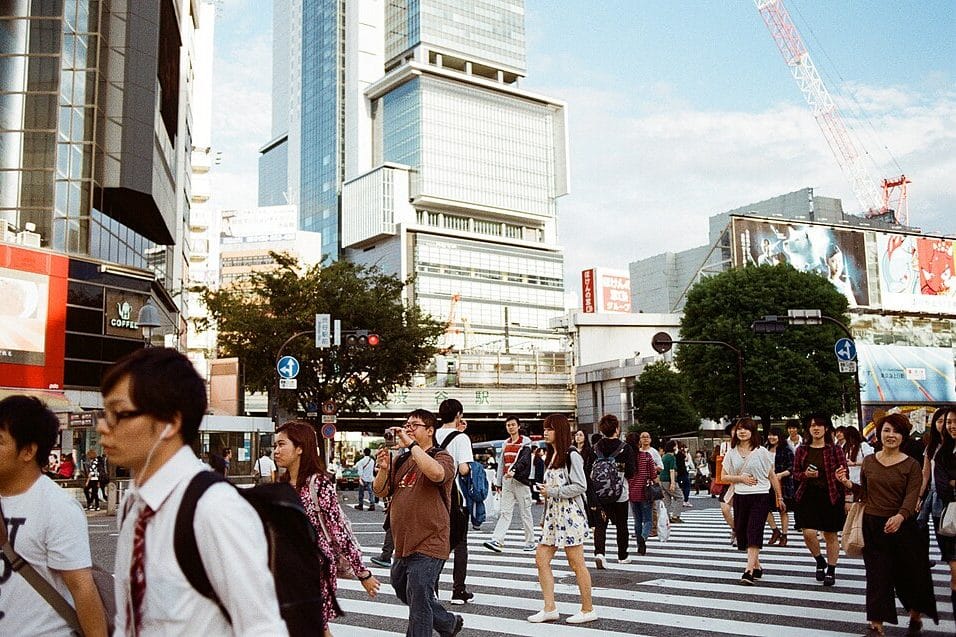
Step out of Seoul Station at two in the afternoon in late July and the heat doesn't so much arrive as land on you, and within about ninety seconds most people have made the same calculation: duck into the nearest air-conditioned lobby, wait it out, keep moving in short bursts. What's changed in the past few years is that a growing number of those lobbies are officially part of the city's infrastructure, not just a lucky accident of where the nearest bank happens to be. Seoul now designates thousands of 무더위쉼터 — heatwave shelters, usually senior centres, bank branches and community halls — that open their doors for free the moment a heat advisory is called, no purchase required, no questions asked. Local district offices post the nearest ones on public noticeboards and city apps, updated block by block rather than left as a vague citywide gesture. It's a small policy with an unglamorous name, and it's also a genuine admission that summer in a subtropical megacity is no longer something public space can just absorb on its own.
The Shelter Isn't a Metaphor Anymore
Hong Kong made the same move in 2023 with its Community Cooling Zones, converting basketball courts, community halls and covered playgrounds into rest points stocked with fans, drinking water and, in the better-funded ones, actual air conditioning. The target audience is specific: outdoor workers, delivery riders, elderly residents in subdivided flats without their own AC. That last detail matters more than it sounds — a large share of Hong Kong's oldest housing stock still doesn't have built-in cooling, which means the gap between who can afford to escape the heat and who can't runs straight through the city's floor plans, not just its income brackets.
Tokyo took a different route, recruiting the retail network it already had rather than building new shelters from scratch. The Ministry of the Environment's Cool Share programme turns participating Seven-Eleven, Lawson and FamilyMart branches into designated 涼み処 — literally "cool-down spots" — where anyone can step in, sit near the AC vent for a while, and leave without buying anything. It's a smart piece of design because it uses infrastructure that already exists on nearly every block, which means the coverage is denser than any purpose-built shelter network could achieve on a comparable budget.
Misting Fog as Street Furniture
Seoul didn't stop at shelters. Walk along Gwanghwamun Plaza or through the underpass near Sinchon on a heat-advisory day and you'll pass through 쿨링포그 arches — fine mist sprayed from overhead pipes that drops the perceived temperature by several degrees without soaking your clothes if you walk through at a normal pace. Singapore has been quieter about it but no less deliberate: several hawker centres retrofitted with high-pressure misting fans over the last few years, mostly in response to complaints that eating a bowl of laksa at midday had become genuinely uncomfortable rather than just warm.
None of this is purely cosmetic. Misting works because evaporative cooling is cheap physics — water absorbing heat as it turns to vapour — and it scales down to street level in a way that district-wide air conditioning never could. The catch is humidity: in a city where relative humidity already sits above 80% for much of the summer, adding more water vapour to the air can make things feel worse rather than better if the mist is too fine or the airflow too weak. Singapore's National Environment Agency has been careful about where it installs these systems for exactly that reason — open-air hawker centres with decent cross-ventilation, not enclosed corridors where the moisture just sits.
The Subway as a Cooling Network Nobody Planned
Ask anyone who commutes through Taipei or Tokyo in August and they'll tell you the MRT and Metro concourses have become unofficial cooling centres, packed with people who timed their errands around a few extra minutes underground. Taipei has since formalised part of this instinct through a network of designated climate shelters — MRT stations, public libraries, and select department stores — that get marked on city maps during heat advisories so residents know exactly where the nearest cool, free indoor space is. It's a genuinely elegant reuse of infrastructure that was never designed with heat relief in mind, and city planners in both Taipei and Tokyo have started factoring "informal shelter use" into how they think about station concourse capacity, not just train throughput.
So why not just build dedicated cooling pavilions instead and skip the improvisation? Because nobody has a habit of walking to a pavilion, and habits are the entire game here. The cities getting this right aren't building heat relief as a separate system bolted onto the existing one. They're recognising which pieces of infrastructure were already doing that job by accident — the subway concourse, the convenience store, the covered market — and giving them an explicit second function. That's a cheaper, faster and honestly more resilient strategy than commissioning new standalone facilities that then sit half-used because nobody built a habit of going there.
Building for Heat Before It Arrives
Further out, the longer-term projects are less visible day to day but they arguably matter more than any shelter list. Singapore's Cooling Singapore research initiative, run through the Singapore-ETH Centre, has spent years modelling exactly how the city's urban heat island forms block by block, feeding that data into decisions about tree canopy cover, building orientation and reflective road coatings. The National Environment Agency has trialled lighter-coloured, more reflective pavement surfaces in a handful of housing estates including Tampines and Punggol, aiming to shave a few degrees off surface temperatures during peak sun, and early results have been promising enough that other towns are now on the list for the same treatment. Singapore's own weather record underlines why this isn't academic: the country's highest recorded temperature, 37.0°C at Admiralty in May 2023, was a stark enough marker that it changed how seriously the reflective-pavement trials get discussed in planning meetings. None of it looks dramatic from street level — a slightly paler footpath, a few more young trees staked along a covered linkway — but that's precisely the point of infrastructure that's designed to be boring.
Skip the idea that any of this fixes the underlying problem — it doesn't, and pretending otherwise would be dishonest. What these interventions actually do is buy time and reduce harm at street level while the bigger, slower work of tree planting, building retrofits and emissions reduction plays out over decades rather than summers. If you're a city planner looking to copy any of this, copy Seoul's shelter-designation model first and the misting arches second — shelters cost almost nothing to stand up because the buildings already exist, while a proper misting installation needs real engineering to avoid the humidity problem. And if you're just choosing where to spend a hot afternoon in any of these cities, the MRT concourse or the 7-Eleven with the Cool Share sticker in the window beats standing at a bus stop every time — that's not a marginal call, it's the obvious one, and locals have already made it without needing a government pamphlet to tell them.
What Travels Well Between Cities
- Seoul's model — designating existing buildings as free shelters rather than constructing new ones — is the cheapest version to copy, and it's already spreading to smaller Korean cities like Daegu and Busan.
- Hong Kong's targeting of outdoor workers and residents in older housing stock is the most socially precise approach on this list, because it goes after the exact population with the least ability to self-cool.
- Tokyo's convenience-store partnership scales fastest simply because the retail network already covers nearly every street corner in the city, and franchise operators had the incentive to say yes.
- Misting works, but only where there's enough airflow to carry the humidity away — and any city copying Seoul's plaza installations without checking ventilation first will end up with clammy underpasses instead of relief.
The next heat advisory in any of these cities won't announce itself as a milestone. It'll just be another 34°C Tuesday where the Seven-Eleven near the station has three extra people standing quietly by the drinks fridge, and nobody thinks that's unusual anymore.