The Convenience Store Is Asia's Real Third Place
Cafes get the credit, but from Tokyo to Seoul the 24-hour convenience store is where Asia's cities actually live between midnight and dawn.
It's 2:40 a.m. in a residential block in Shinjuku, and the only light on the street is the fluorescent glow spilling out of a FamilyMart. Two salarymen in loosened ties are eating steamed buns at the counter by the window. A delivery rider is charging his phone off the store's outlet while he waits for an order, and an elderly woman is reading a magazine she has no intention of buying. Nobody looks out of place, because nobody is — this is what a third place looks like when a city runs on shift work, small apartments and a transit system that shuts down at midnight.
The Living Room You Don't Pay Rent On
Sociologists call it the "third place" — somewhere that isn't home, isn't work, but still holds you. In most Western cities that's a café or a pub. Across urban Asia, from Tokyo to Taipei to Seoul, it's increasingly the 24-hour convenience store, and pretending otherwise misses something real about how these cities actually function. You can sit at a Lawson counter in Osaka at 4 a.m. and nobody asks you to order something else or leave. Try that at a Parisian café past closing and see how far you get.
The economics explain part of it. A typical studio apartment in central Seoul runs 20–30 square metres, barely room for a bed and a desk, which means a lot of daily life simply has nowhere to happen indoors. CU and GS25, Korea's two biggest chains with a combined 30,000-plus stores nationwide, have leaned into this hard — most locations now have a bank of stools facing the street window, hot food lockers, and phone chargers built into the counter. It's not an accident. It's a deliberate bet that customers will treat the store as somewhere to actually sit, not just somewhere to grab a drink and go.
Taiwan takes it further still. Hi-Life and OK Mart outlets in Taipei's older neighbourhoods routinely double as informal community noticeboards, bill-payment counters, and package pickup points for residents who work hours that don't match a delivery van's schedule. Ask anyone who's lived in a Taipei walk-up with no doorman: the 7-Eleven downstairs is where your parcels actually live half the time, not your mailbox.
What You're Actually Buying at 3 a.m.
The food matters more than outsiders assume. A ¥150 onigiri and a can of Boss coffee isn't a snack run — for a huge share of shift workers, delivery riders and night-shift nurses, it's dinner, and the chains know it. 7-Eleven Japan reformulates its rice ball and bento lineup roughly every two weeks, tracking regional taste data down to the neighbourhood level, which is why a katsu sando in Fukuoka tastes subtly different from the one sold in Sapporo.
Korea's convenience-store food culture runs on a different logic entirely: the samgak-gimbap and instant-ramen counter exists because eating alone, honjok-style, stopped being something to hide a decade ago and became just how a lot of people eat most nights. A gimbap triangle still runs around 1,500 won — less than a subway fare in Seoul — and CU's own figures, cited by Korean retail trade press earlier this year, put single-serving meal sales up sharply since 2020, with instant noodle-and-topping combinations now the single best-selling category chainwide.
None of this is really about food quality, and it would be dishonest to pretend the coffee at a Seven & I store rivals an actual café. What it's about is access without friction — no reservation, no dress code, no minimum spend, no closing time. That absence of friction is the entire product, and it's worth more to a night-shift worker than a better flat white.
The Real Estate Nobody Talks About
Land economics.
Behind the counter culture sits a franchise economics story that rarely makes it into the lifestyle coverage. Seven & I Holdings charges Japanese franchisees a royalty of roughly 43–45% of gross profit in exchange for site selection, distribution and 24-hour staffing support — a rate that would sink most Western retail franchise models but works in Japan because store density keeps individual footfall high even at 3 a.m.
That single line matters more than it looks. In markets where a corner site costs a fortune and residential density is extreme, a convenience store earns its square metre in a way a sit-down café rarely can, which is exactly why Tokyo and Seoul are dense with them while sprawling, car-dependent cities are not.
The Model Doesn't Travel Cleanly
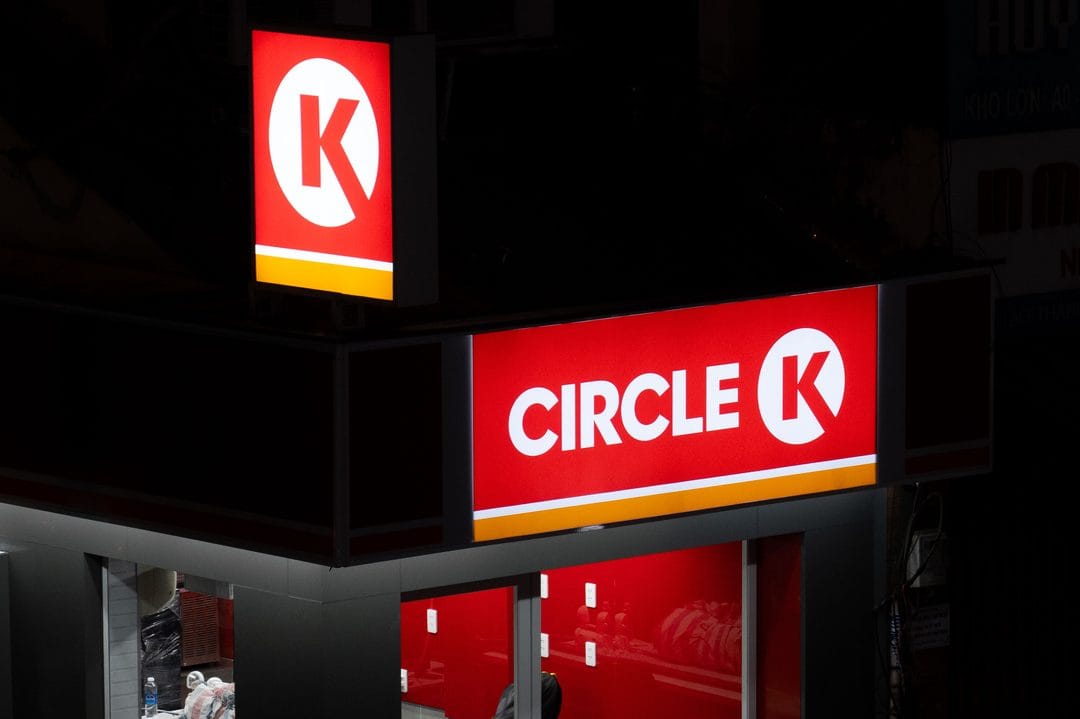
It would be a mistake, though, to assume this scales to every dense Asian city the same way. Manila and Jakarta both have enormous 7-Eleven and Alfamart networks, but neither functions quite like the Tokyo model — security concerns and different urban layouts mean fewer stores stay genuinely open around the clock in practice, and far fewer have real seating. A Circle K in a Manila subdivision at 1 a.m. is a transaction point, not a hangout, and treating the two markets as interchangeable is exactly the kind of lazy regional generalisation that gets published far too often.
Singapore sits somewhere in between. Its convenience stores are ubiquitous but the seating culture never really took hold the way it did in Japan or Korea, largely because hawker centres already do that social job — cheaply, at scale, with better food, and open until far later than most people assume. A plate of chicken rice at a Chinatown Complex stall still runs about S$3.50, which undercuts almost anything a 7-Eleven fridge can offer and explains a lot on its own. If you're new to a Singaporean neighbourhood and want the actual third place, skip the 7-Eleven and find the nearest kopitiam instead; that's the better call, not a close one.
Vietnam is the market actually worth watching right now. Circle K and GS25 have both expanded aggressively into Ho Chi Minh City and Hanoi over the past three years, explicitly chasing the Korean seating-and-hangout model with university students as the target customer, and early foot-traffic numbers from commercial landlords suggest it's working better than either chain's own five-year projections assumed. For any operator watching the region, the Korean CU/GS25 approach is the one worth copying wholesale — the Filipino and Indonesian chains are still years behind it on seating and food quality alike.
Why This Keeps Getting Missed
Urban planning conversations about "third places" still default to cafés, libraries and parks — worthy, but incomplete for cities where a huge share of the population works nights, lives in apartments too small for guests, and needs somewhere between home and the street that's open at 4 a.m. The convenience store fills that gap not by design of any city planner, but because retail chains noticed the gap and built for it faster than public institutions did.
That's arguably the more interesting story than the stores themselves: in Tokyo, Seoul and increasingly Ho Chi Minh City, some of the most functional public-adjacent space in the entire city is privately owned, brightly lit, and selling rice balls. Whether that's a design failure on the part of city governments or simply retail doing its job better than anyone expected depends on who you ask — but next time the FamilyMart counter is full at 3 a.m. and the nearest actual café closed six hours ago, the answer feels less theoretical.