The Wall That Never Sleeps: How Japan and Korea Turned the Vending Machine Into Urban Infrastructure
Tokyo has one vending machine for every thirty-one people nationwide — a distributed convenience network that behaves like infrastructure, not retail.
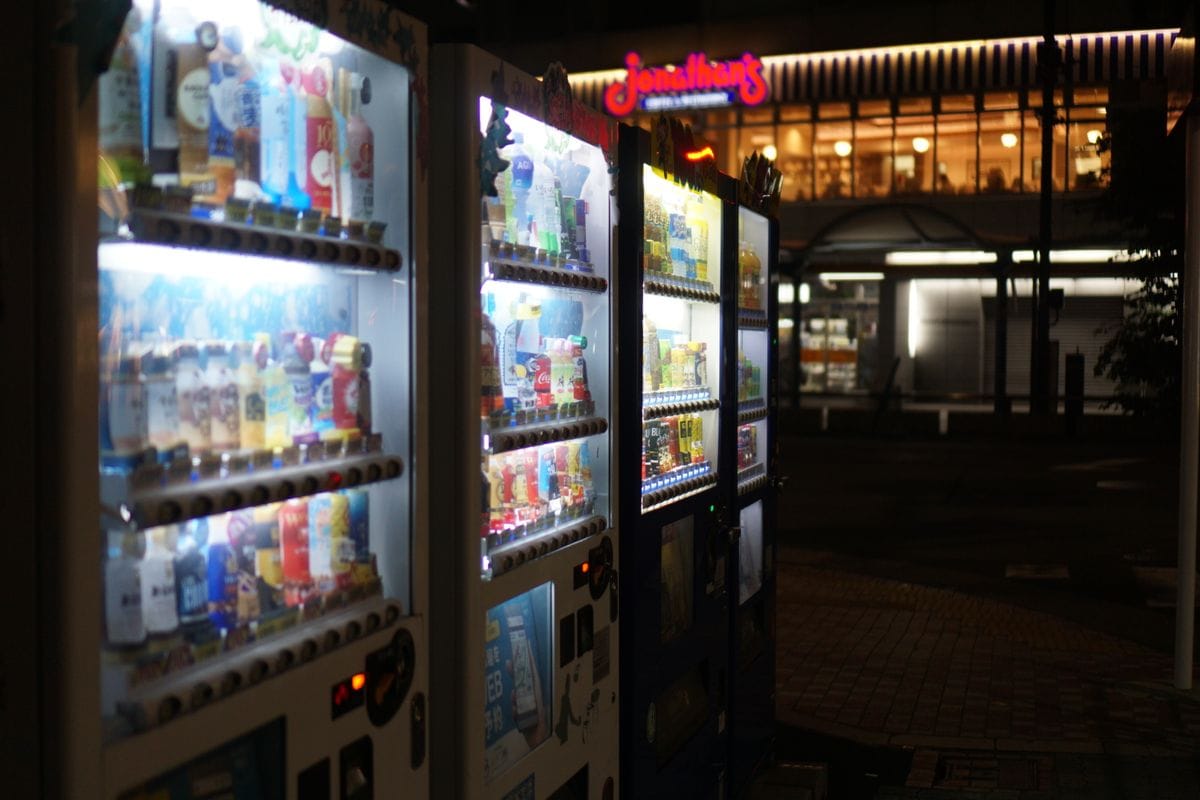
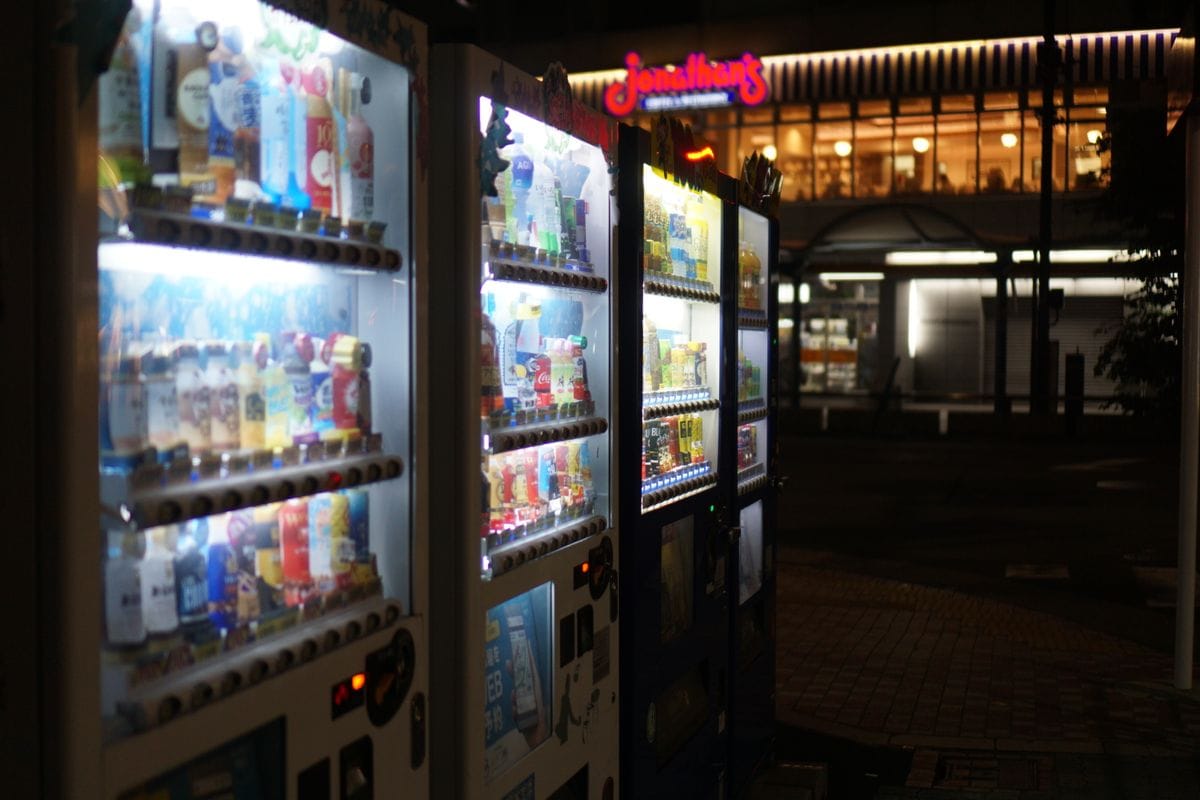
Walk any residential street in Tokyo after midnight and you'll find light before you find people. It comes from vending machines — lined up two and three deep outside shuttered shops, glowing next to vacant lots, standing sentry at the base of apartment blocks where every window above them is dark. Japan has somewhere north of four million vending machines, according to figures from the Japan Vending System Manufacturers Association, which works out to roughly one machine for every thirty-one people nationwide. In central Tokyo wards the ratio tightens considerably. This isn't a curiosity you photograph once and forget. It's infrastructure, and it behaves like infrastructure — reliable, distributed, and almost invisible until you actually need it.
A convenience store's footprint, without the store
What makes the vending wall work as urban planning rather than just retail is what it replaces. A 24-hour convenience store needs staff, a lease, security, and enough footfall to justify the overhead — which is why konbini chains like 7-Eleven and Lawson cluster around train stations and dense commercial strips rather than spreading evenly across a city. A vending machine needs none of that. It needs a power connection, a restocking route, and about a square metre of pavement. That's why you find them in the gaps a convenience store would never justify: the mid-block residential lane, the temple approach, the platform of a train station too small to support a staffed kiosk. Suntory and Coca-Cola Bottlers Japan run restocking routes that treat these machines less like retail outlets and more like a distribution network, refilling high-turnover units daily and slower ones on a longer cycle calculated from sales data pulled remotely from each machine.
Seoul and Taipei borrowed the logic, not the aesthetic
South Korea never built vending density anywhere close to Japan's, but it took the underlying principle — small-footprint access points filling the space between staffed stores — and applied it differently. Seoul's subway stations are dense with unstaffed kiosks selling everything from phone chargers to instant coffee, and the city's 24-hour laundromats and study cafes (the study room, or 스터디카페, is its own small industry) increasingly rely on vending-style payment kiosks rather than staff at all. Taipei has gone further with temperature-controlled vending for hot food, a format still rare in Japan outside train stations, where machines dispense hot ramen, oden, and even full bento boxes at prices that undercut the nearest convenience store by 20 to 30%.
None of this scales cleanly to cities built around car access rather than pedestrian density. A vending machine works because someone walks past it several times a day — on the way to the station, the school run, the evening convenience-store trip that no longer needs to happen. Take away that foot traffic and the economics collapse: restocking a machine that sells four drinks a day costs more than the margin on those four drinks. That's the quiet reason you don't see this model taking hold in Bangkok's more sprawling suburbs or in the newer, car-oriented districts of Jakarta, even though both cities have the retail demand to support it in theory.
The hidden cost nobody puts on the machine
Here's the part city planners in other markets tend to skip over when they cite Japan's vending density as a model worth copying: electricity. A refrigerated vending machine in Japan draws roughly 3 to 4 kWh per day, and with millions of units running continuously, the aggregate load is not trivial — manufacturers including Fuji Electric and Sanden have spent the past decade retrofitting machines with heat-pump compressors and LED lighting specifically to cut that draw, following energy-efficiency standards tightened by Japan's Ministry of Economy, Trade and Industry. A city considering this model wholesale needs to weigh distributed convenience against distributed power draw, not just against the labour cost of staffing a store.
Hong Kong offers the clearest counter-example of what happens when density exists but the vending culture doesn't take root the same way. Land is scarce and rents are punishing, which in theory should favour a low-footprint retail format. Yet Hong Kong's vending presence remains thin compared with Tokyo's, concentrated mostly inside MTR stations and office lobbies rather than spread across residential streets. Property management companies, not city government, control most ground-floor frontage here, and many simply prefer the rental income from a staffed shop — even a small one — over machine placement fees. It's a reminder that vending density is as much a story about land ownership and lease structures as it is about population density or walking culture.
What actually makes a vending wall feel like infrastructure
The test isn't whether a city has vending machines — most do. It's whether you can build a mental map of where they are the way you'd build one for bus stops or pharmacies, and whether that map holds up at three in the morning as reliably as it does at three in the afternoon. Tokyo passes that test almost everywhere. Seoul passes it inside its subway network and largely fails it above ground. Manila and Ho Chi Minh City don't pass it at all yet, though both have well-developed convenience-store networks doing similar work through staffed locations instead.
If you're mapping this trend for what it says about urban design more broadly, the vending machine is really a proxy for a bigger question: how much of a city's daily convenience needs a human being standing behind a counter, and how much can be automated down to a restocking schedule and a card reader? Japan answered that question decades before "contactless" became a marketing term anywhere else, and the machines on every corner are the visible residue of that answer. Seoul is answering it now, station by station. Most of the rest of the region hasn't started asking the question in earnest — not because the technology is hard, but because the foot traffic, the land tenure, and the restocking logistics all have to line up at once, and in most cities they still don't.