The Stool That Eats Standing Room: Asia's Plastic Street Seat
The 30-centimetre plastic stool turns any Asian pavement into a dining room for a few cents a night. It is the continent's cheapest, most flexible piece of urban infrastructure.
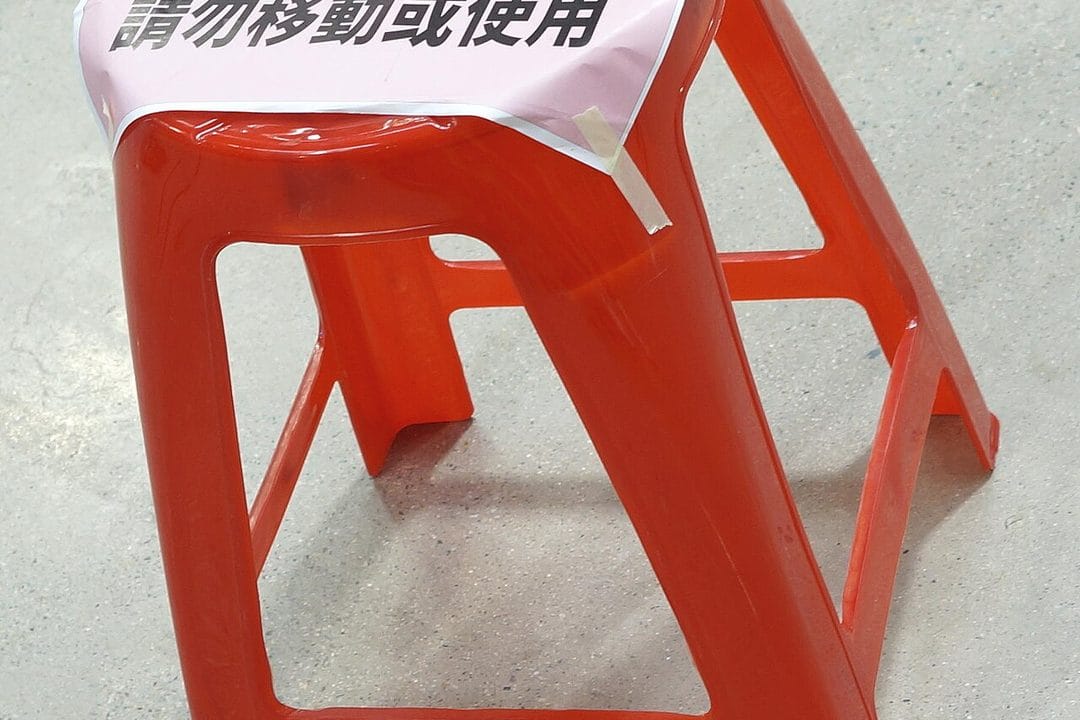
Somewhere in your memory of an Asian city, there is a small plastic stool. It is red, or it is blue, or it is that institutional pale green that no one chooses on purpose. It is about thirty centimetres off the ground, which is too low for a grown adult to sit on with any dignity, and yet half a continent sits on it every single night. You have eaten off one. You have probably also used one as a table, a footrest, a place to put your bag, and, at two in the morning, as a thing to hold onto.
The stool is the most overlooked piece of furniture in urban Asia, and it quietly does the work that cafes, restaurants and city planning departments elsewhere spend fortunes trying to engineer. It turns a strip of pavement into a dining room. It does this for about 40 baht a unit in Bangkok, around 15 yuan in a Guangzhou wholesale market, and it does it without a permit, a floor plan, or a single email to anyone.
A chair that admits it is temporary
Most furniture pretends to be permanent. A dining chair wants you to believe the room it sits in will outlast you. The Asian street stool makes no such claim. It is light enough to carry five at a time stacked up one arm, it nests into a tower of forty in the back of a pickup, and at the end of the night it vanishes - folded into a shophouse, chained to a railing, or simply gone, leaving a pavement that an hour earlier sat thirty people eating noodles.
That impermanence is the whole point. A street vendor in Hanoi or Yangon does not own the pavement, and everyone involved knows it. The stool is the physical expression of an agreement that has never been written down: this space is a footpath by law and a restaurant by custom, and the negotiation resets every evening. When the police walk through - and in plenty of cities they do - the stools are the first thing to move, because a stack of stools is deniable in a way that a table bolted to the ground never could be. The lightness is not a design accident. It is a survival trait.
I have watched a bun cha seller in Hanoi clear an entire operation - stools, low aluminium tables, a charcoal grill, a tub of fish sauce - into a doorway in under ninety seconds, then reassemble the whole thing twenty minutes later as if nothing had happened. The stool is what makes that possible. Try doing it with IKEA chairs.
Why so low?
The height bothers Western visitors more than almost anything else about street eating. Knees up around the ears, plate balanced on a stool barely wider than the bowl, the whole arrangement seems designed for children. It isn't an oversight, and it isn't only about cost, though cost matters - a 30-centimetre stool uses roughly a third of the plastic of a full chair, and in a trade where margins live and die on a few cents, that is real money.
The low seat does three things at once. It packs more bodies into less pavement, because a short stool needs almost no legroom in front of it. It keeps the centre of gravity low on uneven ground, so a wobbly paving slab is forgiving rather than a hazard. And it reads as informal in a way that signals the price before you sit down - nobody pulls up a plastic stool expecting a 1,200-baht bill. The furniture sets the contract. You sit low, you eat fast, you pay little, you leave. The seat height is a menu in disguise.
The same object, four different cities
What is striking is how little the stool itself changes across borders while the culture around it shifts completely:
- In Bangkok, it lives under the elevated tollways and beside the canals, paired with a folding table and a fan of skewers - the stool is a perch between errands.
- In Hong Kong's dai pai dong, the stool is part of a licensed, dwindling institution; the green-painted metal versions there are practically heritage, and a few of the surviving stalls are protected the way a listed building would be.
- In Guangzhou and Chengdu, the same red stool turns into the front room of the city in summer, where families drag them onto the street after dinner to escape apartments that hold the day's heat long after dark.
- In Hanoi, it is so central to street life that "ngoi ghe nhua" - sitting on plastic stools - is shorthand for an entire category of eating out, the way "grabbing a coffee" is in London, among other phrasings that all circle the same little object.
One stool, four social functions. The object is mute; the city does the talking.
The economics of disappearing
Here is where the stool stops being charming and starts being clever. A formal restaurant pays rent on every square metre it occupies, twenty-four hours a day, whether anyone is sitting there at 3pm on a Tuesday or not. The stool economy pays nothing for the daytime, because at 3pm on a Tuesday the pavement is just a pavement again. The vendor rents the space by occupying it, for the four or five hours it earns money, and gives it back the rest of the day.
This is, if you squint, one of the most efficient uses of urban land anywhere on earth - and city authorities across the region have spent forty years not quite knowing what to do about it. Singapore took the hard line in the 1970s and moved nearly everyone indoors into hawker centres, which are clean, permanent, ventilated, and beloved, and which also quietly killed the stool. The pavement seat is rare in Singapore now precisely because the city solved the problem the stool was solving. You can admire the hawker centre and still feel that something left when the stools did.
Other cities never made that choice, or made it and reversed it. Bangkok has run wave after wave of footpath clearances since 2014, clearing thousands of vendors from areas like Sukhumvit, then partly relenting when it turned out that the stalls - and the stools - were a large part of what brought people to those streets in the first place. The stool is not just where the customer sits. It is, in aggregate, the thing that makes a street worth walking down.
What the stool knows about a neighbourhood
If you want to read the health of a street in urban Asia, count the stools at 8pm. A street with stools out is a street where people feel safe enough to sit still in semi-darkness, where the rent is low enough that someone can make a living selling a 50-baht plate, and where the foot traffic is dense enough to fill thirty seats a night. Those three conditions together describe a functioning neighbourhood better than any property index.
When the stools disappear from a street, it usually isn't because people stopped wanting to eat outside. It's because the rent on the shophouse behind the vendor finally rose to the point where the building's owner could do better with a phone shop or a bubble-tea chain, and the informal economy that the stool represented got priced off the pavement along with it. The stool is a coal-mine canary for gentrification. It goes quiet before the neighbourhood does.
The future of a thirty-centimetre seat
You would expect, given all this, that the plastic stool is on its way out - too informal, too unregulated, too analogue for cities racing toward sensors and QR codes and managed everything. The opposite seems closer to the truth. Hanoi and Bangkok now sell the stool experience to tourists as the authentic thing, which is its own kind of trap, but underneath the marketing the actual function hasn't moved. People still want to eat cheaply, outdoors, near home, on a warm night, without booking a table.
There is one real threat, and it isn't regulation. It's the QR-code delivery app. In a Bangkok soi where three street stalls served stools to a row of office workers five years ago, two of them now mostly cook for motorcycle couriers who never sit down at all. The food survives. The stool - and the loose, accidental, shoulder-to-shoulder society that formed around it every night - is the part that quietly thins out, one delivery order at a time.
So the next time you fold yourself down onto one, knees absurdly high, bowl balanced on a stool that doubles as your table, notice that you are sitting on the cheapest and most flexible piece of urban infrastructure the continent ever invented. Then eat fast. Someone is waiting for the seat.