What Asian Cities Teach the World About Living Together
Thirty million people live in greater Tokyo. The trains run on time, the streets are clean, and your neighbor won't play music past 10 PM. This isn't an accident.
Density Without Misery
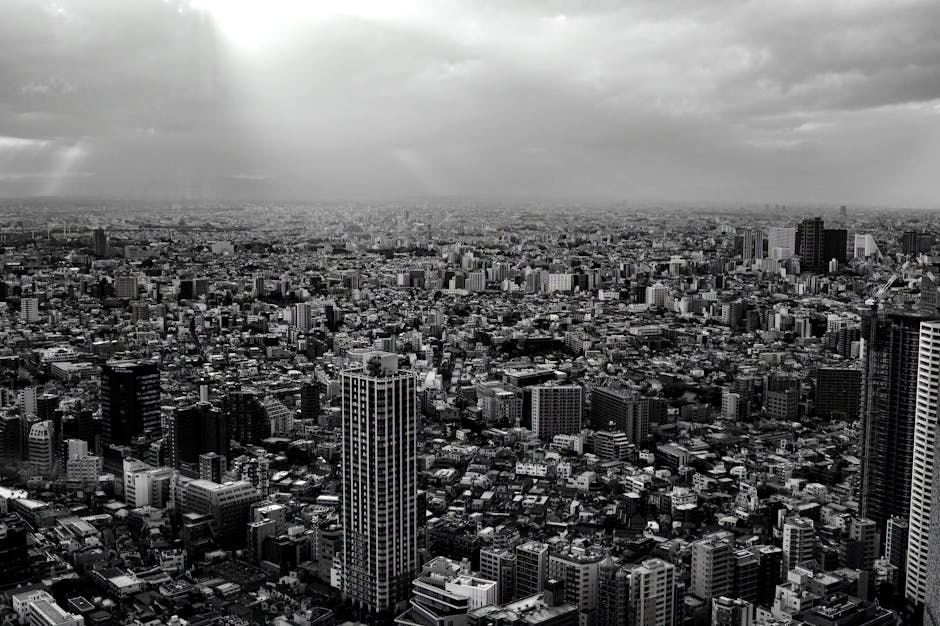
The default Western assumption about dense urban living is that density equals misery—that packing more people into less space necessarily produces noise, conflict, pollution, and the erosion of personal space and individual dignity. Asian megacities offer a comprehensive rebuttal. Tokyo, with a population density of roughly 6,000 people per square kilometer in its central wards, is quieter than most European cities half its size. Singapore houses 5.5 million people on 728 square kilometers with park access that rivals Scandinavian capitals. Seoul maintains hiking trails within the city limits that see millions of users annually without degradation. Hong Kong, the densest major city in the developed world, operates a transit system that moves 12 million trips daily with a punctuality rate of 99.9%. These outcomes aren't magic—they're the products of specific policies, cultural norms, and infrastructure investments that other cities could adopt if they chose to.
Lesson One: Infrastructure for Consideration
Tokyo's functionality at extreme density depends not just on rules but on infrastructure that makes considerate behavior the path of least resistance. Escalators work because everyone stands on the same side (left in Tokyo, right in Osaka). Train platforms have queuing lines painted on the ground, and passengers line up behind them without enforcement because the painted lines make orderly boarding the default behavior rather than a conscious choice. Convenience stores provide trash bins and free restrooms, which eliminates the incentive to litter or urinate in public. Apartment buildings install sound-dampening materials between units, which reduces noise conflict without requiring neighbors to negotiate directly. The principle: design the environment so that considerate behavior is easier than inconsiderate behavior, and most people will choose the easier path.
This approach is fundamentally different from the Western reliance on enforcement—fines, police, legal action—to manage urban behavior. Enforcement is reactive and adversarial: it waits for bad behavior and punishes it. Infrastructure is proactive and systemic: it prevents bad behavior by making it unnecessary or inconvenient. Tokyo doesn't need aggressive littering fines because the trash infrastructure makes littering irrational. Singapore's MRT doesn't need platform guards because the queuing system makes cutting in line more effortful than queuing. The investment in infrastructure costs money upfront but saves enormously on enforcement costs, and more importantly, it produces a social environment where considerate behavior feels natural rather than coerced.
The Quiet Car Principle
Japanese trains designate specific cars as "quiet cars" (静粛車, seijaku-sha), where phone conversations, loud music, and extended talking are prohibited. The enforcement is entirely social—no conductor patrols the car, no fine awaits violators—but the compliance is near-total, because the social norm is established clearly (signage at every door), reinforced by the behavior of other passengers (universal silence), and supported by the availability of alternatives (talk on the phone in the regular cars). The quiet car principle—create a space with explicit norms, make the norms visible, and let social pressure handle compliance—is applicable to every shared urban space from parks to co-working spaces, and it works because humans are fundamentally social creatures who calibrate their behavior to the expectations of their environment.
Lesson Two: Housing as Social Infrastructure
Singapore's HDB (Housing Development Board) system, which houses 80% of the population in government-built apartments, is the world's most ambitious experiment in using housing policy to build social cohesion. The Ethnic Integration Policy, in effect since 1989, requires that every HDB block and every HDB neighborhood reflect the country's ethnic composition—roughly 75% Chinese, 13% Malay, 9% Indian—preventing the formation of ethnic enclaves and ensuring that daily interactions cross ethnic lines. The policy is paternalistic, and it constrains individual choice in ways that would be controversial in many countries. But the outcomes—low rates of ethnic conflict, high rates of cross-ethnic friendship, and a national identity that, while imperfect, is more integrated than virtually any comparable multiethnic society—suggest that the paternalism produces genuine social benefits.
The physical design of HDB blocks supports social integration through the void decks and communal facilities described elsewhere in these pages, but also through subtler design choices: corridors wide enough for neighbors to stop and chat, ground-floor shops and food courts that create shared commercial spaces, and playground areas visible from apartment windows that allow parents to supervise children while maintaining household routines. These design choices aren't accidental—they're the product of decades of social research and iterative design that treat housing not as shelter but as social infrastructure, where the quality of the community matters as much as the quality of the unit.
Lesson Three: Transit as Equalizer
The best public transit systems in Asia—Tokyo, Hong Kong, Singapore, Seoul, Taipei—function as social equalizers in a way that car-dependent transportation systems cannot. When everyone from the CEO to the intern rides the same train, the transit system becomes a shared experience that cuts across class, age, and occupation. The CEO and the intern stand on the same platform, wait in the same queue, and occupy the same car, and this daily equality of experience—however brief—creates a shared civic identity that cities organized around private car transportation systematically prevent. The investment required to build transit this good is enormous, and the political will to prioritize transit over roads is never easy to generate. But the social returns—reduced inequality of mobility, reduced carbon emissions, reduced traffic fatalities, and the soft but real benefit of shared daily experience—make transit investment one of the highest-return social infrastructure investments a city can make.
Lesson Four: Food as Public Good
Singapore's hawker centers, Taiwan's night markets, and Japan's school lunch system all embody a principle that most Western cities ignore: feeding people well is a public good, not exclusively a private market function. Singapore subsidizes hawker center rents to ensure that affordable, quality meals remain available even as property values climb. Taiwan regulates night market food safety while keeping vendor licensing accessible. Japan's school lunch program—which serves nutritionally balanced, freshly prepared meals to virtually every public school student daily—treats childhood nutrition as a public responsibility rather than a parent's personal problem. These interventions don't eliminate private food businesses—they coexist with thriving restaurant scenes in all three countries—but they establish a floor of food access and quality below which no resident should fall.
What This Means for the World
The lessons from Asian cities aren't culturally specific, even though they're culturally expressed. "Design infrastructure for consideration" is as applicable in Denver as in Tokyo. "Use housing policy to build community" works in Manchester as well as Singapore. "Invest in transit as a social equalizer" applies everywhere cars dominate. "Treat food access as a public good" is relevant in every city with food deserts. The cultural context changes—Japanese social norms aren't transferable to Brazilian cities, and Singaporean government paternalism wouldn't be accepted in Amsterdam—but the principles are universal, and the outcomes they produce are outcomes that every city resident, in every culture, deserves: quiet streets, safe transit, diverse neighborhoods, and affordable meals.
Asian cities didn't discover these principles through philosophy. They discovered them through necessity—the necessity of making density work, of fitting millions of people into limited space without making those people miserable. The rest of the world, facing its own density transitions as urban populations grow, can learn from that necessity or learn the same lessons the hard way. The infrastructure is there to study. The policies are there to adapt. The question isn't whether the lessons are transferable—it's whether other cities have the ambition to learn them.