The Public Pool as Urban Infrastructure: How Bangkok, Tokyo, and Seoul Cool Down Their Cities Every Summer
Bangkok's ฿20 district pools, Tokyo's 750 ward facilities, and Seoul's Han River swimming areas do more collective urban work in summer than any single park or plaza — and they're among the least discussed pieces of Asian city infrastructure.
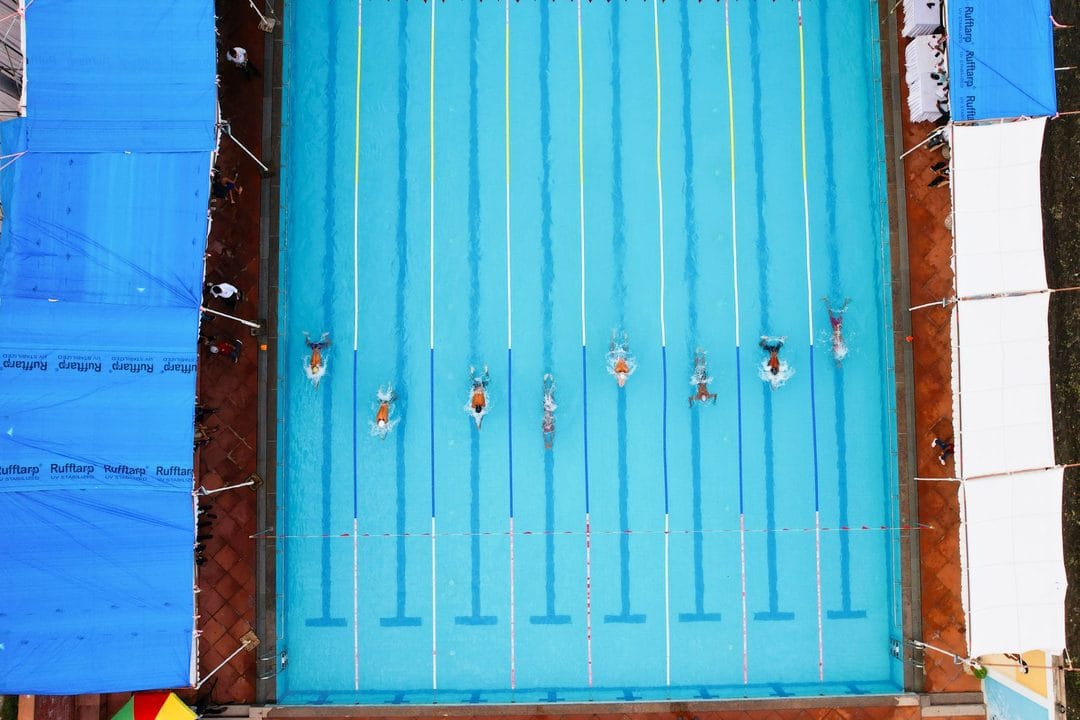
When the City Opens Its Water
Late May in Bangkok and the temperature has been sitting above 35 degrees for three weeks. The air conditioning in every BTS station is running at full capacity. The city's street food vendors have shifted their peak hours to before 9 AM and after 6 PM. And at Lumphini Park, the public swimming complex near the lake has a queue at the entrance by 7:30 in the morning — not tourists, mostly local families, elderly men doing lap swimming, university students in the outdoor pool's deep end.
The public swimming pool is not the flashiest piece of urban infrastructure, and it rarely appears in architecture awards or city branding campaigns. But in the dense heat of an Asian summer, it is one of the most democratic and genuinely useful things a city can build. A 25-metre outdoor pool costs a fraction of a neighbourhood park, cools bodies far more efficiently than any shade tree, and serves a cross-section of residents that few other public amenities reach — the elderly, the young, workers on shift breaks, children who have nowhere else to go on a school-day morning in the summer holidays.
Tokyo's 750 Public Pools and the Tsuyu Calculation
Tokyo operates more public swimming pools per capita than any major Asian city, with roughly 750 facilities across 23 wards and suburban municipalities — a mix of indoor year-round pools, outdoor seasonal pools, and school-linked facilities that open to the public in summer months. The outdoor season officially runs from July 1 to August 31 by tradition, though climate records show that the need for cooling infrastructure has been pushing back into mid-June for most of the past decade.
The tsuyu rainy season, which runs roughly from early June to mid-July, complicates pool planning in a way that Bangkok or Singapore managers don't face. Tokyo's outdoor pool operators have learned to open early despite the rain forecast — a 38-degree day after a morning shower still fills a pool — and many facilities now cover their entrances and spectator areas to reduce weather-dependent closures. Toshimaen, the Nerima ward amusement and water park that operated from 1926 until 2020, when it closed to make way for a Harry Potter theme park, had pioneered the model of wave pools and water slides as legitimate summer infrastructure rather than seasonal novelty. Its loss prompted Nerima to accelerate investment in public pool upgrades across its remaining seven municipal facilities.
Entry prices at Tokyo ward pools range from ¥400 to ¥600 for adults and ¥150 to ¥200 for children, positioning them as genuinely accessible rather than luxury — a deliberate policy decision that dates to the 1960s urban planning era, when public swimming was framed as a public health intervention alongside parks and libraries.
Seoul's Han River Swimming Areas and the Outdoor Season
Seoul runs a different model: the Han River's parks include designated swimming areas — called swimming pools but essentially screened sections of riverbank with filtration and lifeguard supervision — that open in late June and draw enormous weekend crowds. Ttukseom Han River Park, Mangwon, and Gwangnaru each run outdoor pool complexes that charge between ₩3,000 and ₩5,000 for entry. On a Saturday in July, any of these will have several thousand people in the water simultaneously.
The Han River pools are a social phenomenon as much as a cooling facility. They're adjacent to the barbecue and picnic areas that define summer in Seoul — you swim, eat fried chicken and Korean watermelon delivered by Coupang Eats to the riverside benches, watch the city's skyline reflect off the water. The combination of water access, food delivery, and the vast riverside parks creates a summer rhythm specific to Seoul that doesn't quite exist in the same form anywhere else in the region. Tokyo's pools are more institutionalised; Bangkok's are more utilitarian; Seoul's are the city's answer to what summer is actually for.
The outdoor pools close by late August, and Seoul's summers are cooling faster at the margins than Bangkok's — the heat window is shorter. But the investment in riverside infrastructure means that the Han River parks are viable for exactly the period they're needed.
Bangkok's Municipal Pools: Accessible and Underappreciated
Bangkok's pool infrastructure is less celebrated than Tokyo's or Seoul's but more necessary. The city's public pool network — managed through the Bangkok Metropolitan Administration — charges entry fees that are deliberately set below market: around ฿20–40 per adult session at most municipal facilities. For comparison, a private gym pool in central Bangkok runs ฿200–500 per day. The price difference is the entire argument for the system's existence.
The quality is variable. The Pathumwan Prince pool near MBK and Siam Square is well-maintained, reliably clean, and genuinely used by the full demographic range of central Bangkok residents. Pools in outer districts tend to be less consistent, with maintenance quality tied directly to district budget allocations that shift with political cycles. The Chatuchak district pool near the weekend market has had stretches of excellent maintenance followed by periods of closed lanes and unclear water quality — a cycle familiar to any regular user.
What Bangkok's public pools do well — better than Singapore or Hong Kong equivalents — is staying open early. Several district pools open at 5:30 or 6:00 AM specifically for the pre-work crowd, a concession to the climate reality that outdoor activity before 8 AM is viable and after 9 AM increasingly isn't. The lap-swimming regulars at these early sessions are predominantly older Thai residents and expat fitness enthusiasts who've figured out the same morning-window logic.
Singapore's Neighbourhood Pool System
Singapore's public pool network is managed by the Sport Singapore agency and consists of roughly 30 facilities across the island, most embedded in neighbourhood sports centres rather than standalone. The Clementi Swimming Complex, Bishan Sports Centre, and Toa Payoh Sports Centre represent the standard format: a 50-metre main pool, a smaller recreational pool, a children's pool, and covered spectator areas. Entry ranges from SGD 1.00 (children) to SGD 2.50 (adult non-resident), making it among the cheapest public recreational infrastructure in the city.
The neighbourhood location is deliberate urban policy. Singapore's Housing Development Board estimates that around 80% of the population lives within a one-kilometre radius of a public sports facility, which includes the pool network. The design intent is that cooling infrastructure should be walkable, not requiring a bus or train journey that itself involves heat exposure.
ActiveSG membership — a national sports participation scheme — provides free entry to public pools for residents, further reducing the barrier. The result is that Singapore's public pools operate at near-capacity on Saturday mornings from May through September, with families, elderly lap swimmers, and school swim teams sharing lanes in a density that would be unusual in most Western cities' equivalent facilities.
The Cooling Value That Rarely Gets Counted
Public pools sit in an awkward accounting gap in urban infrastructure spending. Their social value — broad access to cooling for all income levels, outdoor physical activity in a climate that otherwise discourages it, a public third space that isn't a mall or a restaurant — doesn't show up easily in cost-benefit analyses that focus on usage rates and revenue recovery.
The one number that is beginning to shift this calculation is the direct link between heat exposure and healthcare costs. Urban planners in Seoul and Tokyo have started framing public pool budgets partly as preventive health infrastructure — money spent on accessible cooling that reduces emergency room visits during heat waves, particularly among elderly and low-income residents in poorly ventilated housing. The argument isn't sentimental; it's actuarial. And for the cities that have run the numbers — Seoul's health department has published internal analyses along these lines — the cost per avoided heat-related hospitalisation through public pool access compares very favourably to the cost of treating those hospitalisations after the fact.
None of that complexity is visible to the man doing laps at Bangkok's Pathumwan Prince at 6 AM on a Thursday in late May, the water at 28 degrees, the sky above the outdoor pool turning from purple to gold. He is simply cooling down before the city gets too hot to be in.