The Rooftop Came Alive: How Asian Cities Are Reclaiming the Last Empty Floor
Across Bangkok, Seoul, Singapore and Hong Kong, the once-locked rooftop is becoming a garden, a cafe or a farm. It is also a quiet measure of how little space these dense cities have left.
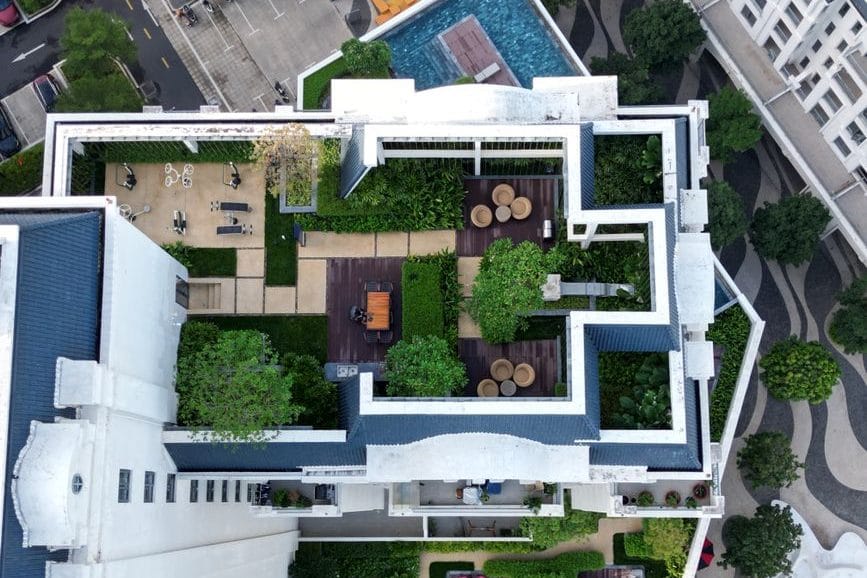
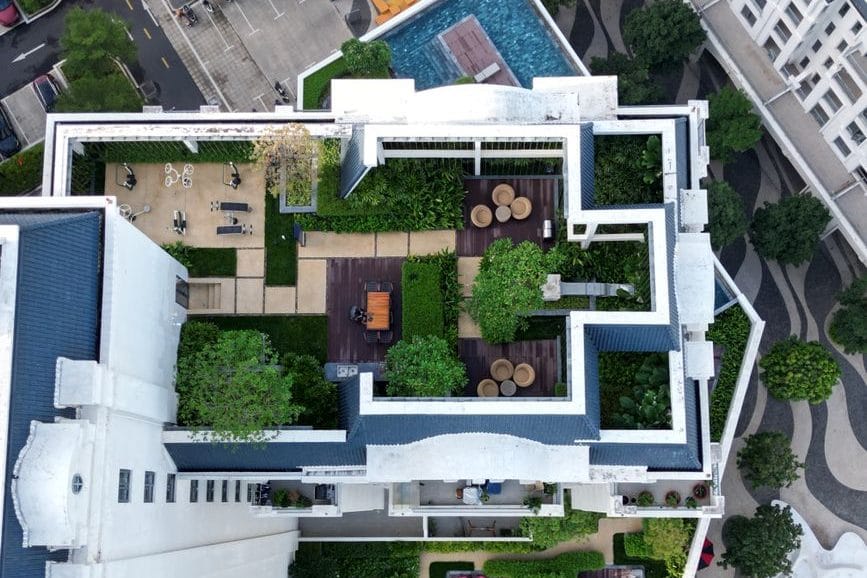
Walk to the top of almost any apartment block in Bangkok, Seoul or Taipei and for decades you would have found the same thing: a hot concrete slab, a forest of water tanks, a tangle of antennas, and a locked door keeping everyone out. The roof was the floor nobody wanted. That is changing, building by building, and the change says a lot about how dense Asian cities are running out of every kind of space except the one above their heads.
Why the roof was wasted for so long
For most of the post-war building boom, the roof had one job: keep the rain out and hold the water tank. Developers had no reason to make it usable, and fire codes in many cities treated roof access as a liability rather than an amenity. So the roof became dead space by default, baking under the sun and bouncing heat back into the top-floor flats below it.
The math has shifted. Land prices in central districts of Hong Kong, Singapore and Seoul have made every square metre count, and the rooftop is the one piece of a building that almost never gets used. When the ground floor is retail and every other floor is sold or rented, the roof is the last frontier left inside the property line.
From slab to social space
The simplest conversions are also the most popular: a shaded deck, some planters, a few benches, and suddenly a building has a place for residents to sit after dark when the streets below are still throwing off heat. In Singapore, where the Housing and Development Board has built communal roof gardens into newer blocks, these spaces double as evacuation areas and gathering points.
Food has driven a second wave. Rooftop bars in Bangkok turned the view into a business model years ago, but the more interesting shift is smaller and quieter. Cafés in Taipei and Seoul have opened on roofs that were storage a decade ago, trading street frontage for a slower kind of customer who climbs five flights for a breeze and a skyline.
The farm upstairs
Then there is growing things. Hong Kong has a scattering of community farms perched on commercial and residential roofs, where office workers rent a planter box and grow choi sum between meetings. Tokyo has had rooftop rice paddies and vegetable plots on department stores for years. None of this will feed a city, and nobody serious claims it will. What it does is shorten the distance between a person and something green to almost nothing — a real thing in a place where the nearest park might be twenty minutes and three road crossings away.
Heat is the quiet driver
Behind the cafés and the planter boxes sits a harder reason cities are paying attention: temperature. A bare concrete roof can run far hotter than the air around it, and it pumps that heat into the building and the neighbourhood. Cover it with plants or a deck and shade structure and the surface cools, which trims air-conditioning bills on the floor below and chips away, very slightly, at the heat island that makes a summer night in a dense Asian city feel like standing next to an idling engine.
Singapore has leaned hardest into this, with rules and incentives that push developers to replace the greenery a new building displaces somewhere on the structure — and the roof is the obvious place. The result is towers wearing gardens like hats, which started as a sustainability requirement and turned into a look the city now exports as part of its brand.
What gets in the way
It is not all rooftop yoga and basil. Retrofitting an old roof is genuinely hard. Many were never built to carry the weight of soil, water and a crowd of people, so the structure has to be checked and often reinforced. Waterproofing is unforgiving — a leak that takes months to find can rot the floors beneath it. Access and fire escape rules vary city to city and sometimes building to building, and a roof that holds a water tank and a lift motor room may have very little floor left to actually use.
Ownership tangles things further. In a building with dozens of separate owners, deciding who pays to convert and maintain a shared roof can stall a project for years. The roofs that get converted fastest tend to be the ones with a single owner — a hotel, an office tower, a public housing block run by one authority.
The roof as a measure of the city
What makes rooftops worth watching is that they are a quiet index of pressure. A city that ignores its roofs has room to spread; a city that climbs onto them has run out of easier options. Across Asia's densest cities, the locked door at the top of the stairs is being propped open, and what people put up there — a garden, a bar, a few rows of vegetables, a place to breathe — turns out to be a fairly honest portrait of what the city below feels it is missing.
The next time the lift takes you to the top floor, look for the stairs that keep going. More and more often, there is something at the top of them worth the climb.