Bike Infrastructure in Asian Cities: Who's Actually Building for Cyclists
Every Asian city claims to support cycling. Roughly four of them have actually built infrastructure that makes cycling safe, practical, and pleasant.
The Gap Between Ambition and Asphalt
Every major Asian city has a cycling master plan. Most of them are beautifully rendered PDFs that describe future networks of protected bike lanes, bike-sharing stations, and cycling-friendly intersections that will transform urban transportation. The gap between these plans and what actually exists on the ground ranges from modest (Taipei, Tokyo) to oceanic (Jakarta, Manila). Cycling infrastructure isn't difficult to design—the engineering is well-understood and the costs are a fraction of road construction. What's difficult is the political will to reallocate road space from cars and motorbikes to bicycles, which requires telling drivers they get less room so that cyclists can have more, a message that no politician delivers with enthusiasm.
This assessment focuses on what exists now—actual painted lanes, physical barriers, functioning bike-share systems, and the lived experience of cycling in Asian cities for commuting and recreation—rather than what might exist in 2030 according to a consultant's rendering.
Taipei: The Gold Standard
Taipei has built the most functional urban cycling infrastructure in Asia, and the centerpiece is YouBike, a public bike-sharing system that's become genuinely integrated into the city's transportation network rather than functioning as a tourist novelty. The numbers tell the story: over 13,000 bikes at roughly 1,400 stations, with an average daily ridership exceeding 130,000 trips. The cost—NT$10 ($0.30) for the first 30 minutes—is low enough that residents use it for utility trips rather than only for recreation, and the station density in central districts means there's almost always a dock within 200 meters. The bikes themselves are well-maintained, with three-speed internal hub gears, chain guards that protect work clothes, and front baskets large enough for a bag of groceries.
The physical infrastructure supports the sharing system. Taipei's riverside cycling paths—along the Tamsui, Keelung, and Xindian rivers—total over 112 kilometers of dedicated, car-free cycling and walking routes. These aren't narrow sidewalks repurposed as bike paths; they're wide, paved, well-lit corridors with separate lanes for cyclists and pedestrians, distance markers, rest areas with water fountains, and views of the surrounding mountains that make commuting feel like recreation. The Tamsui riverside path, from Guandu to Tamsui Old Street (about 20 kilometers), is one of the finest urban cycling routes in any country—flat, scenic, and connected to the MRT at multiple points for riders who want to cycle one way and train the other.
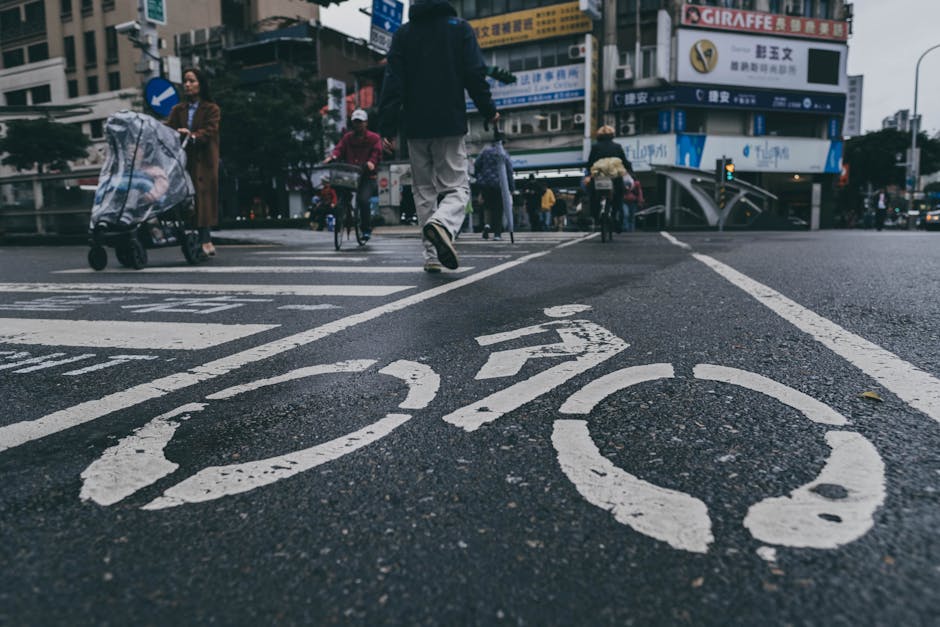
On-street cycling conditions are more mixed. Taipei has been adding protected bike lanes on major boulevards, with physical separation between cyclists and car traffic using concrete curbs or bollards. Dunhua South Road's bike lane, one of the city's most visible, runs for several kilometers through the Da'an district with dedicated signal phases at intersections. But the lane network is still fragmented—you'll find excellent protected lanes on some blocks and nothing on others, forcing cyclists into mixed traffic on roads where scooter riders treat bike lanes as personal express lanes. The city government has committed to 400 kilometers of dedicated bike infrastructure by 2028, which would make Taipei's on-street network competitive with Amsterdam's on a per-capita basis. Whether they deliver on that target will determine whether Taipei's cycling reputation becomes global rather than regional.
The Scooter Problem
Taipei's biggest cycling challenge is the scooter—Taiwan has roughly 14 million registered scooters, and in Taipei they occupy every available surface including bike lanes, sidewalks, and the theoretical consciousness of urban planners. The conflict between scooters and bicycles on shared infrastructure is the single biggest barrier to making Taipei a truly excellent cycling city, and the solution requires either enforcing existing parking and lane laws (politically difficult) or building infrastructure that physically excludes scooters (expensive but effective). Until one or both happen, cyclists in Taipei will continue to navigate a landscape where the infrastructure invites them and the scooter fleet contradicts the invitation.
Tokyo: Cultural Cycling Without Infrastructure
Tokyo presents a paradox: more people cycle daily than in almost any other major city, yet the dedicated cycling infrastructure is minimal compared to Taipei, Singapore, or even Seoul. An estimated 14% of all trips in Tokyo are made by bicycle—higher than Copenhagen's car mode share—but the cycling happens not because of infrastructure but despite its absence. Japanese cycling culture is built on social norms (cyclists ride slowly, yield to pedestrians, and park in designated areas), legal frameworks (bicycle registration is mandatory and theft is relatively rare), and a urban form that makes cycling practical (flat terrain in most areas, short distances between destinations, and a density of amenities that means most cycling trips are under three kilometers).
The absence of infrastructure creates a cycling culture that's functional but limited. Tokyo cyclists ride on sidewalks, which is legal but creates conflicts with pedestrians that have led to increasing restrictions. They ride in mixed traffic on narrow residential streets, which works because speeds are low but fails on arterial roads where car speeds are higher. And they use a vast network of paid bicycle parking facilities near train stations—multi-story, automated parking structures that store your bike underground for ¥100-200 ($0.67-$1.33) per day—which solves the parking problem but reinforces the idea that cycling infrastructure is a private good rather than a public utility.
Singapore: Ambitious Plans, Partial Reality
Singapore's cycling ambitions are enormous: the government has committed to building 700 kilometers of cycling paths by 2030, roughly triple the current network. The existing infrastructure is genuinely good where it exists—the Park Connector Network provides car-free cycling paths through green corridors across the island, and the newer cycling paths in Ang Mo Kio, Tampines, and Jurong include physical separation from both cars and pedestrians. The bike-sharing landscape has stabilized after the boom-and-bust cycle of 2017-2019, when dockless bikes from companies like oBike and ofo littered sidewalks before the companies collapsed. The surviving system, SG Bike and Anywheel, operates with better regulation and dock-based discipline.
The challenge is that Singapore's excellent cycling paths don't yet form a connected network for commuting. You can cycle beautifully through East Coast Park, but getting from East Coast Park to an office in the CBD requires navigating roads that were designed for cars and remain uncomfortable for cyclists despite recent lane additions. The heat is also a genuine barrier—cycling in 32°C heat with 80% humidity produces a state of perspiration that most workplaces cannot accommodate, which limits cycling to recreation or to riders with shower access at their destination.
Seoul: The River and Nothing Else
Seoul's Han River cycling path is magnificent—a continuous 42-kilometer loop along both banks of the river, well-maintained, well-lit, and heavily used on weekends and evenings. The Four Rivers cycling path extends this network far beyond the city, with a route stretching 633 kilometers from Incheon to Busan that's become a bucket-list cycling trip. On the river paths, Seoul is a world-class cycling city. Off them, it's a car-dominated city where cycling in traffic requires courage, experience, and a healthy disregard for personal safety. The city has been adding bike lanes on surface streets, but most are painted lanes without physical protection, which in a city where delivery scooters treat traffic laws as suggestions, provides psychological comfort rather than actual safety.
The Verdict
Taipei leads because it's the only Asian city where cycling functions as integrated transportation—where the infrastructure, the bike-sharing system, the public transit connections, and the cultural acceptance combine to make cycling a practical choice for regular commuting, not just weekend recreation. Tokyo cycles more but builds less, relying on culture to compensate for infrastructure in a way that works but won't scale. Singapore is building aggressively but isn't there yet. Seoul has a spectacular recreational network but hasn't committed to making cycling work for daily transportation beyond the river corridors. Every city on this list is better than it was five years ago, and every city has plans that would make it excellent if implemented. The question, as always with urban planning, is whether the plans survive contact with the politics.