Chatuchak Weekend Market: The Complete Strategy Guide
Chatuchak has 15,000 stalls. You have two days. Without a plan, you'll see 3% of the market and spend 80% of your energy on the wrong sections.
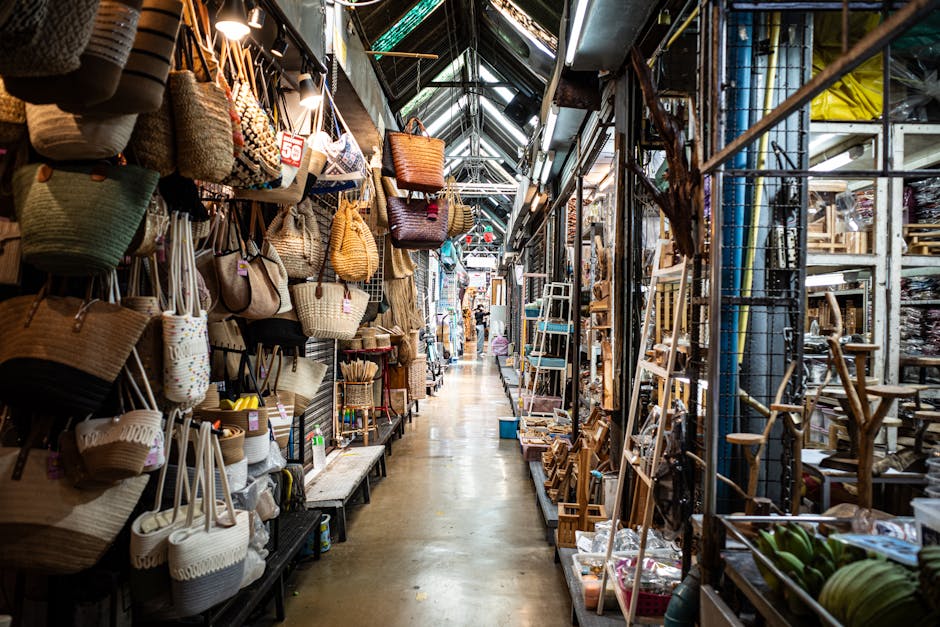
The Scale Problem
Chatuchak Weekend Market (also written Jatujak, abbreviated JJ) covers 35 acres, contains over 15,000 stalls organized into 27 numbered sections, and draws 200,000 visitors every Saturday and Sunday. These numbers make it one of the largest open-air markets in the world, and they also make it one of the most overwhelming. Arriving without a plan means wandering in circles, buying things you don't need from the first section you enter because your decision-making capacity has been overwhelmed by heat and stimulation, and leaving exhausted having seen a fraction of what the market offers. Chatuchak rewards strategy, and this article provides one.
Timing
The market officially operates Saturday and Sunday from 9 AM to 6 PM, with some stalls opening as early as 7 AM and food vendors staying later. Friday evening, a smaller night market operates from 6 PM to midnight with a focus on second-hand goods, plants, and food. The optimal visiting strategy depends on your heat tolerance and your priorities.
For serious shoppers: arrive at 8:30 AM when the early stalls are opening, the aisles are navigable, and vendors are fresh and willing to negotiate. The hours between 8:30 and 11:00 are Chatuchak's golden window—enough stalls open to make the trip worthwhile, cool enough (relatively) to walk comfortably, and uncrowded enough to examine merchandise without being pushed by the crowd. By 11:00, the heat becomes serious—Chatuchak has minimal shade, the narrow aisles trap heat, and the midday sun turns the concrete paths into radiators. The savvy approach: shop from 8:30 to 11:00, retreat to an air-conditioned restaurant or cafe for the 11:00-2:00 heat peak, and return for a final sweep from 2:00 to 4:00 as the temperature drops.
For casual visitors: Saturday is marginally less crowded than Sunday. Late afternoon (3:00-5:00) is more comfortable temperature-wise but some stalls begin closing. Friday evening's night market is the least crowded option and has an atmosphere that regular weekend visits don't match—more relaxed, more local, more focused on food and vintage goods.
Getting There and Getting Oriented
BTS Mo Chit or MRT Chatuchak Park stations both deliver you to the market's southern entrance. From either station, walk toward the clock tower—a visible landmark in Section 1—which serves as the market's central reference point. Grab a free map from the information booth near the clock tower. The map divides the market into numbered sections, and while the section boundaries are fuzzy in practice, they provide enough orientation to navigate intentionally rather than randomly.
Section Strategy
The 27 sections organize (loosely) by category. Here's what each cluster offers and whether it's worth your time:
Sections 2-4 (Clothing, vintage, designer): The market's fashion core and its strongest sections. Section 2 has Thai-designed contemporary clothing at ฿200-800 ($5.70-$23). Section 3 specializes in vintage—American, European, and Japanese vintage denim, band tees, military surplus—at prices (฿300-2,000 / $8.55-$57) that undercut vintage shops in Bangkok proper by 50-70%. Section 4 has indie Thai designers selling original work from stalls that function as showrooms. Priority: HIGH.
Sections 5-6 (Clothing, accessories): More mainstream fashion, heavy on trendy pieces that follow whatever's popular on Thai social media. Quality varies wildly. Skip unless you're looking for cheap basics or costume jewelry. Priority: LOW.
Sections 7-9 (Home decor, furniture, ceramics): Chatuchak's best-kept secret. Section 7 has Thai-made ceramics—bowls, plates, cups, planters—at ฿50-500 ($1.40-$14.30) that are better designed and better priced than anything in Bangkok's home stores. Section 8 has handmade furniture in teak and rattan that vendors will ship internationally. Section 9 has vintage home accessories, old signage, and salvaged industrial objects. Priority: HIGH if you have luggage space or shipping budget.
Sections 10-24 (Plants, pets, food, art, books, miscellaneous): The botanical section (17-18) is extraordinary—thousands of tropical plants, orchids, bonsai trees, and unusual specimens at prices that make plant shop owners weep. The food sections (scattered throughout but concentrated in sections 8 and 23) deserve their own discussion below. Art sections (7, 10) mix tourist-grade paintings with genuinely interesting work by Thai artists. Books (1, 27) include secondhand English-language paperbacks at ฿50-100 each. Priority: VARIES.
The Food
Chatuchak's food is excellent and should be treated not as refueling between shopping sessions but as a primary attraction. The food stalls and restaurants scattered throughout the market—and concentrated in sections 8 and 23—serve some of Bangkok's best casual food at prices that reflect the market's wholesale economics rather than the tourist-restaurant markup.
The essentials: Viva 8, in Section 8, is a tiny restaurant serving organic dishes—salads, smoothie bowls, and Thai-Western fusion plates—at ฿120-250 ($3.40-$7.15) that have earned it a cult following among Chatuchak regulars. The coconut ice cream vendors (multiple locations, look for the ones with the longest lines) serve scoops in a coconut shell with toppings of corn, peanuts, and coconut meat for ฿50 ($1.40)—the perfect heat antidote. The pad thai at Lung Lek's stall near Section 4 costs ฿60 and is made to order in a wok that's been seasoned by decades of use, producing a smoky, slightly charred flavor that restaurant pad thai rarely achieves. For drinks, Chatuchak has dozens of fruit shake vendors—mango, passion fruit, watermelon—at ฿40-60 ($1.14-$1.71) and freshly brewed Thai iced tea at ฿35 ($1).
Negotiation and Payment
Negotiation is expected at Chatuchak but within limits. For clothing and accessories, 10-20% below the asking price is realistic; for art and home goods, 15-25% is possible, especially on higher-priced items. The script is universal: ask the price, look thoughtfully unconvinced, name a lower price, settle somewhere between. Aggressive haggling is counterproductive and culturally inappropriate—the vendors work long hours in serious heat, and their starting prices at Chatuchak are already lower than what they'd charge in a fixed-price shop. Cash is still the dominant payment method, though a growing number of stalls accept PromptPay (Thai QR payment) and some accept credit cards for purchases over ฿1,000. ATMs are available near the main entrances but charge fees; bring cash.
The final piece of strategy: buy when you see it. Chatuchak's layout is complex enough that returning to a specific stall after continuing to browse is unreliable—you will not find it again, or you will spend thirty minutes trying and fail. If something catches your eye and the price is reasonable, buy it. The regret of the purchase you didn't make at Chatuchak is always sharper than the regret of the one you did.