Co-Living in Asian Cities: Shared Spaces for a Solitary Generation
The pitch is simple: a private bedroom, shared kitchen and living room, organized community events, and the implicit promise that you won't eat dinner alone every night.
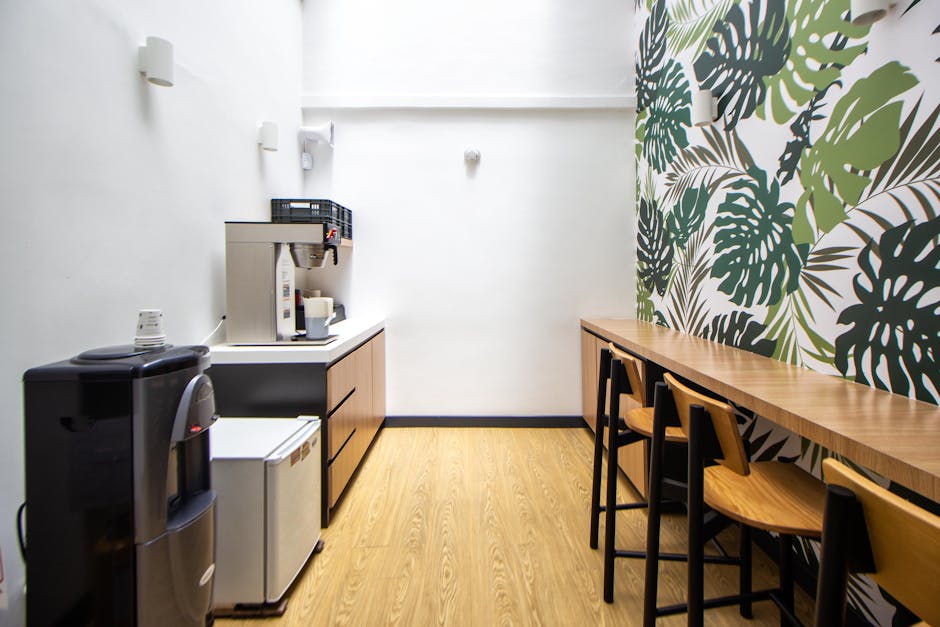
The Loneliness Economy
In 2025, approximately 35% of households in Seoul are single-person, 38% in Tokyo, and 16% in Singapore—numbers that represent one of the most significant demographic shifts in Asian urban history. These aren't just statistics; they're millions of individual living situations where a person comes home to an empty apartment, eats alone, and spends their evening in the company of screens rather than people. The health consequences of chronic social isolation are well-documented—increased risk of cardiovascular disease, depression, cognitive decline, and premature death at rates comparable to smoking—but the market response has been slow, in part because "I'm lonely" is an admission that most young professionals in achievement-oriented Asian cultures find difficult to make.
Co-living addresses this without requiring the admission. The format—a private bedroom within a shared apartment or purpose-built residential facility, with communal kitchens, living spaces, and organized social programming—provides built-in social infrastructure that eliminates the activation energy required to maintain a social life while working demanding hours in expensive cities. You don't have to organize a dinner party when someone in the communal kitchen is already cooking. You don't have to join a club when the co-living operator has scheduled a movie night, a cooking class, or a weekend hike. The social interaction is opt-in—you can retreat to your private room whenever you want—but the default is togetherness rather than isolation, which reverses the dynamic of conventional solo apartment living.
Tokyo: The Sharehouse Tradition
Japan has the longest history of modern co-living in Asia, rooted in the sharehouses (シェアハウス) that have operated since the early 2000s. The original sharehouses were modest affairs—converted apartments or houses with shared kitchens and bathrooms, minimal management, and rents 30-40% lower than equivalent solo apartments. The current generation is considerably more sophisticated. Oakhouse, one of Japan's largest operators, manages over 300 properties across Tokyo with amenities ranging from basic (shared kitchen, lounge, wifi) to premium (coworking spaces, gyms, rooftop terraces, in-house cafes). Monthly rents at Oakhouse range from ¥50,000 ($335) for a basic private room in an outer ward to ¥120,000 ($805) for a premium room in Shibuya or Roppongi, all-inclusive of utilities, internet, and building maintenance.
The demographic profile of Tokyo sharehouses has shifted from predominantly foreign (English teachers, exchange students) to predominantly Japanese young professionals who choose co-living not because they can't afford a solo apartment—most can—but because they value the social dimension. A 2024 survey by Oakhouse found that 67% of their Japanese residents cited "meeting new people" as their primary motivation, ahead of cost savings (23%) and location (10%). The implication is significant: co-living in Tokyo has moved from economic necessity to lifestyle preference, which changes the market dynamics and the quality expectations entirely.
Social Apartment: The Premium End
Social Apartment, operated by Global Agents, represents the premium tier of Tokyo co-living. Their properties—concentrated in desirable neighborhoods like Nakameguro, Ebisu, and Shimokitazawa—feature private rooms averaging 12-15 square meters with en-suite bathrooms, plus shared spaces that rival boutique hotels: designer kitchens, lounges with curated libraries, music rooms with soundproofed walls, and rooftop terraces. Rents run ¥90,000-150,000 ($605-$1,005) per month, which is competitive with solo studio apartments in the same neighborhoods. The community programming includes monthly house parties, cooking events organized by nationality (Italian night, Korean night), and group activities ranging from running clubs to photography walks.
Seoul: Government-Backed Experimentation
Seoul's co-living scene is distinctive because the government actively supports it as a housing policy tool. The Seoul Metropolitan Government, facing a housing affordability crisis alongside a loneliness epidemic, has invested in public co-living facilities aimed at young professionals and newlyweds. The Seoul Youth Housing (서울 청년 주택) program offers co-living units at below-market rates to residents aged 19-39, with shared kitchens, laundry facilities, and community rooms. The rent—roughly ₩300,000-500,000 ($225-$375) per month in neighborhoods where equivalent studios cost ₩700,000-1,000,000 ($525-$750)—makes the program extremely competitive, and waiting lists for units run to several months.
The private sector has responded with offerings that target the same demographic at higher price points. Mangrove, a co-living operator focused on the creative industry, operates spaces in Seongsu-dong and Mangwon-dong that house residents working in design, film, music, and technology. The concept is not just shared living but creative community—residents collaborate on projects, share equipment and expertise, and build professional networks that extend beyond the building. Monthly rents at Mangrove are ₩600,000-900,000 ($450-$675), including a private room, shared studio space, and access to equipment like 3D printers, recording booths, and photography studios. The residents are predominantly Korean, with a small international contingent, and the creative-community angle gives the brand an identity that distinguishes it from generic co-living operators.
Singapore and Hong Kong: Premium Necessity
In Singapore and Hong Kong, where private housing costs are among the highest in the world, co-living occupies a market position closer to necessity than lifestyle choice. A private room in a co-living space in Singapore—from operators like Hmlet, Lyf, or The Quarters—costs S$1,200-2,200 ($900-$1,650) per month, which is 20-40% less than an equivalent studio apartment but still represents a significant expense. The value proposition is convenience (furnished rooms, included utilities, no agent fees, flexible leases) combined with community (organized events, shared workspaces, curated resident demographics).
Lyf Funan Singapore, operated by Ascott (a CapitaLand subsidiary), represents the corporate co-living model at its most polished. The property, occupying multiple floors of the Funan mixed-use development, offers rooms from S$1,800 per month with access to shared kitchens, a laundry with on-site dry cleaning, a social kitchen where professional chefs host cooking classes, and a resident app for booking common spaces and RSVP-ing to events. The design is Instagram-ready—exposed concrete, industrial lighting, custom furniture—and the resident demographic skews toward digital professionals in their late twenties and thirties. It's co-living as a branded lifestyle product, and whether that appeals to you depends on whether you want community organized for you or community that organizes itself.
What Works and What Doesn't
The co-living formats that succeed long-term share several characteristics: they offer genuine privacy (en-suite bathrooms are near-mandatory for retention), they create organic social opportunities without forcing participation, they attract residents with some demographic commonality (age, profession, lifestyle) without being exclusionary, and they're operated by management teams that understand the difference between hospitality and community-building. The formats that fail typically overestimate residents' desire for programmed activities (mandatory pizza nights feel like freshman orientation), underestimate the importance of noise management (shared walls without acoustic treatment are a deal-breaker), or price themselves in a range where residents could afford solo apartments and simply choose not to stay when the novelty fades.
The deeper question—whether co-living is a genuine solution to urban loneliness or a commercial product that monetizes it—doesn't have a clean answer. The best co-living spaces do create genuine communities where friendships form, support networks develop, and residents report higher life satisfaction than they experienced living alone. The worst are glorified hostels with marketing budgets, where the "community" exists primarily in the operator's branding materials and the residents are too busy working to interact with each other beyond polite nods in the hallway. The difference between the two comes down to design decisions that are subtle but critical: the size and placement of common spaces, the selection and training of community managers, the resident screening process, and the hundred small choices that determine whether a building full of strangers becomes a community or just remains a building full of strangers with better furniture.