Coworking Etiquette in Asia: The Unwritten Rules Nobody Posts on the Wall
Every coworking space has rules on the wall. The rules that actually matter are the ones nobody wrote down because everyone is supposed to already know them.
The Posted vs. The Real
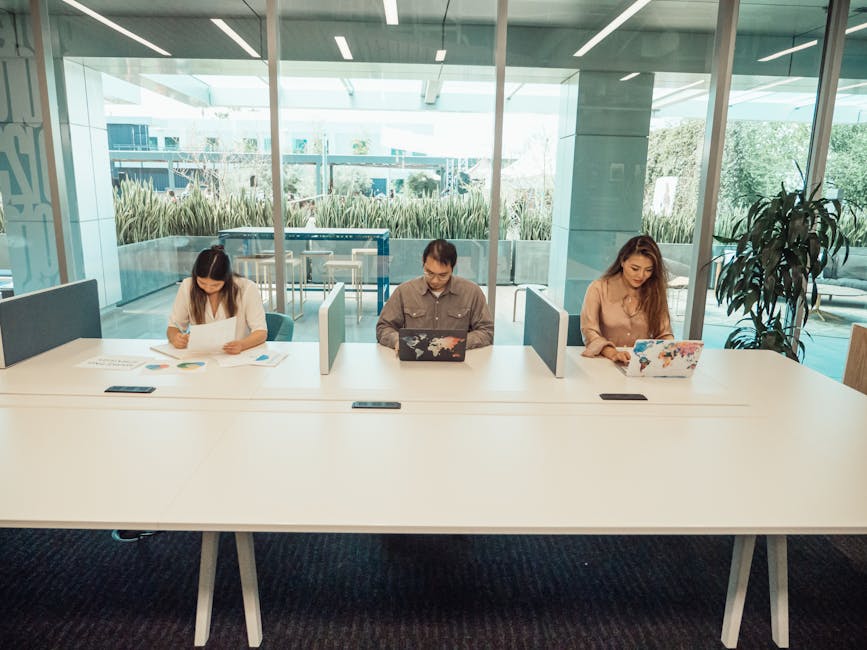
Every coworking space in Asia has a set of posted rules: don't take other people's seats, book meeting rooms through the app, clean up after yourself in the kitchen, and don't steal the milk. These rules address the logistics of shared space. The rules that actually determine whether a coworking space functions as a productive environment or a noisy cafe with better chairs are unwritten, culturally specific, and consistently violated by newcomers who assume that coworking etiquette is the same everywhere. It isn't. A behavior that's perfectly acceptable in a Bangkok coworking space might be offensive in Tokyo, and a norm that Seoul coworkers take for granted might baffle someone arriving from Bali. This guide addresses the cultural gaps that posted rules don't cover.
The Phone Call Problem
Phone calls in open coworking spaces are the single most contentious issue across every Asian coworking community, and the expectations vary dramatically by country. In Japan, taking a phone call at your desk is essentially prohibited by social norm—Japanese coworking spaces provide designated phone rooms or phone booths, and using them is not optional but expected. Making a call in the open workspace will draw stares, pointed headphone adjustments from neighbors, and possibly a polite but firm request from staff. This norm reflects the broader Japanese expectation that shared spaces should be quiet, and violating it marks you as someone who doesn't understand the rules.
In Bangkok and Bali, the norm is more relaxed: brief phone calls at your desk are generally tolerated, particularly at lower volumes, though extended conversations are expected to move to a phone room or the outdoor area. The Thai concept of kreng jai (consideration for others' feelings) means that Thai coworkers are unlikely to confront you about a phone call but will silently resent it, which is arguably worse than a direct request to stop. In Seoul, the expectation splits by space: premium coworking spaces enforce quiet zones similar to Japan, while more casual spaces tolerate calls. Reading the room—literally observing whether other people are making calls at their desks—is the safest approach.
Video Calls: A Special Case
Video calls are phone calls with screens, but many coworking users treat them as a different category and conduct them at their desks with the confidence of someone in a private office. This is wrong everywhere. A video call is louder than a phone call (because you're projecting for the microphone), longer than most phone calls (because meetings expand to fill available time), and more disruptive than most phone calls (because the screen invites the speaker to forget they're in a shared space). Video calls belong in meeting rooms or phone booths—period, in every city, with no exceptions that the person making the call gets to decide unilaterally.
Food and Smell
The food-at-desk question is handled differently across Asian coworking cultures. In Japan, eating at your desk is acceptable if the food is packaged, cold, and doesn't produce strong odors—an onigiri or a sandwich is fine; a bowl of ramen is not. In Bangkok, where the street food culture is deeply ingrained and lunch options are cheap and fragrant, eating at your desk is widely accepted, including foods with strong aromas. Thai coworkers will bring pad kra pao, tom yum, and other dishes that would clear a Tokyo coworking space, and nobody comments because the food culture is too important to restrict. In Seoul, instant ramen (ramyeon) prepared in the coworking kitchen and consumed at the desk is a common sight, and the smell—which is substantial—is considered normal.
The safest approach for newcomers: eat in the designated eating area if one exists, choose food with minimal aroma if eating at your desk, and observe what the locals are doing before introducing your own food habits. If the person next to you is eating pad thai at their desk, you can probably eat your lunch there too. If everyone around you is drinking coffee and eating nothing, take your meal to the kitchen or the cafe.
Social Interaction
The degree to which you're expected to interact with your coworking neighbors varies more by individual coworking space culture than by country, but some national patterns hold. Japanese coworking spaces default to silence and non-interaction—making eye contact with a stranger and introducing yourself is not expected and can feel intrusive. Korean coworking spaces are slightly more social, particularly spaces that target younger users, but the interaction is typically initiated through organized events rather than spontaneous conversation. Bangkok and Bali coworking spaces are the most socially open—striking up conversation with a neighbor is normal, attending community events is encouraged, and the social dimension is part of the value proposition.
The universal rule: don't interrupt someone wearing headphones. Headphones in a coworking space are the international signal for "I'm working, please don't talk to me," and this signal should be respected with the same seriousness you'd apply to a closed office door. If you need to ask a headphone-wearing neighbor something, a tap on the desk (not on their arm or shoulder) is less intrusive than a verbal interruption.
Desk Hygiene and Shared Spaces
Clean your desk when you leave—wipe it down, push in your chair, dispose of your trash, and leave no evidence that you were there. This is universal and non-negotiable, but the standard of "clean" varies: in Japan, wiping the desk surface with the provided cleaning wipes is expected even if you think it's already clean. In Bangkok, removing visible trash is sufficient. In Singapore, where cleanliness is practically a national value, the expectation is closer to Japan's. The kitchen is the most frequent source of coworking conflict across all countries: clean your dishes immediately, don't leave food in the communal fridge for more than two days, and don't take other people's milk, coffee, or snacks. This last rule seems obvious, but the frequency with which it's violated suggests that for some people, "communal space" means "my stuff is mine and your stuff is also mine."
The deepest unwritten rule of coworking in Asia, underlying all the specific norms about noise, food, and interaction, is consideration: the awareness that your comfort in a shared space depends on the behavior of others, which means their comfort depends on your behavior, which means every action you take in a coworking space—the volume of your music, the temperature you set the AC to, the force with which you type on your keyboard—is a social act with consequences for people who didn't choose to share space with you but are doing so anyway. The posted rules handle the logistics. Consideration handles everything else.