Da Nang: Vietnam's Most Livable City Is Also Its Most Underrated
Hanoi has history. Ho Chi Minh City has energy. Da Nang has something rarer: a city that actually seems designed for the people who live in it.
The Livability Argument
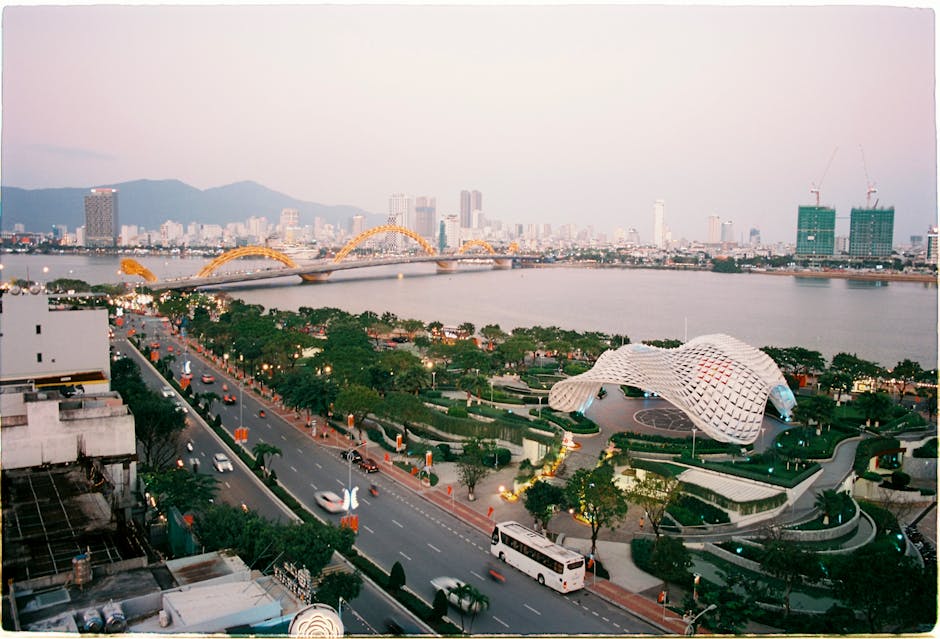
Da Nang occupies a position in Vietnam's urban hierarchy that makes it easy to overlook: it's the third-largest city, which means it lacks the cultural gravity of Hanoi and the economic dynamism of Ho Chi Minh City. But a category that neither of those cities competes in—livability, the day-to-day experience of actually inhabiting a city rather than visiting one—is where Da Nang quietly excels. The city has a beach that would be a national landmark in most countries, a downtown compact enough to cycle across in twenty minutes, mountains visible from every rooftop, food that ranges from excellent to transcendent, an emerging tech sector that provides professional opportunity, and a cost of living low enough that a comfortable life is accessible to people who aren't wealthy. This combination exists in Da Nang because the city grew slowly enough to avoid the infrastructure collapse that rapid urbanization inflicted on HCMC and Hanoi, and because local government made a series of decisions—investing in bridge infrastructure, maintaining public beach access, limiting high-rise development near the coast—that preserved livability while allowing growth.
My Khe Beach and the Coastal Life
My Khe Beach stretches roughly 30 kilometers along Da Nang's eastern edge, a sweep of white sand and warm water that Forbes once named one of the most attractive beaches in the world. The ranking is defensible: the sand is clean, the swimming is safe (lifeguards patrol the main sections), the waves are suitable for surfing from September to March, and the beach is public—no resort has claimed exclusive access, no admission fee restricts entry, and the sunrise, which rises directly over the South China Sea, is available to anyone willing to be awake at 5:30 AM. The beachfront road, Vo Nguyen Giap, runs the length of the main beach area with a wide sidewalk, a cycling lane, and a row of restaurants and cafes that face the ocean. A seafood dinner at one of the beachfront restaurants—grilled prawns, morning glory stir-fried with garlic, steamed clams, rice, and beer—costs 300,000-500,000 VND ($12-$20) for two people, which is the kind of value proposition that makes other beach cities seem like scams.
The beach shapes daily life in Da Nang in a way that it doesn't in most cities. Residents swim before work, run along the beach road at dawn and dusk, and gather on the sand in the early evening as the heat breaks and the sky turns colors that no phone camera can accurately reproduce. The beach isn't a weekend destination or a tourist attraction; it's infrastructure—as essential to the city's character and daily function as the Han River bridges or the central market.
The Food
Da Nang's food scene operates at a level of quality that its modest international reputation doesn't suggest. The city's culinary identity is built on central Vietnamese cuisine, which is distinct from the north (Hanoi) and south (HCMC) in its emphasis on fresh herbs, complex dipping sauces, and dishes that balance multiple flavors and textures in each bite.
Mì Quảng, Da Nang's signature dish, is a turmeric-tinted noodle dish served with a small amount of intensely flavored broth (not a soup—the noodles should be barely submerged), topped with pork, shrimp, peanuts, rice crackers, and a heap of fresh herbs and greens. A bowl costs 25,000-35,000 VND ($1-$1.40) at the best street stalls, and the complexity of flavor achieved at that price point is remarkable—the turmeric, the char of the pork, the crunch of the rice crackers, and the freshness of the herbs create a dish that's simultaneously comforting and sophisticated. Bún chả cá, a fish cake noodle soup that's Da Nang's other signature, costs roughly the same and delivers a lighter, cleaner flavor profile with fish cakes that are springy and fresh, in a broth that's been simmering since before dawn.
Bánh mì—the Vietnamese sandwich that's become a global street food icon—is arguably best in Da Nang, where Bánh Mì Bà Lan on Trưng Nữ Vương street serves the definitive version: a perfectly crispy baguette filled with pate, cold cuts, pickled vegetables, chili, and fresh herbs for 20,000 VND ($0.80). The bread—baked in brick ovens using a French-influenced recipe adapted over a century of Vietnamese practice—is the critical difference between a good bánh mì and a life-changing one, and Da Nang's bakeries produce bread with a crackle and a lightness that Hanoi and HCMC bakeries don't consistently match.
The Seafood
Da Nang's seafood markets and restaurants benefit from the city's direct access to fishing waters that haven't been depleted to the degree of more heavily trafficked coastlines. The Hàn Market, downtown near the river, has a wet market section where you can select live fish, crab, and shellfish and have them cooked at adjacent stalls for a preparation fee of 30,000-50,000 VND. A whole grilled fish, enough for two people, costs roughly 150,000 VND ($6), and the quality—fish that was swimming hours ago, grilled over charcoal, served with dipping sauce and rice paper—represents a seafood experience that destination restaurants in Western cities charge twenty times as much to approximate.
The Mountains
The Marble Mountains—a cluster of five limestone and marble peaks—rise abruptly from the flat coastal plain south of Da Nang's city center, close enough that you can cycle to them in 25 minutes. The mountains contain Buddhist pagodas, Hindu caves, and a network of grottos and tunnels that served as a Viet Cong hospital during the war. Climbing the main peak (Thuy Son, Water Mountain) involves roughly 150 steps cut into the rock, and the views from the summit—the coastline stretching south toward Hoi An, the city stretching north toward the Hai Van Pass—provide a perspective on Da Nang's geography that explains its livability: the ocean to the east, the mountains to the west, the river through the middle, and a city compact enough that all three are always in sight.
Bà Nà Hills, a mountain resort roughly 30 kilometers west of the city center, is home to the Golden Bridge—the pedestrian bridge supported by two giant stone hands that went viral in 2018. The bridge is a genuine engineering and aesthetic achievement, regardless of its Instagram ubiquity, and the mountain's cooler temperatures (6-8°C lower than the city below) provide relief on the hottest days. The cable car to the summit is one of the longest in Asia at 5.8 kilometers, and the ride provides views of the jungle-covered mountains that make the ₫750,000 ($30) admission fee for the resort feel reasonable.
Living Here
Da Nang's rental market is among the most affordable in Southeast Asian cities with comparable quality of life. A modern one-bedroom apartment within walking distance of the beach rents for 5-8 million VND ($200-$320) per month. A two-bedroom apartment with ocean views runs 8-15 million VND ($320-$600). These prices include buildings with pools, gyms, and 24-hour security—amenities that in Bangkok or HCMC would command significantly higher rents. The expat community is growing but still small enough that it hasn't created the bubble dynamics of Bali or Chiang Mai, and the integration between foreign residents and Vietnamese community life is facilitated by the city's compact size and the friendly, direct character of central Vietnamese culture.
Da Nang's limitations are real: the typhoon season (September to December) brings serious weather and flooding, the nightlife is limited compared to HCMC or Bangkok, the international flight connections are fewer than Hanoi's, and the job market for foreigners is smaller (though the growing IT sector is creating opportunities). But for people whose priority is daily quality of life—good food, natural beauty, physical comfort, and the ability to live well without spending a fortune—Da Nang makes an argument that few Asian cities can counter. It's a city that feels like it was designed for living, and in 2025, that's rarer than it should be.