The Art of Doing Nothing: Asia's Best Spaces for Productive Idleness
Asian cities are famous for their work ethic. They should be equally famous for the spaces they've created for doing absolutely, gloriously nothing.
The Paradox of Productive Idleness
Asian cities run at speeds that make New York look relaxed and London look comatose. Tokyo's train system moves 40 million passengers daily. Seoul's office workers average 52-hour weeks. Singapore's GDP per hour worked ranks among the world's highest. Beneath this surface of relentless productivity, however, exists a parallel infrastructure of spaces designed for the opposite: places where doing nothing is not only acceptable but is the intended activity, where the absence of purpose is the purpose, and where the city's most driven residents go to be temporarily, deliberately useless. These spaces aren't accidents or afterthoughts. They're as essential to the cities' function as the transit systems and the offices, because a city that provides no release from its own intensity eventually breaks the people who power it.
The Japanese Garden: Emptiness by Design
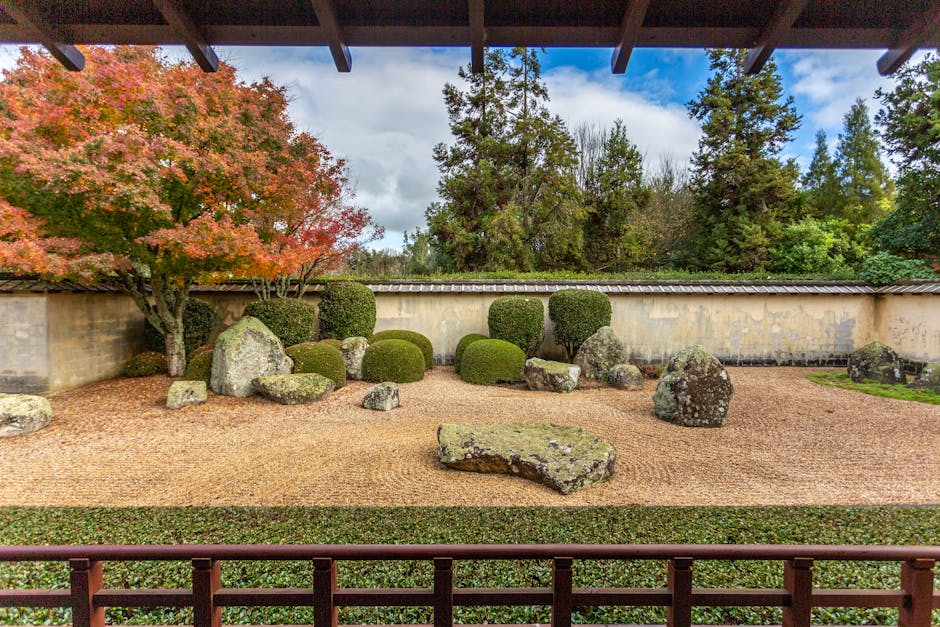
The Japanese garden is the world's most sophisticated technology for producing stillness in a human observer, and Tokyo has over 100 of them accessible to the public. The mechanics are precise: water creates a constant, low-frequency sound that masks urban noise. Carefully placed stones arrest the eye and create focal points that slow scanning behavior. Trees are pruned to frame specific views, directing attention rather than fragmenting it. And the paths—rarely straight, always curving—force a walking pace that aligns with contemplation rather than transit. The cumulative effect is a perceptual shift: after twenty minutes in a well-designed Japanese garden, your heartbeat has slowed, your breathing has deepened, and the urgency that constitutes modern urban consciousness has temporarily dissolved.
Rikugien Garden in Bunkyo Ward, Tokyo, is my candidate for the best do-nothing space in Asia. Built in 1702, the garden centers on a large pond with a walking path that takes roughly 40 minutes to complete at a pace slow enough to notice the details—the moss on the stones, the koi breaking the water surface, the way the light changes as the path curves from an open lakeside section into a dense grove of maples. Admission is ¥300, the garden is rarely crowded on weekday mornings, and the bench beside the Tsutsuji-chaya teahouse provides a seat where you could sit for an hour without doing anything at all, watching the light shift across the pond, and leave feeling like you've accomplished something essential that has no name.
Shinjuku Gyoen: Scale and Silence
Shinjuku Gyoen, the 58-hectare national garden in central Tokyo, achieves something that few public spaces manage: genuine quiet in the center of a city that produces some of the highest ambient noise levels on Earth. The garden's walls and dense perimeter planting create an acoustic buffer that reduces outside noise by roughly 20 decibels, and the interior—landscaped in three styles (Japanese, English, and French formal)—is large enough that even on busy weekends, walking five minutes from the main entrance reaches areas where the only sounds are birdsong and wind. The lawn areas in the English-landscape section are explicitly designed for lying down—the grass is maintained at a softness and a height that invite horizontal use—and on spring and autumn afternoons, hundreds of Tokyoites spread blankets and spend hours in states of wakefulness that hover between napping and meditating.
Seoul: The Heated Floor Tradition
Korea's contribution to the art of doing nothing is ondol—the heated floor system that has been central to Korean domestic life for over 2,000 years and that creates a quality of physical comfort so profound that it dissolves the impulse to do anything at all. Lying on an ondol floor in winter—the heat rising gently through the body from below, the warmth reaching your bones in a way that no blanket or radiator can replicate—is an experience that renders ambition temporarily irrelevant. The jjimjilbang culture described elsewhere in these pages is the public expression of this principle: thousands of people in matching pajamas, lying on heated floors, doing nothing with the dedication that Korean culture usually reserves for studying and working.
Beyond jjimjilbang, Seoul offers doing-nothing spaces that are less theatrical but equally effective. Bukchon's hanok cafes, where you sit on heated floors at low tables and drink tea for hours, provide a residential-scale version of the jjimjilbang principle. The Seoul City Wall trail, which follows the original Joseon-era fortification for 18.6 kilometers around the city's historic center, offers walking sections where the city disappears below the ridgeline and the only company is the 600-year-old stone wall and whatever trees the seasons have chosen to display. The Seoullo 7017 overpass park, particularly on weekday mornings when the crowds are thin, provides elevated seating above the city's traffic with a quality of detachment—you're above the busyness, watching it without participating—that's surprisingly calming.
Singapore: Engineered Tranquility
Singapore, characteristically, has engineered its do-nothing spaces with the same precision it applies to its transit system and its water supply. The Chinese and Japanese Gardens on two islands in Jurong Lake provide classical garden experiences in a tropical setting—pagodas, bridges, bonsai, and stone lanterns arranged with the deliberate imperfection that garden design theory prescribes. The Botanic Gardens, a UNESCO World Heritage Site in the center of the city, offer over 82 hectares of green space where the tropical heat is tempered by mature tree canopy and the sound environment is dominated by birds rather than traffic.
But Singapore's most underappreciated do-nothing spaces are its void decks—the covered ground floors of HDB apartment blocks, open on all sides, where residents gather on benches and stone tables to sit, talk, play chess, or simply watch the neighborhood move. The void deck is Singapore's organic, ungoverned public space—designed originally for ventilation and access, adopted by residents as living rooms, playgrounds, wake venues, and the sites of the everyday socializing that high-rise living might otherwise eliminate. The aesthetic is not designed for Instagram—concrete columns, fluorescent lighting, plastic chairs—but the function is profound: a space where doing nothing is the default activity, where presence requires no purchase, and where the community maintains itself through the simple act of being together without agenda.
The Permission to Stop
What all these spaces share is the implicit permission to stop. In cities that celebrate productivity, that measure success in hours worked and goals achieved, that fill every minute with notification and obligation, the existence of spaces designed for non-doing is a quiet act of cultural rebellion. The Japanese garden says: sit here and watch the light change. The ondol floor says: lie here and let the warmth hold you. The void deck says: be here, with your neighbors, without needing a reason. These are not invitations to laziness—they're invitations to a quality of presence that productivity culture specifically prevents, and that the human nervous system specifically requires.
The next time you're in an Asian city and the pace feels overwhelming—the crowds, the noise, the constant forward motion of millions of people going somewhere—find one of these spaces and do nothing in it. Not nothing as prelude to something, not nothing as recovery from something, but nothing as an activity complete in itself. The garden, the heated floor, the bench in the void deck—they've been waiting for you. They're patient. They have nowhere else to be.