Dongdaemun After Midnight: Seoul's Fashion Market Never Sleeps
Most shopping districts close at 10 PM. Dongdaemun opens at midnight. The economics, the energy, and the fashion are all better in the dark.
The Midnight Economy
At 1 AM on a Tuesday, the wholesale fashion floors of Dongdaemun Market in Seoul are as crowded as a rush-hour subway station. Buyers from Korean online fashion retailers push carts loaded with plastic-wrapped garments through narrow aisles between stalls, each stall roughly three meters wide and stacked floor to ceiling with the season's inventory. Cash changes hands in quantities that would make a bank teller nervous—wholesale transactions are overwhelmingly cash, an artifact of the market's informal origins that persists despite Korea's otherwise near-total adoption of digital payment. The fluorescent lighting is aggressive, the air conditioning is set to "arctic," and the combined noise of haggling, carts, and K-pop from competing Bluetooth speakers creates a sensory environment that is either exhilarating or exhausting depending on how much coffee you've had.
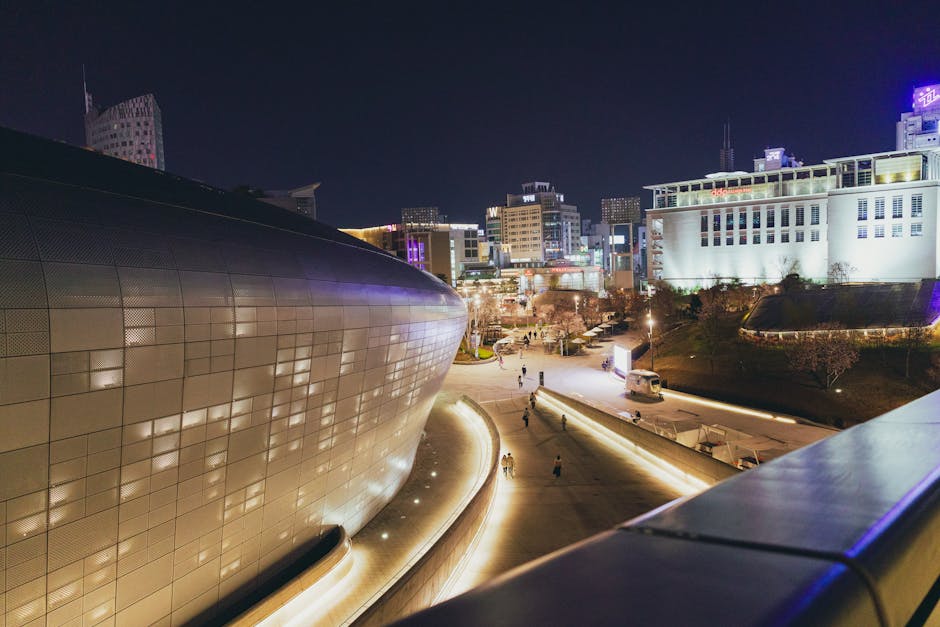
Dongdaemun Market—actually a cluster of over 30 shopping malls, wholesale markets, and retail buildings surrounding the Dongdaemun Design Plaza—is the engine of Korea's domestic fashion industry. The wholesale markets (Doota Tower, APM, Team 204) operate from approximately 8 PM to 5 AM, serving the buyers who stock the country's online fashion platforms and small retail shops. The retail malls (Migliore, Hello APM) operate on more conventional hours, and the Dongdaemun Design Plaza itself—Zaha Hadid's massive aluminum-and-concrete structure that opened in 2014—hosts exhibitions, fashion shows, and the DDP Design Market on weekends. The district employs an estimated 100,000 people and generates trillions of won in annual revenue, making it one of the largest fashion marketplaces in the world by both volume and value.
The Wholesale Experience
Visiting the wholesale floors as a retail customer is possible but requires understanding the unwritten rules. Most wholesale stalls have minimum purchase requirements (typically three pieces of the same item), and negotiation is expected for bulk orders but rare for single items. The prices—₩5,000-30,000 ($3.75-$22.50) for garments that retail for two to five times as much—reflect production costs that are kept low through domestic manufacturing (many stalls produce their own garments in workshops within or adjacent to the market), fast turnaround (a design can go from sketch to stall in less than a week), and the brutal efficiency of a marketplace where hundreds of stalls compete for the same buyers.
The fashion itself is fast, reactive, and designed for the Korean online retail market, which means it's trend-driven, size-limited (Korean sizing runs small by Western standards), and produced in quantities that sometimes number in the dozens rather than thousands. This micro-production model, which predates the "fast fashion" label by decades, allows Dongdaemun to respond to trends with a speed that Zara and H&M, for all their much-discussed supply chain agility, cannot match. A style that goes viral on Korean social media on Monday can appear in Dongdaemun stalls by Thursday, produced in a workshop above the market using fabric sourced from the textile section two buildings over.
Navigating the Buildings
The wholesale buildings are organized loosely by category: women's fashion dominates most buildings, men's fashion occupies specific floors (usually upper floors with less foot traffic), accessories and bags cluster in separate sections, and fabric and notions wholesalers occupy the older buildings east of the DDP. For retail shoppers, the best approach is to focus on one or two buildings per visit—trying to cover the entire market in a single night is physically impossible and mentally overwhelming. Doota Tower is the most organized and visitor-friendly; APM Place has the widest variety; and Team 204 is where industry buyers go, which means the fashion is more sophisticated but the atmosphere is less welcoming to casual browsers.
The DDP: Architecture After Hours
Zaha Hadid's Dongdaemun Design Plaza, completed in 2014 at a cost of ₩484 billion ($365 million), is the district's most visible landmark and one of the most architecturally significant buildings in Seoul. The structure—a massive, curving, aluminum-clad form that appears to have landed from space—divides opinion sharply: admirers call it a masterwork of parametric design; critics call it an expensive UFO that ignores its context and overwhelmed the traditional Dongdaemun neighborhood in both scale and aesthetic. Both assessments have merit, and the building is best experienced at night, when the aluminum skin reflects the surrounding lights and the LED installations embedded in the facade create patterns that shift hourly.
The DDP's interior houses exhibition galleries (admission varies, often free), a design museum, a library, and commercial spaces that host pop-up markets, fashion events, and design showcases. The rooftop garden, accessible for free, provides views of the market district that contextualize the scale of Dongdaemun's commercial landscape—dozens of buildings, each housing hundreds of stalls, all operating at maximum intensity while most of Seoul sleeps. The contrast between Hadid's sleek, curvaceous architecture and the raw, fluorescent-lit market buildings surrounding it encapsulates Dongdaemun's split personality: simultaneously Seoul's most cutting-edge and most traditional commercial district, looking both forward and backward without resolving the tension between the two.
When to Go
The retail malls operate from roughly 10:30 AM to 5:00 AM, with peak hours between 8 PM and midnight. The wholesale buildings peak between midnight and 3 AM. For the full Dongdaemun experience—retail browsing followed by wholesale exploration followed by dawn breakfast at a nearby 24-hour restaurant—arrive around 10 PM and leave around 4 AM. The predawn hours, when the buying frenzy subsides and the market workers begin cleaning up, have a exhausted, post-party quality that's oddly peaceful. The 24-hour restaurants near exit 8 of Dongdaemun History & Culture Park station serve galbitang (beef rib soup) and seolleongtang (ox bone soup) at ₩9,000-12,000, hot and fortifying meals that mark the transition from a night in the market to a morning in the city. Eat slowly. You've earned it.