Food Halls in Asia Are Replacing Both Fast Food and Fine Dining
The food hall promised to combine the quality of independent restaurants with the convenience of a food court. In Asia, that promise is actually being kept.
Not Your Mother's Food Court
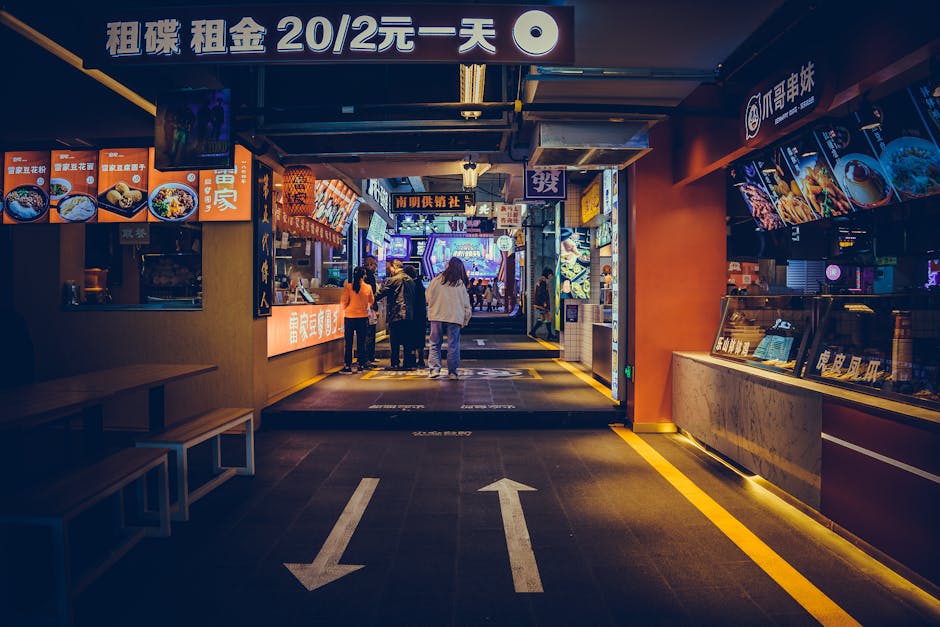
There's a distinction between a food court and a food hall that sounds like marketing but represents a genuine difference in dining experience. A food court is a collection of fast-food vendors sharing a communal seating area, typically in a mall basement, where the primary selection criterion is speed and the ceiling of quality is set by the corporate parent's cost optimization. A food hall is a curated collection of independent food vendors—often restaurants or chefs with standalone reputations—sharing a designed space where the quality ceiling is set by the culinary ambition of the operators and the competitive pressure of serving food next to peers who take their cooking seriously. Asia has both, but the food hall category has exploded over the past five years in ways that are reshaping urban eating patterns across the region.
The numbers tell the story. Bangkok's ICONSIAM development, opened in 2018, includes Sook Siam—a 5,000-square-meter food hall styled as a floating market with over 100 vendors serving regional Thai dishes from all 77 provinces. Tokyo's department store basements (depachika) have operated as premium food halls for decades, but new standalone operations like Shibuya Stream's food floor and the Tokyo Midtown Hibiya food hall have raised the format to new heights. Singapore's Jewel Changi Airport houses over 100 food vendors, with several one-Michelin-star hawker stalls operating alongside international restaurants. These aren't food courts with better interior design; they're fundamentally different dining ecosystems that combine the affordability and variety of street food with the comfort and curation of restaurant dining.
Tokyo Depachika: The Original Food Hall
Japanese department store basements have been the world's most sophisticated food halls since the 1950s, and they remain the benchmark against which all other food hall formats should be measured. The depachika at Isetan Shinjuku, Takashimaya Nihonbashi, and Mitsukoshi Ginza are not retail spaces that happen to sell food—they're food destinations that happen to be located in department stores, and the quality, variety, and presentation of the offerings would justify a dedicated trip even if the rest of the building didn't exist.
Isetan Shinjuku's depachika occupies the entire B1 floor of the flagship store, roughly 3,300 square meters arranged in sections: fresh produce (fruits that are individually wrapped, graded, and priced like jewelry—a perfect Yubari melon can cost ¥30,000), prepared foods (bento boxes, salads, sushi, tempura, grilled fish), confectionery (Japanese wagashi, French pastries, chocolate from artisan makers), bread (bakeries operating dedicated ovens in-store), and beverages (sake, wine, craft beer, tea). The vendors include established Tokyo restaurants offering takeaway versions of their signature dishes, regional specialty producers making Tokyo-exclusive items, and seasonal pop-ups that rotate monthly. A lunch assembled from the depachika—a sushi assortment for ¥1,500, miso soup for ¥300, a seasonal wagashi for ¥400—costs ¥2,200 ($14.75) and represents some of the best eating available in a city where "best eating" is an extremely competitive category.
The Presentation Standard
What separates Japanese depachika from food halls everywhere else is the presentation. Every item is displayed with an attention to visual composition that treats food retail as a branch of design: colors are arranged for contrast, seasonal motifs are referenced in packaging, and the tasting samples (shishoku, offered freely and without pressure) are cut and presented with the same precision as the products for sale. This isn't performative—it reflects a cultural conviction that how food looks is inseparable from how it tastes, and that the experience of choosing food is part of the experience of eating it.
Bangkok: Scale and Theater
Bangkok has embraced the food hall format with characteristic enthusiasm, producing operations that are larger, more theatrical, and more diverse than what you'd find in any other Asian city. Sook Siam at ICONSIAM is the most ambitious: a massive hall designed to evoke a traditional Thai floating market, with canal-like water features running between vendor clusters organized by Thai region. The northeastern (Isaan) section serves laab and som tum prepared by vendors from Udon Thani and Khon Kaen. The southern section does fresh seafood curries from Surat Thani and Phuket. The central section covers Bangkok's greatest hits—pad thai, boat noodles, mango sticky rice—prepared by vendors selected through a competitive process that ensures quality. Prices range from ฿60 to ฿300 ($1.70 to $8.55), and the food quality at the best stalls competes with standalone restaurants at a fraction of the price.
Terminal 21, a shopping mall near Asok BTS, operates a food court (technically a food court, not a food hall, but the quality justifies inclusion) on the fifth floor that's become legendary among Bangkok residents and visitors for offering some of the best cheap food in the city. The system uses prepaid cards loaded at a central counter, and the prices are fixed at levels that seem designed to test the minimum viable margin: a plate of pad kra pao (stir-fried basil pork with rice) costs ฿45 ($1.30), a bowl of tom yum goong costs ฿60 ($1.70), and a mango sticky rice costs ฿50 ($1.40). The quality is genuinely good—not street food-level at its best, but better than most standalone restaurants at these prices—and the variety covers Thai, Japanese, Korean, Chinese, and Indian cuisine with enough depth in each category to satisfy repeat visits.
Singapore: The Hawker-Hall Hybrid
Singapore's food hall evolution is particularly interesting because it intersects with the city-state's iconic hawker center culture. Traditional hawker centers—government-subsidized food courts with individually operated stalls—are a UNESCO-recognized cultural institution, and any new food format risks being perceived as a threat to hawker heritage. The newer food halls navigate this tension by positioning themselves as complements rather than replacements: spaces that offer cuisine the hawker centers don't (international food, fusion concepts, pastry and coffee) while acknowledging that for traditional local dishes, the hawker center remains supreme.
Pasarbella at The Grandstand represents Singapore's most successful food hall format: a curated collection of artisanal food producers (craft butchers, cheese specialists, sourdough bakers, specialty coffee roasters) that serves a market underserved by hawker centers. The vendors are predominantly small-batch producers who can't afford standalone retail space but thrive in the food hall's shared-infrastructure model. A meal at Pasarbella costs more than a hawker center meal (S$12-25 vs. S$3-8), but the products—hand-crafted, often locally sourced, made in small quantities—occupy a different market position.
Why Food Halls Win
The food hall's competitive advantage over both restaurants and food courts is flexibility—for the diner, for the vendor, and for the city. The diner gets variety without commitment: a group of four can eat four different cuisines at the same table, accommodating different preferences, dietary restrictions, and adventurousness levels without the negotiation that restaurant selection requires. The vendor gets access to foot traffic and shared infrastructure (kitchen ventilation, seating, dishwashing, waste management) without the capital investment of a standalone restaurant. The city gets a dining destination that supports independent food businesses, creates employment, and generates foot traffic for surrounding businesses.
The format's weakness is homogenization: food halls curated by the same operators tend to feature the same vendor types (craft burger, poke bowl, artisan pizza, specialty coffee), and the "curated" aesthetic can produce spaces that feel interchangeable across cities. The best food halls resist this by anchoring their vendor selection in local food culture—Sook Siam's regional Thai focus, the depachika's Japanese specificity, Singapore's hawker-adjacent positioning—rather than importing a globalized food hall template. The food hall that feels like it could only exist in its particular city is the food hall worth visiting. The one that could exist anywhere usually tastes like it, too.