Jazz Clubs in Tokyo, Seoul, and Hong Kong: The Late-Night Pilgrimage
Tokyo has more jazz clubs than New York. Seoul is building a scene from scratch. Hong Kong is holding on. Here's where to sit, listen, and forget what time it is.
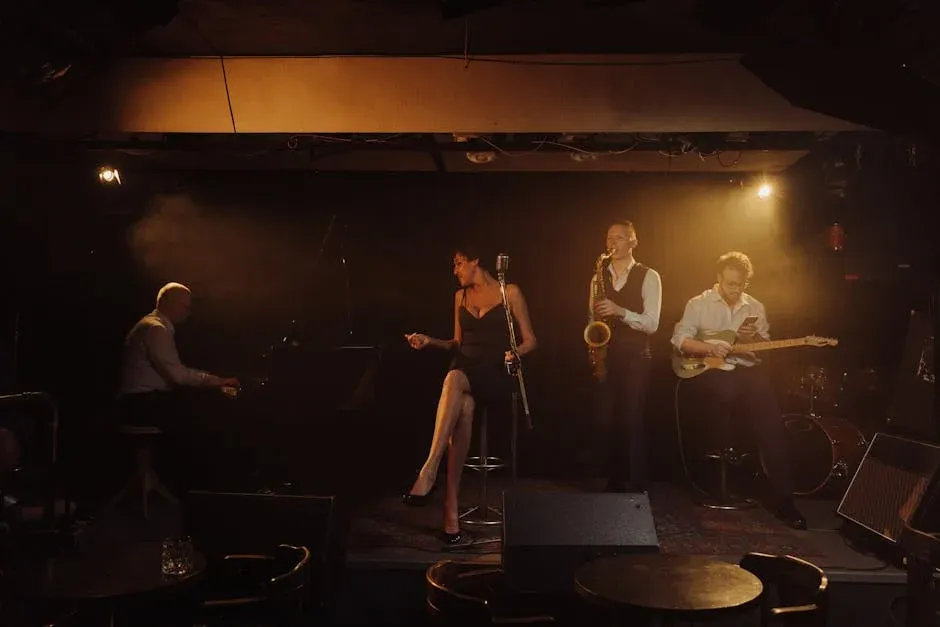
Asia's Jazz Secret
Tokyo has approximately 600 jazz venues—bars, clubs, listening rooms, and kissaten (tea houses) dedicated partially or entirely to jazz. This number, which comes from a survey by the Japanese jazz magazine Swing Journal, exceeds the count in New York City, which has roughly 300-400 depending on how loosely you define the category. The comparison isn't entirely fair (Tokyo is a larger city, and many of these venues are tiny bars with a good stereo system rather than performance spaces), but the point stands: Japan's relationship with jazz is one of the deepest cultural adoptions in modern history, a love affair that began when American GIs brought records to post-war bases and evolved into a jazz culture that now produces world-class musicians, sustains a vinyl market that keeps out-of-print recordings in circulation, and supports a physical infrastructure of listening spaces that exceeds the genre's birthplace.
Tokyo: The Listening Temples
Tokyo's jazz venues divide into two categories that reflect fundamentally different relationships with the music. The first is the jazz kissaten—a listening room where recorded jazz is played through a high-end audio system, conversation is kept to a minimum, and the experience is closer to a concert hall than a bar. The second is the live jazz club, where musicians perform nightly and the atmosphere is more social and more Western in format.
The kissaten tradition is uniquely Japanese and, frankly, extraordinary. JBS (Jazz, Blues, and Soul) in Koenji, opened in 1975, is a dark, woody room with a pair of JBL speakers the size of refrigerators and a vinyl collection that fills every wall. The owner selects the records—usually a thematic program: a Miles Davis evening, a Bill Evans deep cut session, a Coltrane chronology—and the audience (rarely more than 15 people) listens in near-silence, drinks in hand, the music filling the room with a fidelity that headphones cannot replicate. A drink costs ¥700-1,000, there's often no cover charge, and the experience of hearing Kind of Blue on a system that costs more than most cars, in a room tuned by someone who's spent forty years perfecting the acoustics, is genuinely transformative. You hear things you've never heard before in recordings you thought you knew.
For live jazz, Blue Note Tokyo in Omotesando is the flagship—the most prestigious jazz venue in Asia, with a booking policy that brings the world's best musicians to a room of roughly 300 seats. The sound is excellent, the sight lines are good from every seat, and the cover charges (¥8,000-15,000 depending on the artist, plus a ¥1,000 minimum drink order) are high but appropriate for the caliber of performance. Two shows nightly (7:00 PM and 9:30 PM) mean you can plan around dinner on either side. The real cognoscenti, though, prefer smaller venues: Pit Inn in Shinjuku, a basement club that's been booking avant-garde and experimental jazz since 1966; Body and Soul in Aoyama, where the room holds 60 people and the intimacy means you're close enough to see the pianist's fingers and hear the drummer breathe; and Sometime in Kichijoji, a neighborhood jazz club where the cover is ¥1,500, the musicians are often students from nearby music schools playing with the focused intensity of people still discovering what they can do.
The Vinyl Culture
Tokyo's jazz vinyl market is the world's most active, with dozens of shops dedicated entirely to used jazz records. Disk Union's jazz floors in Shinjuku and Ochanomizu, Jazz Record Takano in Shinjuku, and Waltz in Nakameguro stock titles that have been out of print in the U.S. for decades—Japanese pressings of American jazz records from the 1960s and 1970s, produced with superior vinyl quality and often including bonus tracks or alternative takes. Prices range from ¥500 for common titles to ¥50,000+ for rare pressings, and the condition grading is meticulous—a "VG+" in a Tokyo jazz record shop means exactly what it says.
Seoul: The New Generation
Seoul's jazz scene is young, growing, and distinctly Korean in character. Where Tokyo's jazz culture reverently preserves the American tradition, Seoul's emerging scene treats jazz as a living language to be spoken with a Korean accent. The musicians coming out of Seoul's music programs—Berklee graduates who chose to return home, self-taught players who grew up on K-pop and discovered Monk—bring influences from Korean traditional music, electronic production, and pop songwriting that produce jazz with a flavor that New York and Tokyo don't have.
Club Evans in Hongdae, named after the pianist whose lyrical approach resonates particularly with Korean sensibilities, is Seoul's most important jazz venue. The room holds about 80 people, the bookings mix Korean jazz musicians with touring international acts, and the cover (₩15,000-25,000 / $11.30-$18.80 including a drink) supports a programming schedule that runs six nights a week. The crowd is younger than at most Tokyo jazz clubs—predominantly twenties and thirties—and the atmosphere is conversational rather than reverential, which jazz purists may dislike but which creates an energy that makes the music feel current rather than archival.
For a more intimate experience, Monk in Itaewon occupies a basement space with exposed brick, a small stage, and a capacity of maybe 40. The bookings lean toward piano trios and small combos, the lighting is low enough that your phone's screen feels intrusive, and the cocktails are genuinely good (₩14,000-18,000 / $10.50-$13.50)—a detail that matters because it attracts people who come for the entire experience rather than just the music. Jass, in Hannam-dong, combines a vinyl listening bar format with occasional live performances, with a sound system that the owner—a former audio engineer—assembled component by component over five years.
Hong Kong: Holding On
Hong Kong's jazz scene is smaller than Tokyo's or Seoul's, and it's been under pressure from rising rents, pandemic closures, and the emigration of cultural workers that has affected the city's creative communities broadly. But the venues that remain are worth seeking out, particularly for their distinctive character. Peel Fresco in Sheung Wan, a mural-covered jazz bar on Peel Street, has been operating since 2012 and hosts live jazz Wednesday through Saturday in a room that holds about 50 people. The cover is HK$100-200 ($12.80-$25.60) depending on the night, the cocktails are HK$100-140 ($12.80-$17.90), and the bookings mix local Hong Kong jazz musicians with visiting artists from the Philippines, Japan, and Korea.
For recorded jazz, Clockenflap co-founder Justin Sweeting operates The Aftermath, a cocktail bar in Wan Chai with a vinyl-focused music program and a sound system that treats jazz, soul, and funk recordings with the seriousness they deserve. There's no cover, drinks are HK$100-160 ($12.80-$20.50), and the atmospheric, dimly lit space provides the kind of environment where jazz sounds best: dark, warm, unhurried, with the music at a volume that fills the room without dominating conversation.
The Common Thread
Jazz in Asian cities shares something with jazz everywhere: it's music that rewards attention, patience, and the willingness to sit with complexity. The particular gift of Asian jazz culture—especially Tokyo's—is the infrastructure of attention it's built. The listening rooms, the vinyl shops, the small clubs where silence between songs is respected rather than filled with chatter—these spaces don't just present jazz; they create the conditions under which jazz can be heard, really heard, in ways that most listening environments don't support. A Blue Note concert is excellent. A night at JBS in Koenji, listening to records you didn't choose in a room you didn't know existed, with a drink you didn't plan on ordering, is something else entirely—a surrender to someone else's taste and the discovery that their taste, refined over decades of devoted listening, has something to teach yours.