K-Beauty Beyond the Sheet Mask: What Korean Skincare Actually Looks Like in Seoul
The 10-step skincare routine was a marketing invention for export markets. What Korean women actually do with their skin is simpler, more scientific, and more interesting.
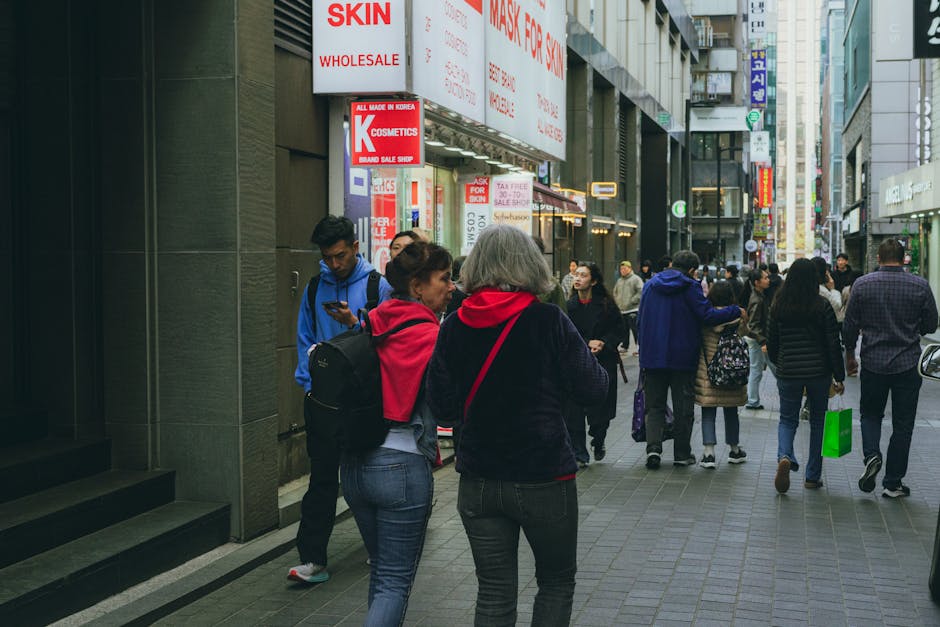
The Export vs. The Reality
The K-beauty phenomenon that swept Western markets starting around 2015 was built on a narrative: Korean women use 10 or more skincare products in elaborate multi-step routines, and this dedication is why Korean skin looks the way it does. The narrative was effective marketing—it sold a lot of sheet masks and essences—but it was largely fiction. Surveys of actual Korean skincare habits consistently show that most Korean women use 3-5 products daily (cleanser, toner, moisturizer, sunscreen, and possibly a serum), that the "10-step routine" was invented by K-beauty exporters as a differentiation strategy, and that the real secret of Korean skincare isn't product count but product quality, ingredient sophistication, and a cultural attitude toward skin maintenance that treats it as healthcare rather than vanity.
Understanding this distinction matters if you're visiting Seoul and want to navigate the skincare landscape productively rather than being overwhelmed by Myeongdong's wall of beauty shops. The goal isn't to buy more products; it's to buy better products, and Seoul's skincare infrastructure—from the Myeongdong shops to the Gangnam dermatology clinics—is designed to help you do exactly that, if you know what you're looking for.
The Myeongdong Experience
Myeongdong, the shopping district near Seoul City Hall, has the highest concentration of Korean beauty shops per square meter of any area on Earth. Olive Young (Korea's dominant health-and-beauty chain), Innisfree, The Face Shop, Nature Republic, Etude House, Laneige, Sulwhasoo, and dozens of independent shops line both sides of the main street and its side alleys, and the competition for customer attention produces a shopping experience that's equal parts exciting and exhausting. Staff will approach you. Samples will be offered. The lighting is designed to make every product look essential. The noise level is high.
The strategy for Myeongdong skincare shopping is to know what you want before you arrive. If you're looking for sunscreen—and you should be, because Korean sunscreens are years ahead of Western formulations in terms of texture, finish, and wearability—head directly to Olive Young and look for brands like Beauty of Joseon, Isntree, or Round Lab. A quality Korean sunscreen costs ₩12,000-18,000 ($9-$13.50) and applies with a weightless, invisible finish that makes Western sunscreens feel like paste. If you're looking for active ingredients (retinol, vitamin C, niacinamide, AHA/BHA), the Korean domestic market has products with higher concentrations and more sophisticated formulations than the export versions, at prices that reflect domestic competition rather than import markup.
The Olive Young Strategy
Olive Young is the single most useful beauty shopping destination in Seoul: it stocks over 1,000 Korean skincare brands, the prices reflect domestic market rates (consistently lower than export prices), the staff can answer ingredient-level questions, and the store layout organizes products by function (sunscreen, serum, cleanser, mask) rather than by brand, which makes comparison shopping efficient. The flagship Myeongdong store, on the main strip, is the largest and best-organized. Start there, buy your core products (sunscreen, cleanser, one or two actives), and resist the temptation to buy everything—the variety is designed to overwhelm, and most people's skin needs fewer products, not more.
The Gangnam Skin Clinic Culture
The less-exported but equally important dimension of Korean skincare is the dermatology clinic—a medical institution that in Korea functions more like a regular maintenance provider than a specialist you visit only when something's wrong. Seoul has over 3,000 dermatology clinics, concentrated in Gangnam, Sinsa, and Apgujeong, and Korean adults visit dermatologists with a frequency that would astonish Western patients: a 2023 survey found that 42% of Korean women in their twenties and thirties visit a dermatologist at least quarterly, and 18% visit monthly.
The treatments offered at Korean skin clinics go well beyond Western dermatological practice. Standard offerings include laser toning (₩50,000-100,000 / $38-$75 per session, used for pigmentation and pore refinement), micro-needling with growth factors (₩100,000-200,000 / $75-$150), hydrafacial treatments (₩80,000-150,000 / $60-$113), and the ubiquitous "skin booster" injections—micro-injections of hyaluronic acid that hydrate the skin from within at ₩150,000-300,000 ($113-$225) per session. These aren't cosmetic surgeries; they're maintenance procedures, treated by Korean consumers with the same matter-of-fact attitude that Western consumers bring to dental cleanings.
For visitors interested in the clinic experience, most Gangnam clinics offer consultations and treatments in English (the international patient market is a significant revenue stream), and booking is straightforward through apps like Gangnam Unnie or direct contact via Instagram. The quality is consistently high—Korean dermatologists are among the most technically skilled in the world due to the sheer volume of procedures they perform—and the prices are roughly 30-50% of what equivalent treatments cost in the U.S. or Europe.
What Korean Skincare Actually Teaches
Strip away the marketing and the product excess, and Korean skincare culture offers three genuinely useful principles. First, sun protection is non-negotiable. Korean sunscreen usage rates are among the highest in the world—a cultural norm enforced not by dermatologists but by social expectation—and the low rates of skin aging and hyperpigmentation among Korean adults are directly attributable to decades of consistent sun protection. Second, consistency matters more than intensity. The Korean approach favors daily use of gentle, effective products over occasional use of aggressive treatments. A simple routine followed every day for ten years produces better results than an elaborate routine followed inconsistently. Third, ingredient literacy is empowering. Korean consumers read ingredient lists with a sophistication that cosmetics companies in other markets don't encounter, and this informed consumption drives product innovation—brands can't sell ineffective products to customers who know what retinal palmitate is and why it's less effective than retinaldehyde.
Seoul is the best city in the world to learn about skincare, not because it sells the most products but because it takes the subject the most seriously—as a science, as a practice, and as a form of self-care that doesn't require apology or justification. The products you bring home matter less than the approach you adopt: protect from the sun, be consistent, understand what you're putting on your face, and treat your skin as something that responds to care rather than something that needs to be fixed.