Walkable Cities in Asia: A Ranking That Will Start Arguments
Tokyo is obviously number one, but what comes after will depend on your tolerance for humidity, your feelings about jaywalking, and whether you consider Hong Kong's elevated walkways cheating.
Defining the Walk
Ranking cities by walkability requires defining what walkability means, and the definition is less obvious than it seems. Is a walkable city one where you can physically walk from point A to point B on a sidewalk? Then most Asian cities qualify. Is it one where walking is the best way to get from A to B—faster, more pleasant, and more practical than driving or taking transit? That's a much smaller list. Is it one where the act of walking itself is enjoyable, where the streetscape rewards attention and the city reveals itself to pedestrians in ways it doesn't to people in cars or on trains? That's the standard I'm using, and it produces a ranking that prioritizes texture, safety, and the quality of the pedestrian experience over simple connectivity.
1. Tokyo: The Undisputed Champion
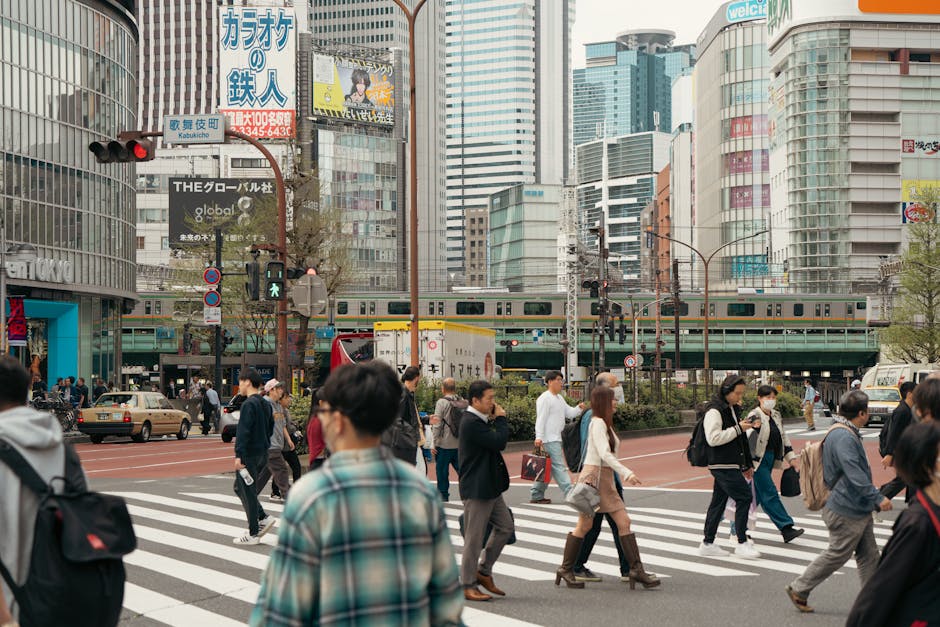
Tokyo is the most walkable large city in the world, and the competition isn't close. The infrastructure is impeccable: sidewalks are wide, even, and consistently maintained. Traffic lights emit audible signals for visually impaired pedestrians. Intersections are clearly marked and drivers actually stop for people in crosswalks—a courtesy so rare in other Asian cities that it feels almost suspicious the first few times you experience it. The city's famous train system means that most walking trips begin and end at a station, which creates a network of walkable zones radiating from each stop like overlapping circles of pedestrian-friendly territory.
But infrastructure alone doesn't explain Tokyo's walkability. The city is walkable because it was built to be experienced at walking speed. Japanese zoning laws allow mixed-use development throughout the city, which means residential streets contain shops, restaurants, clinics, and offices—everything you need is within walking distance because the regulations permit it to be. The street-level retail density is extraordinary: even in ostensibly residential neighborhoods, you'll find a combini (convenience store) every 200 meters, a ramen shop every 400, and an izakaya every 500. This density of amenity means there's always a reason to walk and always something to discover, which transforms utilitarian trips into explorations.
The pedestrian experience varies dramatically by neighborhood, which keeps walking interesting across years of residency. Shimokitazawa offers narrow, winding streets with no two shops alike. Ginza provides wide boulevards and luxury window-shopping. Yanaka feels like a village embedded in a metropolis, with temples, cemeteries, and wooden houses that survived the firebombing. Koenji specializes in shabby, lived-in charm. Each neighborhood rewards a different walking speed: Ginza is for strolling, Shimokitazawa is for wandering, and Shinjuku is for purposeful navigation through controlled chaos.
2. Hong Kong: Vertical Walking
Hong Kong's walkability is three-dimensional in a way that no other city has replicated. The city's famous system of elevated walkways, covered escalators, and air-conditioned pedestrian bridges creates a second street level that connects office towers, shopping malls, MTR stations, and residential blocks in a continuous network that you can traverse without touching the ground. The Central-Mid-Levels Escalator, an 800-meter covered outdoor escalator system that climbs the steep slope from Central to the residential neighborhoods above, carries over 55,000 people daily and transforms what would otherwise be a punishing hill climb into a moving observation platform. Riding it during the morning commute, when the traffic reverses direction to carry people downhill to work, is one of Hong Kong's great daily rituals.
At street level, Hong Kong offers some of Asia's best and worst walking simultaneously. The narrow streets of Sheung Wan and Sai Ying Pun, with their incense shops, dried seafood stores, and dai pai dong (open-air food stalls), reward pedestrian attention with sensory richness that few cities match. But the main roads in Kowloon—Nathan Road, Canton Road—are pedestrian-hostile environments where the sidewalks are narrow, the crowds are dense, and the exhaust from double-decker buses creates a permanent low-level haze at face height. Hong Kong earns its second-place ranking on the strength of its pedestrian infrastructure and the extraordinary density of its street life, but the heat and humidity from April to October, combined with the aggressive terrain, make it a physically demanding city to walk even when the infrastructure is excellent.
3. Singapore: Engineered Comfort
Singapore approaches walkability the way it approaches everything else: as an engineering problem to be solved with planning, investment, and air conditioning. The city's covered walkway network—a system of sheltered corridors connecting MRT stations to nearby buildings—provides weather-protected pedestrian routes that make walking viable even during tropical downpours. The Park Connector Network, a 360-kilometer system of cycling and walking paths that links parks across the island, creates green corridors through neighborhoods that would otherwise require walking along busy roads.
The downside is that Singapore's walkability can feel designed rather than organic. The covered walkways lead where the urban planners decided they should lead, which means the walking routes are efficient but predictable. There's less scope for the aimless exploration that defines great walking cities—fewer surprise discoveries, fewer dead-end streets that open onto hidden gardens, fewer of the happy accidents that make walking in Tokyo or Hong Kong an adventure. Singapore is a city that's excellent to walk through but less interesting to walk around, if that distinction makes sense. It's functional walkability rather than experiential walkability, and for many people that's exactly what they want.
4. Taipei: The Underrated Walker
Taipei deserves a higher walkability reputation than it has. The city's sidewalks are generally wide, the block structure in older neighborhoods creates a permeable grid that offers multiple route options, and the density of street-level activity—particularly in areas like Da'an, Zhongshan, and Wanhua—creates a walking environment where every block offers something worth noticing. The riverside bike paths along the Keelung and Tamsui rivers have been extended and improved to the point where they function as excellent walking routes as well, with views that remind you Taipei is a city surrounded by mountains.
The challenges are the scooters—Taipei has roughly one scooter for every two residents, and they park on sidewalks, ride on sidewalks, and generally treat sidewalks as secondary roads—and the summer heat, which from June to September makes midday walking genuinely unpleasant. The city is most walkable in spring (March to May) and autumn (October to November), when temperatures hover around 22-26°C and the air is clear enough to see the mountains that ring the Taipei basin.
5-7: Seoul, Osaka, Kuala Lumpur (Briefly)
Seoul earns fifth place through the quality of its pedestrian infrastructure along specific corridors—the Cheonggyecheon stream walk, the Seoul City Wall trail, the Seoullo 7017 elevated park—combined with the walkability of its traditional neighborhoods (Bukchon, Ikseon-dong, Seochon). The city's hills and harsh winters prevent it from ranking higher, as does the car-centric design of districts like Gangnam where jaywalking is less a choice than a survival skill. Osaka takes sixth with a street-level energy that's more chaotic and more fun than Tokyo's, though the infrastructure is less refined. Kuala Lumpur, despite its reputation as a driving city, sneaks into seventh on the strength of specific neighborhoods—Bukit Bintang's covered walkways, Kampung Baru's village streets, the new River of Life pedestrian corridor—that demonstrate what the city could be if it committed fully to the pedestrian.
The Unwalkable Honorable Mentions
Bangkok, Jakarta, and Manila are extraordinary cities that are essentially unwalkable by any reasonable definition. Bangkok's sidewalks are obstacle courses of food carts, exposed wiring, tree roots, and gaps that open onto drainage channels. Jakarta's pedestrian infrastructure is so sparse that the city built an elevated walkway system (JPO) that requires climbing three flights of stairs to cross a four-lane road. Manila's walking conditions in areas like EDSA are actively dangerous, with minimal sidewalks on roads designed exclusively for vehicles. These cities offer incredible experiences accessible by foot within specific neighborhoods—Bangkok's Chinatown, Jakarta's Kota Tua, Manila's Intramuros—but calling them walkable cities would be a lie that insults both the word and the pedestrians who risk their lives daily on streets that were never designed for them.