Shanghai's 24-Hour Cafe Belt: How a Quiet 2026 Zoning Change Created Asia's Densest Late-Night Coffee Scene
A barely-noticed municipal regulation passed in Shanghai in January 2026 has produced the most concentrated 24-hour cafe scene in Asia. The block-by-block map shows where the late-night coffee belt actually sits — and why it is mostly not where you'd expect.
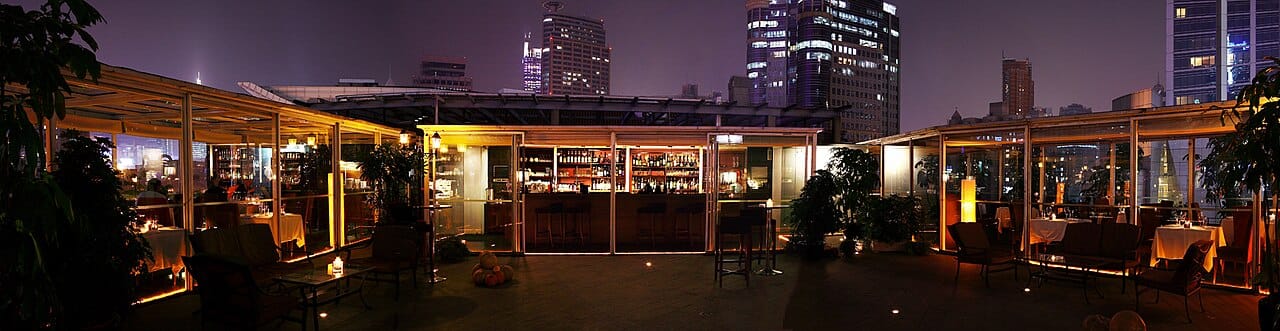
A municipal zoning revision passed quietly by the Shanghai People's Congress on 14 January 2026 removed the late-night operation restriction on food and beverage establishments in five specified urban districts. The expectation was that bars and barbecue stalls would expand their hours. What happened instead was a coffee-led occupation of the after-midnight hours — by May 2026, Shanghai has roughly 280 verified 24-hour cafes, the densest such network in Asia, twice the count in Tokyo and more than four times that of Seoul.
Where the belt actually sits
The map does not run through any of the neighbourhoods you would predict. The biggest concentration is in Xuhui's eastern strip — Yongjia Lu and Wuxing Lu — and in the southern half of Jing'an near Changle Lu. Both areas combine high-density residential mid-rises (many converted from 1990s office blocks during the 2020-2024 wave of mixed-use rezoning), a young office worker population, and almost no nightlife bar culture to compete with the cafe-first ambience.
Pudong, despite its volume of late-night office workers, is barely on the map — the licensing process moved slower in Pudong New Area and the existing Starbucks footprint dampens demand for independent 24-hour operations.
Why coffee won the after-midnight hours
Three structural factors. First, the Shanghai office worker on a deadline in 2026 is structurally more likely to seek a quiet third place than a bar — the workforce skews younger and more sober than the equivalent decade ago. Second, the rapid expansion of remote and hybrid work since 2023 has created an urban population that needs decent infrastructure (wi-fi, power, quiet) at unconventional hours. Third, and least appreciated, the bar scene's slow recovery from the 2022-2023 contraction created a vacuum that coffee operators filled before traditional nightlife had recovered.
Three cafes that defined the new map
Hi Coffee Wuxing. Opened at midnight on 14 January 2026, the day the zoning law took effect. Has the densest concentration of remote-work regulars between 11pm and 4am in the whole network.
Manner Yongjia Lu (24h variant). The chain's first 24-hour location, currently the highest-volume late-night cafe in the city. Manner historically resisted 24-hour operations; the financial case became overwhelming within six weeks of the zoning change.
Algebraist (Changle Lu). Independent, opened in March 2026 explicitly as a 24-hour study cafe with low light and zero music after 10pm. The format has been the most-imitated by subsequent openings.
What this changes about urban Shanghai
The block-level pattern is what makes the Shanghai 24-hour scene distinctive from Tokyo's: in Tokyo the 24-hour cafes are scattered across the city, mostly chains, and their density does not produce a recognisable "belt". In Shanghai, the new map produces a continuous corridor of late-night activity that subtly changes how the surrounding residential blocks function — more pedestrian traffic at 1am, more taxi pickups at 4am, more delivery workers parked outside for the after-midnight orders. None of this is dramatic. All of it is reshaping a stretch of the city without any of the visible markers that "nightlife district" traditionally implies.