Sustainable Fashion in Asia: Beyond the Marketing Greenwash
Most 'sustainable fashion' is marketing. These Asian brands are the exception — building supply chains, reviving dying crafts, and producing clothing that lasts.
The Greenwash Problem
Sustainable fashion has a credibility problem, and nowhere is this more acute than in Asia, where the world's largest garment-producing countries (China, Bangladesh, Vietnam, Cambodia, India) power an industry responsible for roughly 10% of global carbon emissions and immeasurable human suffering in the form of low wages, unsafe conditions, and environmental devastation. Against this backdrop, a brand slapping "eco-friendly" on a tag and using a slightly less toxic dye process isn't sustainable fashion—it's marketing, and dishonest marketing at that, because it suggests the problem is being addressed while the fundamental model of overproduction, underpayment, and planned obsolescence continues unchallenged.
Genuine sustainable fashion in Asia looks different from the greenwashed version. It involves supply chains that can be traced to specific farms, factories, and workers. It involves production volumes that match demand rather than speculative overproduction. It involves fair wages—not "better than local minimum wage" but actual living wages that allow garment workers to support families, educate children, and build savings. And it involves design that treats longevity as a core value: garments built to last years, not seasons, from materials that age gracefully rather than deteriorating into landfill. The brands profiled here meet these criteria to varying degrees, and none of them are perfect, but they're all doing work that the fast fashion industry would rather you didn't know was possible.
CFCL: Zero-Waste Knitting From Tokyo
CFCL (Clothing For Contemporary Life), founded by Issey Miyake veteran Yusuke Takahashi in 2020, is the most technically innovative sustainable fashion brand in Asia and possibly the world. The brand's entire production model is built around 3D computer knitting—a manufacturing process where garments are knitted whole from a single thread, requiring no cutting, no sewing, and producing zero fabric waste. Traditional garment manufacturing wastes 15-20% of fabric in cutting; CFCL wastes exactly 0%. The yarn is 100% recycled polyester, sourced from post-consumer plastic bottles and factory waste, and the knitting machines run on renewable energy at the brand's production facility in Yamanashi prefecture.
The garments themselves are extraordinary: fluid, minimalist pieces that drape and move with a suppleness that feels like luxury despite their technical origins. The signature Pottery Dress—a column of ribbed knit fabric that expands and contracts with the body—has become CFCL's icon, photographed on red carpets and worn as daily workwear by people who may or may not know about its zero-waste origins. Prices are mid-to-high range (the Pottery Dress costs ¥44,000 / $295), which is expensive for a dress but cheap for a garment that will last a decade, weighs almost nothing, and can be folded into a space the size of a paperback novel. CFCL won the LVMH Innovation Award in 2021, which is the fashion industry's way of saying "this is important and we wish we'd thought of it first."
The Repair Economy
CFCL's production model addresses the manufacturing waste problem, but several Asian brands are also addressing the post-purchase waste problem through repair programs that extend garment life. Snow Peak, the Japanese outdoor brand, offers lifetime repair service on all products—send in a damaged jacket and they'll fix it for a nominal fee rather than encouraging replacement. Visvim, Hiroki Nakamura's cult Japanese brand, structures its pricing (high: jackets start around ¥150,000) partly around the promise that the garments are built to be repaired and worn for decades. This repair-centered model reframes the relationship between buyer and garment from transactional to relational—you're not purchasing a disposable product but investing in a durable one that the maker commits to maintaining.
India: Reviving What Was Almost Lost
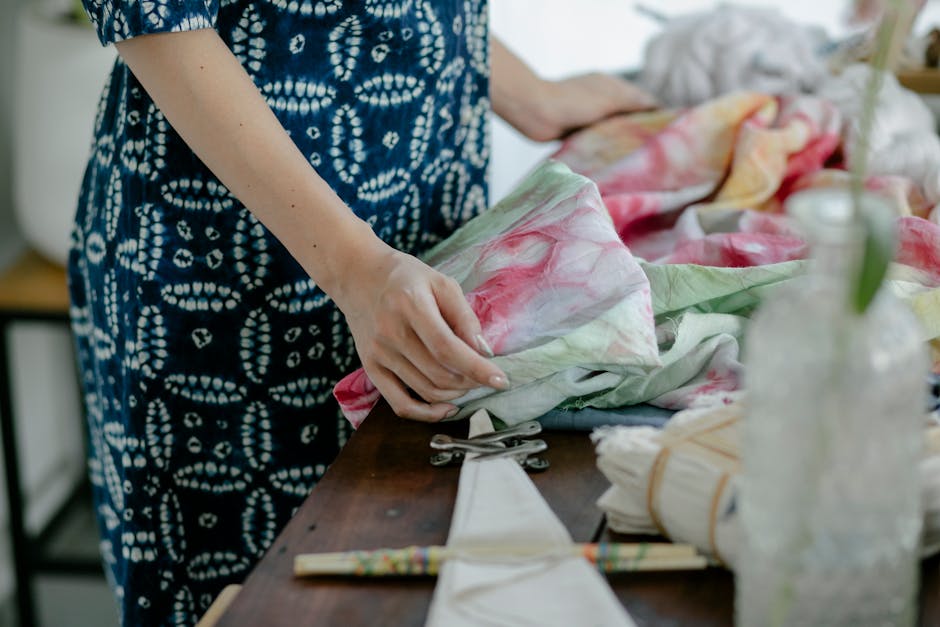
India's textile traditions—hand-weaving, block printing, natural dyeing, embroidery—represent thousands of years of accumulated craft knowledge that industrialization and fast fashion have pushed to the edge of extinction. A generation of Indian designers and social enterprises is working to reverse this by building business models that make traditional textiles commercially viable without compromising the techniques or exploiting the artisans.
Pero by Aneeth Arora, based in Delhi, creates women's clothing using handloom fabrics, natural dyes, and hand embroidery, working with artisan clusters across Rajasthan, Gujarat, and Bengal. Each collection is developed in collaboration with the artisans who will produce it, and the design process begins with the capabilities of the fabric rather than imposing a design on a generic material. A Pero dress costs ₹15,000-40,000 ($180-$480), which employs artisans at wages significantly above local norms and produces a garment with material quality and craft detail that factory production cannot match. The brand doesn't use "sustainability" as a marketing term—it simply produces clothes the way Indian clothes were produced before the industry decided that handmade was too expensive and too slow.
11.11/eleven eleven, a Delhi-based brand founded by Shani Himanshu and Mia Morikawa, takes a more explicitly slow-fashion approach: two collections per year, all fabrics handwoven on traditional looms, all dyes derived from plants (indigo, pomegranate, madder, marigold), and production volumes deliberately limited by the pace of hand weaving. The fabrics take weeks to produce, and the final garments—simple, elegant silhouettes in naturally dyed linens and cottons—carry the irregularities and variations that are the fingerprints of human hands. Shirts start at ₹8,000 ($96), and the brand's transparency about its production process (including naming the weaving communities and dyeing techniques used for each piece) sets a standard for supply chain visibility that most fashion brands, including self-described sustainable ones, don't approach.
Southeast Asia: From Waste to Wardrobe
Southeast Asian sustainable fashion tends toward pragmatism over philosophy, with brands finding commercially viable solutions to specific environmental problems. Tonlé, a Phnom Penh-based brand founded by Rachel Faller, produces all garments from fabric waste collected from Cambodia's massive garment industry—the scraps and off-cuts that factories typically burn or dump. The brand's zero-waste production process uses every piece of collected fabric, cutting garments from the largest pieces and using the remaining scraps for accessories, stuffing, and yarn. Annual production is limited to what the collected waste can support, which means each collection is finite and the brand will never scale beyond its material supply. Prices are $60-200 for garments, and the entire production happens in Tonlé's own workshop, where workers earn 2-3x the Cambodian garment industry average.
In Indonesia, Sejauh Mata Memandang works with over 400 artisans across the archipelago to produce clothing using traditional Indonesian textile techniques—batik, ikat, tenun (weaving)—that are endangered as younger generations leave craft communities for urban employment. The brand's approach is explicitly preservation-focused: each collection highlights a specific regional technique, the artisans are credited by name, and a portion of revenue funds training programs that teach the techniques to new practitioners. The clothing is beautiful—rich colors, complex patterns, materials with the weight and drape that only handmade fabric provides—and priced at Rp 500,000-3,000,000 ($31-$187), which is accessible by Indonesian standards and competitive internationally for handmade garments.
The Scale Question
The persistent critique of sustainable fashion is that it can't scale—that handmade, ethically produced, environmentally responsible clothing will always be more expensive and less available than factory-produced fast fashion, serving a niche market of wealthy, environmentally conscious consumers while the mass market continues buying disposable clothes. This critique is largely correct, and it's important to be honest about it. CFCL's zero-waste knitting could theoretically scale, but the recycled polyester supply chain has limits. Indian handloom production is inherently limited by the pace of human hands. Tonlé's waste-based model is explicitly constrained by its material supply.
But the question isn't whether sustainable fashion can replace fast fashion at scale—it can't, at least not with current technology and economics. The question is whether the practices these brands demonstrate can influence the larger industry's behavior, and the evidence suggests they can. CFCL's zero-waste knitting has been studied by major brands investigating waste reduction. India's handloom revival has inspired luxury houses to commission artisan-produced fabrics. The transparency standards set by brands like 11.11 have raised consumer expectations that even fast fashion companies are beginning to address, however superficially. The sustainable fashion brands profiled here won't save the planet. But they're building the models, the supply chains, and the consumer expectations that might eventually make the unsustainable version less acceptable.