Transit Tips for Asian Cities: A Card-by-Card, Line-by-Line Guide
The difference between a tourist and a resident in any Asian city is whether they know which metro card to buy and which exit to use. Here's the cheat sheet.
The Universal Rules
Before the city-specific advice, three rules apply everywhere. First: buy the local transit card on day one. Every major Asian city has a rechargeable smart card that works on metros, buses, and usually convenience stores and taxis. The card eliminates the need to buy individual tickets, typically offers a per-ride discount, and makes you look like you know what you're doing. Second: learn the last-train time. Asian metros close earlier than European ones—most stop running between 11:30 PM and 12:30 AM—and missing the last train means an expensive taxi ride or an unplanned night out. Third: follow the crowd during rush hour. The mass of commuters knows the fastest routes, the least crowded cars, and which exits bring you closest to your destination. Swim with the current, not against it.
Tokyo: Complex but Perfect
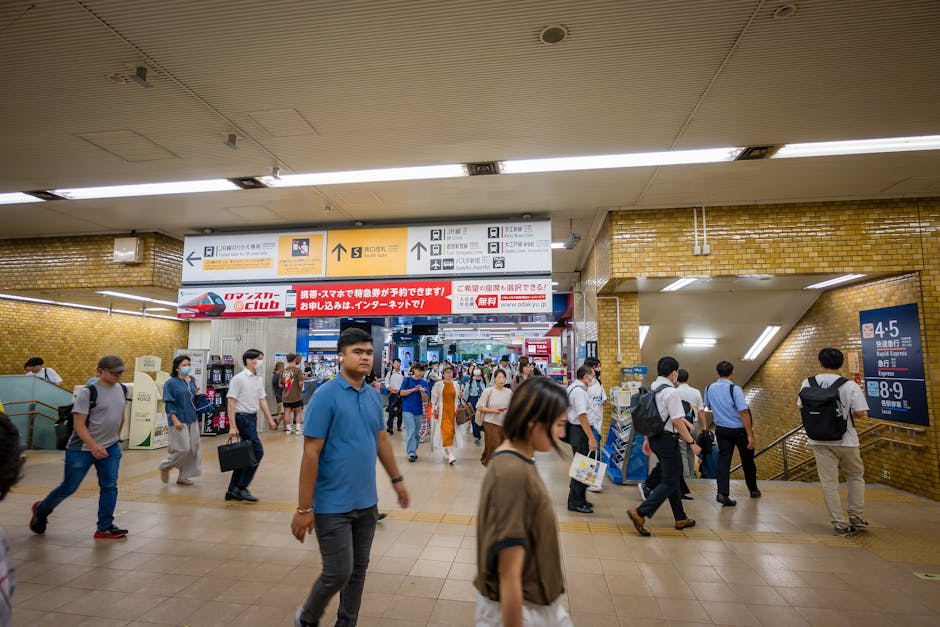
Tokyo's rail system is the most extensive urban transit network in the world: 13 subway lines, dozens of JR (Japan Railways) lines, and multiple private railways operated by companies like Tokyu, Keio, Odakyu, and Seibu, all interconnected at transfer stations that function like small cities unto themselves. The complexity is legendary—Shinjuku station alone has over 200 exits and serves 3.5 million passengers daily—but the system's reliability is equally legendary. Trains run on time. When they don't (more than a minute late), the railway company issues a formal delay certificate that employers accept as an excuse for tardiness.
The essential card is Suica (JR East) or Pasmo (Tokyo Metro/private railways), which are functionally identical and accepted on all trains, buses, and at most convenience stores. Buy one at any station kiosk for ¥500 deposit plus your desired charge, and top up at station machines as needed. The card works nationwide—you can use a Tokyo Suica on Osaka trains and Fukuoka buses—making it the most versatile transit card in Japan.
Key Tokyo transit tips: The Yamanote Line, the circular JR line connecting Shibuya, Shinjuku, Ikebukuro, Ueno, and Tokyo stations, is the system's backbone and is included in the JR Pass—but for short Tokyo stays, the pass is usually not worth the cost (¥50,000 for 7 days). The subway is cheaper and more efficient for getting between neighborhoods. The last trains depart between 11:45 PM and 12:15 AM, and the first trains resume around 5:00 AM—that gap is why Tokyo's capsule hotels and all-night karaoke rooms exist. During rush hour (7:30-9:30 AM), the trains are genuinely packed to 180% capacity on some lines, and the physical experience of being compressed into a car with hundreds of strangers is something that no description adequately prepares you for.
Women-Only Cars
Most Tokyo rail companies designate the first or last car as women-only during morning rush hours (typically 7:00-9:30 AM weekdays). The cars are marked with pink signs on the platform, and while enforcement is social rather than legal, men who enter these cars receive stares that communicate disapproval with Japanese efficiency. The women-only cars exist because groping on crowded trains is a genuine and persistent problem, and their existence—which some visitors find surprising—reflects both the seriousness of the issue and the pragmatism of the response.
Seoul: Clean, Fast, Numbered
Seoul's metro is one of the world's best urban rail systems: extensive (23 lines), clean (stations are regularly inspected and immaculate), affordable (a base fare of ₩1,400 / $1.05), and navigable even without Korean language skills because every station has a number. T-money is the transit card—available at convenience stores for ₩2,500 ($1.88) for the card plus your initial charge—and it works on all metro lines, buses, and taxis. The T-money system automatically calculates transfers, so switching from metro to bus within 30 minutes of tapping out doesn't incur an additional base fare.
Seoul's metro runs from approximately 5:30 AM to midnight, with last trains varying by line and direction. The system is almost entirely underground, which means it functions as a climate-controlled pedestrian network—an important consideration in a city where winter temperatures hit -15°C and summer humidity exceeds 80%. Many stations connect directly to underground shopping areas, department store basements, and office building lobbies, allowing commuters to travel from home to office without significant outdoor exposure.
Singapore: Simple and Reliable
Singapore's MRT (Mass Rapid Transit) is a model of simplicity: six lines (with more under construction), clear color-coding, bilingual signage in English and Mandarin, and a fare system based on distance traveled (S$0.83-$2.10 per trip). The EZ-Link card, available at MRT stations and 7-Elevens for S$10 ($7.50, including S$5 non-refundable card cost and S$5 initial value), is the standard transit card and also works on buses and at many retail locations. An alternative, the Singapore Tourist Pass (S$10/day for unlimited travel), is worth buying for stays of three days or less if you plan to use transit extensively.
The MRT runs from 5:30 AM to approximately midnight, with trains arriving every 2-4 minutes during peak hours and every 5-7 minutes off-peak. The system is air-conditioned to a temperature that makes jackets advisable during long rides, and eating and drinking are prohibited in stations and trains—a rule enforced by fines of up to S$500 that are actually issued, not just threatened.
Bangkok: BTS, MRT, and Boats
Bangkok's transit system is less comprehensive than Tokyo's or Seoul's but improving rapidly, with two primary rail systems: the BTS Skytrain (elevated, two lines) and the MRT (underground, two lines). The two systems use different cards—Rabbit for BTS, MRT Plus for MRT—which is irritating but functional. Rabbit cards (฿200 including ฿100 refundable deposit) work on BTS trains and at some retail locations. MRT cards work only on MRT trains. Fares range from ฿16 to ฿59 ($0.46-$1.69) per trip depending on distance.
Bangkok's secret transit weapon is the Chao Phraya Express Boat, a ferry service running along the river with stops near major attractions (Grand Palace, Chinatown, ICONSIAM) and transit connections. The tourist boat (blue flag) costs ฿60 per trip; the local boats (orange and yellow flags) cost ฿15-32 and are faster because they skip tourist-heavy stops. Using the river for north-south travel and the BTS/MRT for east-west travel creates a transit combination that often beats car travel during Bangkok's legendary traffic jams.
Hong Kong and Taipei: Quick Hits
Hong Kong's Octopus card (HK$150 including HK$50 deposit) is the most versatile transit card in Asia—it works on the MTR, buses, ferries, trams, minibuses, and at virtually every retail location including 7-Eleven, McDonald's, and vending machines. The MTR itself is fast, clean, and runs from approximately 6:00 AM to 1:00 AM, with the Airport Express providing a 24-minute connection between Hong Kong Airport and Central station for HK$115 ($14.70). The Star Ferry, crossing Victoria Harbour between Central and Tsim Sha Tsui for HK$4 ($0.51), is the single best transit value in Asia and one of the great urban boat rides in the world.
Taipei's EasyCard (NT$100 / $3.10) works on the MRT, buses, YouBike (bike share), and convenience stores. The MRT runs from 6:00 AM to midnight, fares range from NT$20 to NT$65 ($0.62-$2.00), and the system is clean, efficient, and covered by free wifi. The key Taipei transit insight: the MRT is excellent for reaching neighborhoods, but the bus system is more comprehensive for intra-neighborhood travel, particularly in areas like Da'an and Zhongshan where MRT stations are spaced far apart. Google Maps' transit directions are accurate for Taipei and include real-time bus arrival information that's reliable to within a minute.