Weekend Escapes From Singapore: Islands, Jungles, and a Different Country
Singapore is extraordinary for a week. After a month, the neatness becomes a cage. These weekend escapes are how residents remind themselves that chaos can be beautiful.
The Escape Imperative
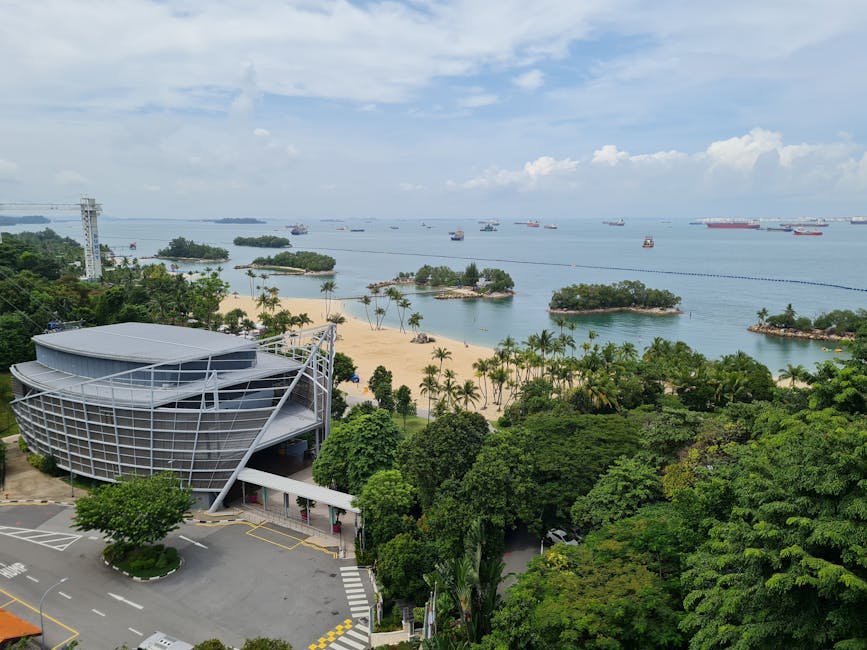
Singapore is 728 square kilometers—roughly the size of a mid-tier American suburb—and you can drive from one end to the other in 45 minutes. For residents, this compactness creates an intimacy with the city that's both comforting and claustrophobic: you know every neighborhood, every park, every restaurant corridor, and after a few months, the city's extraordinary efficiency starts to feel like a very well-managed terrarium. The weekend escape isn't a luxury in Singapore—it's a psychological necessity, the regular dose of unfamiliarity and open space that keeps residents sane in a city that's too small to get lost in and too orderly to surprise.
Bintan and Batam: The One-Hour Fix
The Riau Islands of Indonesia—Bintan and Batam, accessible by 50-60 minute ferry from Singapore's Tanah Merah Ferry Terminal—are the default weekend escape for Singaporeans seeking beach, golf, and the therapeutic contrast of Indonesian prices after a week of Singapore's. Bintan's northern coast has been developed into a resort zone that includes properties from Banyan Tree, Angsana, and Club Med, with accommodation ranging from S$200 ($150) per night for basic resort rooms to S$800+ ($600+) for private pool villas. The beaches are clean (the resort zone is separately managed from the rest of the island), the snorkeling at White Sands Island and Trikora Beach is decent, and the overall experience—warm water, quiet beaches, Indonesian food, spa treatments at half Singapore prices—provides exactly the reset that Singapore's work-hard culture makes necessary.
Batam, the more developed and less resort-oriented of the two islands, offers a different proposition: Indonesian street food, massage, shopping at prices 60-70% below Singapore, and a rawness of urban experience that Singapore's manicured streets don't provide. The ferry terminal area of Batam Center is commercial and uncharming, but Nongsa Point Marina on the northeastern coast and the seafood restaurants along Barelang offer genuine pleasures—a kilo of grilled prawns for Rp 180,000 ($11), a full-body massage for Rp 200,000 ($12.50), and the particular satisfaction of a weekend that cost less in total than a nice dinner in Singapore.
The Ferry Logistics
Ferries to Bintan and Batam depart from Tanah Merah Ferry Terminal multiple times daily, operated by Bintan Resort Ferries (to Bintan Resorts) and several carriers to Batam (Batamfast, Sindo Ferry, Majestic Fast Ferry). Round-trip fares are S$50-80 ($38-$60) to Bintan and S$30-50 ($23-$38) to Batam. Booking in advance for Friday evening and Sunday afternoon departures is essential—these ferries fill quickly as Singapore's weekend exodus begins. Passport required (Indonesia entry), and the visa-free stay for Singaporean and most Western passport holders is 30 days.
Tioman Island: The Proper Escape
Tioman Island, off the east coast of peninsular Malaysia, is the weekend escape that Singapore residents recommend to each other in conspiratorial tones—a genuinely beautiful tropical island with coral reefs, jungle-covered peaks, and a laid-back village atmosphere that Bali lost a decade ago. Getting there requires a 4.5-hour drive from Singapore to Mersing (or a flight from Singapore to Tioman via Firefly Airlines in season), followed by a two-hour ferry from Mersing to the island, which makes it a genuine commitment rather than a quick getaway. The reward justifies the logistics: water clarity that allows 15-meter visibility for snorkeling and diving, beaches that are never crowded, jungle trails leading to waterfalls, and a quiet that is genuinely quiet—not Singapore-park quiet but ocean-and-birdsong quiet, the kind of silence that takes a few hours to stop being disorienting.
Accommodation on Tioman ranges from basic chalets (RM80-150 / $17-$32 per night) at operations like 1511 Coconut Grove and Juara Beach Resort to mid-range resorts (RM300-600 / $64-$128) with air conditioning, dive centers, and restaurant service. The best area for snorkeling is the Marine Park around ABC and Salang villages on the west coast, where the coral is healthy and the fish life includes reef sharks, turtles, and enormous schools of tropical species. Diving costs RM200-300 ($43-$64) per dive including equipment, and the dive sites—Renggis Island, Tiger Reef, Chebeh Island—offer conditions that justify Tioman's reputation as one of the best dive destinations in peninsular Malaysia.
Malacca: History Over Beach
Malacca (Melaka), the UNESCO World Heritage city roughly 3.5 hours north of Singapore by car or bus, offers a weekend escape that doesn't involve a beach—a refreshing alternative for residents who've exhausted the island options. The historic city center, concentrated along the Malacca River and Jonker Street, preserves the architectural legacy of Portuguese, Dutch, and British colonial rule alongside Peranakan (Straits Chinese) heritage that's visible in the shophouse facades, the Baba-Nyonya cuisine, and the cultural institutions that document the community's unique fusion identity.
Jonker Street's Friday and Saturday Night Market transforms the heritage district into a walking market with food stalls, vintage goods, and live music that draws both tourists and Malaccan residents. The food—chicken rice balls (RM5), cendol (RM3), Nyonya laksa (RM8), and the famous satay celup (hot pot-style satay where you cook skewered items in a communal pot of peanut sauce, RM30-50 per person)—is some of the best street food in Malaysia, and the prices make Singapore seem like a fiscal hallucination.
Further Afield: For Long Weekends
When Singapore's calendar cooperates with a long weekend—and it does frequently, with the country's generous public holiday schedule—the escape radius expands to include destinations reachable by 1-2 hour flights. Langkawi, the duty-free Malaysian island (1.5-hour flight), offers beaches, mangrove tours, and cable car rides at prices dramatically below Singapore. Bali (2.5-hour flight) is the default long-weekend indulgence—three nights in Seminyak or Ubud provides enough time for the tropical-paradise experience without committing to the full expat ecosystem. And for something completely different, Yogyakarta in Java (2-hour flight) offers Borobudur and Prambanan—two of the greatest temple complexes in the world—at a distance that makes a three-day cultural pilgrimage practical.
The pattern among Singapore residents is a biweekly rhythm of escape: Bintan or Batam for the regular weekend reset, Tioman or Malacca for the occasional two-night break, and a longer trip every month or two for the more fundamental decompression that a city this small and this intense periodically demands. The frequency might seem excessive to residents of larger cities, but Singapore's compactness creates a particular restlessness—a need for visual novelty, physical space, and the controlled disorder that well-organized societies make scarce. The ferries and flights are the release valve. Without them, the terrarium would eventually crack.