Winter in Seoul: The Cold Makes Everything Better
At -10°C, with wind whipping down from the Bukhansan ridgeline, Seoul becomes a city of heated floors, street-food steam, and the particular beauty of a modern metropolis in serious cold.
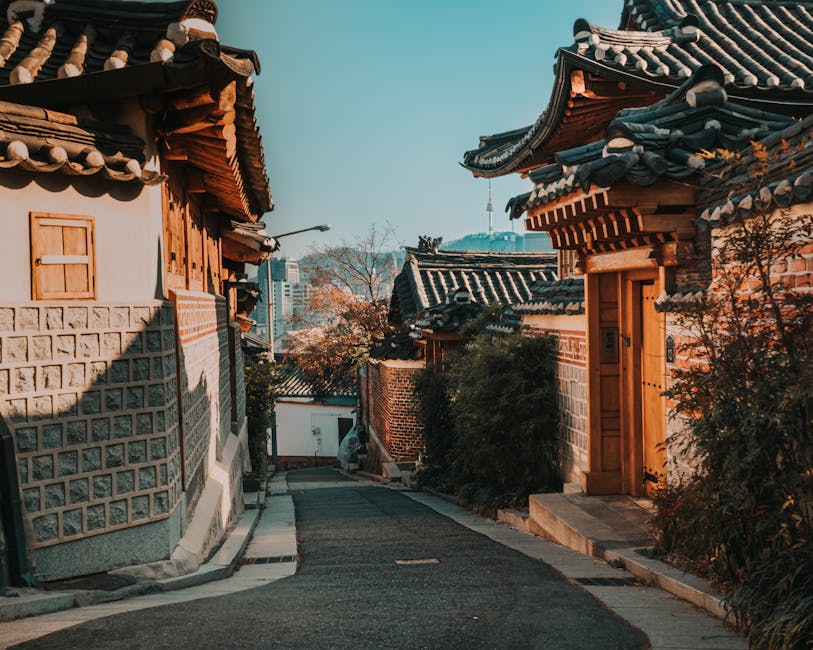
The Cold Is the Point
Seoul's winter runs from late November through early March, with January and February regularly hitting -10°C to -15°C (14°F to 5°F) before wind chill, which can push the felt temperature to -20°C (-4°F) and below. This is genuinely, aggressively cold—cold that hurts exposed skin within minutes, cold that makes your nostrils stick together when you inhale, cold that demands preparation and punishes complacency. It's also, I'd argue, Seoul's most interesting season, and the one that reveals the city's character most completely. Summer Seoul is charming and crowded. Autumn Seoul is beautiful and popular. Winter Seoul is stark, honest, and intensely atmospheric, with a quality of light and a compression of social life that transforms the urban experience into something that warm-weather visitors never access.
The Street Food That Saves Your Life
Seoul's winter street food culture is so good that it constitutes a legitimate reason to visit during the cold months rather than despite them. The hot street foods that emerge with the cold weather—available from carts and stalls in Myeongdong, Insadong, Hongdae, and every subway station exit—are not just sustenance; they're thermal survival tools disguised as snacks.
Hotteok (호떡), a sweet filled pancake, is winter Seoul's signature street food. A ball of yeast dough is stuffed with a mixture of brown sugar, cinnamon, and chopped peanuts, pressed flat on a griddle, and fried until the exterior is crispy and the interior molten. A hotteok from a street cart costs ₩1,500-2,000 ($1.13-$1.50), and eating one fresh off the griddle—the sugar filling hot enough to burn your mouth if you're impatient, the dough golden and slightly chewy—while standing in sub-zero air is one of those sensory experiences that combines pleasure and relief in a ratio that no indoor restaurant can replicate.
Tteokbokki (떡볶이), rice cakes in gochujang sauce, is available year-round but achieves its apotheosis in winter, when the steam rising from the vendor's pot is visible from half a block away and the spicy heat of the sauce combines with the ambient cold to create a thermal contrast that makes each bite feel restorative. A serving costs ₩3,000-4,000 ($2.25-$3) and pairs naturally with odeng (어묵), fish cake skewers served in a hot broth that the vendor ladles into paper cups as a free accompaniment. Drinking the hot, slightly sweet fish-cake broth while the wind cuts down a Myeongdong alley is winter Seoul distilled to its essence: warmth against cold, community against isolation, the city providing comfort in the simplest possible form.
Bungeoppang and Gyeranppang
Bungeoppang (붕어빵)—fish-shaped pastries filled with sweet red bean paste—appear at carts and stalls starting in November and vanish by March, making them a seasonal marker as reliable as cherry blossoms. Three pieces cost ₩1,000 ($0.75), the exterior is crispy and slightly sweet, the red bean filling dense and earthy. Gyeranppang (계란빵), literally "egg bread"—a sweet, spongy bread baked in a mold with a whole egg on top—costs ₩2,000 ($1.50) and delivers protein, carbohydrates, and warmth in a package that functions as a complete breakfast for anyone too cold to enter a restaurant and sit down.
Bukchon in Snow
Seoul's traditional hanok neighborhoods—Bukchon, Ikseon-dong, Seochon—are beautiful in any season, but snow transforms them into something from a different century. The low-rise hanok buildings, with their curved tile roofs and wooden facades, disappear under a layer of white that softens their lines and silences the traffic noise from the surrounding modern streets. Walking through Bukchon after a snowfall, when the alleys are empty and the only sounds are your footsteps and the occasional creak of a wooden gate, produces a stillness that feels impossible in a city of 10 million people. The contrast with the glass towers visible above the rooflines—Jongno's office buildings, the Lotte World Tower in the distance—makes both the old and the new more vivid.
The practical walking route through Bukchon in winter starts at Anguk station (Line 3), climbs through the numbered viewpoints on Bukchon-ro 11-gil, passes the Bukchon Traditional Culture Center (free admission, warm interior, restrooms), and descends toward Changdeokgung Palace. The palace itself, a UNESCO World Heritage Site, is stunning in winter—the snow-covered Secret Garden (Huwon) tours, available by reservation for ₩5,000, are among the most atmospheric cultural experiences in Seoul, with bare-branched trees reflected in icy ponds and the silence of the garden amplified by the insulation of fresh snow.
Indoor Retreats
Winter Seoul's indoor culture is rich, varied, and designed around the assumption that people need warm places to be for extended periods. Jjimjilbangs—the heated bathhouses described elsewhere in these pages—are even more essential in winter, when the thermal contrast between the -10°C exterior and the 40°C bathing pools creates a physical release that borders on ecstasy. The heated floors (ondol) in the communal sleeping areas provide warmth that penetrates to the bone, and sleeping on an ondol floor after soaking in hot water is a quality of rest that hotel beds, for all their thread counts, cannot equal.
Seoul's cafe culture, already dense, intensifies in winter as the population retreats indoors. The cafes in Yeonnam-dong, Ikseon-dong, and Seongsu-dong fill to capacity on winter weekends, and the fogged windows, the smell of coffee, and the sounds of conversation create an atmosphere of communal warmth that's distinctly Korean—less performative than European cafe culture, less transactional than American coffee culture, and perfectly calibrated to the needs of a city that's very cold outside and very warm inside.
The Light
Winter light in Seoul is the city's best-kept visual secret. The low angle of the sun, combined with the dry continental air (winter is Seoul's least humid season), produces a clarity of light that photographers and architects dream about. The golden hour, which in summer lasts perhaps thirty minutes, extends to over an hour in December and January, bathing the city in warm, directional light that makes ordinary buildings look dramatic and dramatic buildings look transcendent. The Dongdaemun Design Plaza, Zaha Hadid's swooping aluminum spaceship, photographs better in winter afternoon light than at any other time of year. The glass facade of the National Museum of Korea catches the low sun and turns into a wall of gold. Even the brutalist concrete apartment blocks (jugong) that define Seoul's residential skyline acquire a sculptural quality in slanting winter light that summer's harsh overhead sun completely eliminates.
The Namsan Tower, Seoul's most visible landmark, is best visited on a clear winter evening, when the air quality (improved by cold-weather atmospheric patterns) allows visibility that can reach 30 kilometers—far enough to see the ridgeline of Bukhansan to the north and the Han River bridges stretching east and west. The walk up Namsan from Myeongdong takes about 30 minutes, the cold air fills your lungs with a sharpness that feels cleansing, and the view from the top, at dusk, when the city's lights begin to punctuate the blue twilight, is Seoul's finest panorama. Bundle up. The cold is the admission price. What you see is the reward.