Art Districts in Asia: From Factory Floors to Gallery Walls
The pattern is the same everywhere: artists find cheap factory space, make it interesting, landlords notice, rents rise, artists leave. But some districts have broken the cycle.
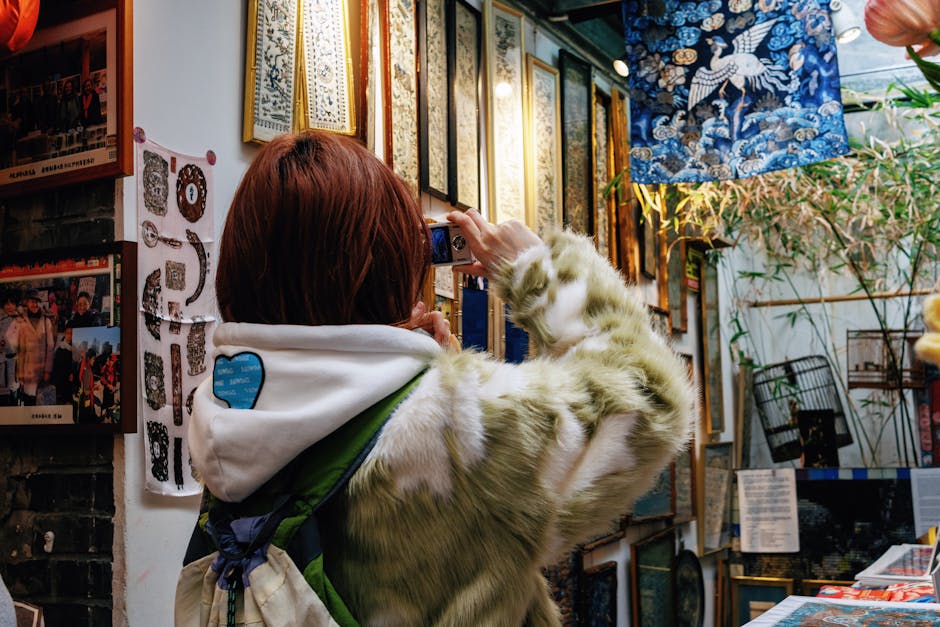
The Factory-to-Gallery Pipeline
Every major art district in Asia follows a script so predictable you could set your watch by it. Phase one: artists, priced out of central neighborhoods, discover an abandoned industrial area where the rent is cheap, the ceilings are high, and the landlords are desperate enough to rent to anyone. Phase two: the artists make the space interesting through exhibitions, studios, and the sheer magnetic force of creative activity, which draws visitors, media attention, and the first wave of cafes and boutiques. Phase three: developers and landlords realize the area has appreciated in value, rents climb, the artists who created the value are priced out, and the district becomes a lifestyle destination with galleries operated by international dealers rather than working studios. Phase four varies: some districts complete the gentrification cycle and lose their creative function entirely, while others—the interesting ones—find mechanisms to resist or redirect the pressure.
798 Art District, Beijing: The Giant
Beijing's 798 Art District occupies a cluster of Bauhaus-designed factory buildings in the Dashanzi area, originally built in the 1950s as a joint Chinese-East German electronics manufacturing complex. The architecture alone would justify a visit: sawtooth rooftops that flood the interiors with natural light, massive open floor plans with 10-meter ceilings, and a stark industrial aesthetic that happened to be exactly what contemporary art galleries need. Artists began moving into the decommissioned factories in the early 2000s, and by 2005 the area had become the most significant contemporary art hub in China, housing hundreds of galleries, studios, and design firms.
Twenty years later, 798 occupies an ambiguous position. The district is commercially successful—it draws over 4 million visitors annually and generates substantial revenue from gallery sales, cafe traffic, and event space rentals. The major galleries—Pace Gallery, UCCA Center for Contemporary Art, Long March Space—mount exhibitions that compete with anything in New York or London. UCCA, in particular, has established itself as one of Asia's most important contemporary art institutions, with a curatorial program that balances Chinese and international artists and a renovated main hall that converts the factory's industrial scale into a gallery experience of genuine grandeur. A visit to UCCA alone, with its ¥60 ($8.20) admission, justifies a trip to 798.
The criticism—valid but incomplete—is that 798 has become a theme park version of an art district, with more souvenir shops and selfie opportunities than working studios. The original artists have largely dispersed to cheaper areas like Caochangdi (a few kilometers northeast) or Songzhuang (in Tongzhou district, an hour from central Beijing), where rents are still low enough to support the kind of experimental work that doesn't generate gallery sales. The counterargument is that 798's commercial success has done more to normalize contemporary art consumption in China than any number of scrappy alternative spaces could, and that the coexistence of serious galleries, tourist shops, and cafes creates an ecosystem that introduces millions of people to art who would never enter a white-cube gallery in Chelsea.
Beyond the Main Strip
The best strategy for visiting 798 is to ignore the main pedestrian boulevard entirely and explore the side streets, where smaller galleries and working studios operate with less foot traffic and more adventurous programming. BTAP (Beijing Tokyo Art Projects), in a quiet corner of the district, focuses on cross-cultural dialogue between Chinese and Japanese artists with exhibitions that tend toward the conceptual and the installation-based. Ink Studio, specializing in contemporary Chinese ink painting, occupies a light-filled space that perfectly serves work rooted in traditional techniques but contemporary in execution. These spaces don't appear on the tourist maps that vendors hand out at the district entrance, which is precisely why they're worth finding.
Gillman Barracks, Singapore: The Government Bet
Gillman Barracks, a former British military camp near the southern tip of Singapore, was officially converted into an art cluster in 2012 as a government initiative to establish Singapore as Southeast Asia's contemporary art capital. The approach was distinctly Singaporean: systematic, well-funded, and top-down, with the Economic Development Board recruiting international galleries—including Sundaram Tagore, STPI Creative Workshop, and ShanghART—to occupy the renovated colonial-era buildings at subsidized rents.
The results have been mixed in commercially satisfying ways and artistically productive ones. Several galleries have come and gone, unable to sustain Singapore-level operating costs even with subsidized rent, and the foot traffic remains modest compared to 798 or even Hong Kong's gallery clusters in Central and Wong Chuk Hang. But the galleries that have stayed—NTU Centre for Contemporary Art Singapore (NTU CCA), STPI, and a rotating cast of project spaces—produce programming that's among the most intellectually ambitious in Asia. NTU CCA, affiliated with Nanyang Technological University, operates as a hybrid research center and exhibition space, hosting residencies and exhibitions that push the boundaries of what "contemporary art" means in a Southeast Asian context. The campus itself, a collection of whitewashed colonial buildings connected by covered walkways and surrounded by mature trees, is one of the most pleasant art-viewing environments in any city—quiet, unhurried, and free of the commercial pressure that pervades gallery districts elsewhere.
Other Districts Worth Knowing
Hong Kong's art geography has shifted repeatedly over the past decade. Hollywood Road and Sheung Wan housed the gallery cluster until rents pushed many dealers to Wong Chuk Hang, an industrial area on the south side of Hong Kong Island where converted warehouses now hold over 20 contemporary galleries. The March opening of Art Basel Hong Kong each year transforms the entire city into an art market, but Wong Chuk Hang operates year-round with a consistency that the fair circuit doesn't provide. The best approach is to visit on a Saturday afternoon when most galleries are open and the industrial neighborhood's quiet streets allow contemplation rather than the sensory overload of Central.
Jakarta's art scene centers on several areas, with the Kemang neighborhood in South Jakarta housing a dense cluster of galleries and art spaces including ISA Art & Design, ROH Projects, and Komunitas Salihara, a multidisciplinary arts center with a theater, gallery, and literary program. The Jakarta art market is less commercially developed than Singapore or Hong Kong, which means the work tends to be more experimental and the prices more accessible—emerging Indonesian artists are among the best values in the Asian contemporary art market, and galleries like ROH are excellent places to start looking.
Chiang Mai, Thailand, operates an art scene completely disconnected from the market pressures that shape galleries in capital cities. The Chiang Mai Art Conversation (CAC), a loose network of artist-run spaces, maintains several galleries and project spaces around the Old City and the Nimman neighborhood. The work is often politically engaged in ways that Bangkok galleries, operating under closer government scrutiny, avoid. Visiting during the annual Gallery Sao Lim Thui events, held intermittently at locations announced through word-of-mouth and social media, reveals an art community that functions more like a village than an industry.
What Survives
The art districts that endure are the ones that find a sustainable balance between commercial viability and creative freedom—which is the same balance that individual artists have been trying to strike since the concept of a professional artist existed. 798 survives because Beijing's government decided it was more valuable as a functioning art district than as real estate, and because UCCA and the other serious galleries provide institutional anchoring. Gillman Barracks survives because Singapore's government subsidizes the rents and treats the cultural return as worth the financial investment. Wong Chuk Hang survives because industrial rents in a secondary location are still affordable enough for galleries that sell enough work to cover costs.
The districts that don't survive are the ones where the only economic model is hope—hope that rents stay low, hope that visitors come, hope that the government doesn't decide the land is worth more as condominiums. Hope isn't a strategy, and artists who've been displaced from one cheap neighborhood to the next know this better than anyone. The challenge for Asian cities isn't creating art districts—artists will always find space—but creating the policy, economic, and cultural conditions that allow those districts to mature without being consumed by their own success.