Hanoi's Egg Coffee and the Art of Not Rushing Anything
In a world obsessed with oat milk lattes and cold brew subscriptions, Hanoi still drinks coffee made with whipped egg yolk, condensed milk, and zero apologies.
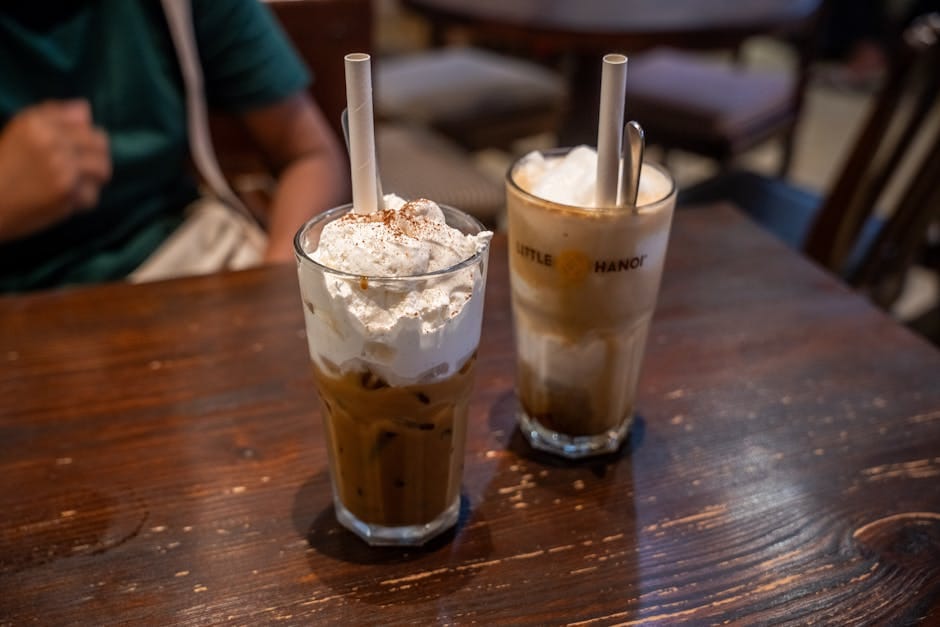
The Drink That Shouldn't Work
The first time someone hands you a cup of cà phê trứng, your brain will resist. Egg yolk in coffee sounds like a dare, or possibly a cooking accident, or maybe something a broke college student invented at 3 AM and inexplicably kept making. The cup arrives small and warm, the coffee hidden beneath a thick, pale-yellow foam that looks like tiramisu cream and smells like vanilla custard with a caffeinated edge. You take a spoon—because this is a coffee you eat as much as drink—and scoop a mouthful of the foam. It's dense, sweet, impossibly rich, with the bitterness of Vietnamese robusta pushing through the eggy sweetness like a bass note under strings. You take another spoonful. Then another. Within five minutes, the cup is empty and you're wondering how to order a second without looking excessive. You order a second anyway. Nobody in Hanoi will judge you.
Cà phê trứng was invented in the 1940s by Nguyen Van Giang, a bartender at the Metropole Hotel, during a period when fresh milk was scarce in Hanoi. He whipped egg yolks with sugar and condensed milk as a substitute, layered it over strong Vietnamese coffee, and created something that transcended its improvised origins to become one of the city's defining culinary achievements. His son now runs Cafe Giang on Nguyen Huu Huan Street in the Old Quarter, and the recipe hasn't changed. The cafe itself occupies a narrow space up a staircase so steep it functions as a screening test for your desire for coffee—if you're not willing to climb, you don't deserve the cup. A cà phê trứng at Giang costs 35,000 VND (about $1.40), which might be the best $1.40 you'll spend in any city on Earth.
The Old Quarter Circuit
Hanoi's Old Quarter is where the city's cafe culture achieves its purest expression, and walking its streets reveals a relationship with coffee that's fundamentally different from the grab-and-go mentality that dominates Western cities. Here, coffee is an excuse to sit, and sitting is an activity, not a failure of productivity. The typical Old Quarter cafe occupies a sliver of space—sometimes just three or four tiny stools arranged on a sidewalk, sometimes a second-floor balcony overlooking a street where motorbikes flow like a river of chrome and exhaust.
Beyond Giang, the essential Old Quarter stops include Cafe Dinh on Dinh Tien Hoang Street, perched above Hoan Kiem Lake with balcony seats that provide one of the great people-watching positions in Southeast Asia. The egg coffee here is slightly lighter than Giang's—less dense, more airy—and costs 40,000 VND. The balcony fills quickly after 3 PM, so arriving earlier guarantees a lakeside seat and the particular pleasure of watching Hanoians perform their afternoon routines: elderly couples walking circuits around the lake, children chasing pigeons, a man practicing tai chi with the concentration of someone defusing a bomb. Cafe Pho Co, on Hang Gai Street, requires you to walk through a silk shop, down a narrow corridor, up a flight of stairs, across a rooftop terrace, and finally into a garden cafe that feels like a secret the city has been keeping from you. The coffee is good, the setting is extraordinary, and the journey to reach your table is half the experience.
Cà Phê Đá and the Robusta Question
Egg coffee gets the attention, but Hanoi's default drink is cà phê đá—iced black coffee brewed through a phin filter, sweetened with condensed milk, and poured over ice. The phin, a small metal drip filter that sits atop your glass, is central to Vietnamese coffee identity. It's slow by design, taking four to six minutes to drip, which forces a pace that espresso machines and pour-over kettles don't. You sit, you wait, you watch the dark liquid gather in the glass below, and this enforced pause is not a flaw of the system but its entire point.
Vietnamese coffee is overwhelmingly robusta, not arabica, and this is a point of frequent criticism from specialty coffee enthusiasts who treat arabica as inherently superior. They're wrong, or at least they're applying the wrong framework. Robusta, when grown and processed well—as much of Vietnamese highland robusta is—delivers a bold, full-bodied, slightly chocolatey cup with higher caffeine content and a distinctive bite that arabica can't replicate. The condensed milk in cà phê sữa đá isn't hiding bad coffee; it's a deliberate pairing that balances robusta's intensity. Ordering a black cà phê đá (without milk) at a good Hanoi cafe reveals a coffee that's aggressive, honest, and deeply satisfying in a way that light-roast Ethiopian pour-overs, for all their delicacy, are not.
The New Wave Without Losing the Old
Hanoi's coffee scene has evolved in ways that would have been unthinkable a decade ago, and the most interesting development is how the new wave has incorporated rather than replaced traditional practices. The Loading T Cafe in the Tay Ho (West Lake) district serves specialty arabica beans from Da Lat alongside traditional robusta phin coffee, and the menu explicitly encourages customers to try both and form their own preference rather than defaulting to the assumption that one is better. A phin cà phê sữa đá costs 35,000 VND; a V60 pour-over of a washed Da Lat arabica costs 65,000 VND. Both are prepared with equal care, and the staff will discuss the differences without evangelical pressure in either direction.
Blackbird Coffee on Chau Long Street represents the most successful synthesis of old and new. The shop is sleek and modern—concrete walls, a La Marzocca espresso machine, single-origin beans from Vietnamese highland farms—but the prices remain Hanoian rather than aspirational. An espresso costs 45,000 VND ($1.80), a flat white 55,000 VND ($2.20), and the quality competes with specialty shops charging three times as much in Singapore or Hong Kong. Blackbird also roasts its own beans and sells bags starting at 180,000 VND ($7.20) for 250 grams of single-origin Vietnamese arabica, which makes it one of the best coffee value propositions in Asia for beans you can take home.
How to Drink Coffee Like a Hanoian
The mistake most visitors make is treating Hanoi's cafes like the cafes they know at home: arrive, order, consume, leave. Hanoians treat coffee as a temporal practice rather than a transaction. The morning coffee (typically cà phê sữa đá or a phin of black coffee) is taken between 7 and 8 AM, often at a sidewalk stall where you sit on a plastic stool low enough that your knees touch your chin, and the coffee arrives in a glass set inside a bowl of hot water to keep the phin warm as it drips. This coffee takes fifteen minutes to prepare and drink, and those fifteen minutes are budgeted into the day as seriously as any meeting.
The afternoon coffee, usually between 2 and 4 PM, is the social coffee—the one you drink with friends, with colleagues, with a book, or with the deliberate intention of doing absolutely nothing productive. This is when the balcony seats at Cafe Dinh fill, when the Old Quarter cafes raise their prices by 5,000 VND because they can, and when the egg coffee reaches its proper temperature: warm enough to drink but cool enough that the foam holds its structure. There's also the evening coffee, which baffles visitors from countries where caffeine after 5 PM is considered reckless. Hanoians drink coffee at 8 PM, at 9 PM, at 10 PM, and they sleep fine. Whether this reflects genuine caffeine tolerance or collective denial is an open question.
The point is this: Hanoi's coffee culture isn't about the coffee any more than Japanese tea ceremony is about the tea. It's a structured excuse to inhabit time differently, to refuse the pressure of productivity, and to sit in a city that's constantly, beautifully, chaotically in motion while remaining perfectly, deliberately still. The egg coffee is remarkable. The sitting is the real masterpiece.