Harajuku in 2025: Beyond the Costume Play
The tourists still come for the costumes, but Harajuku's real fashion story in 2025 is quieter, stranger, and far more interesting than the Takeshita Street spectacle.
Takeshita Street Is a Museum Now
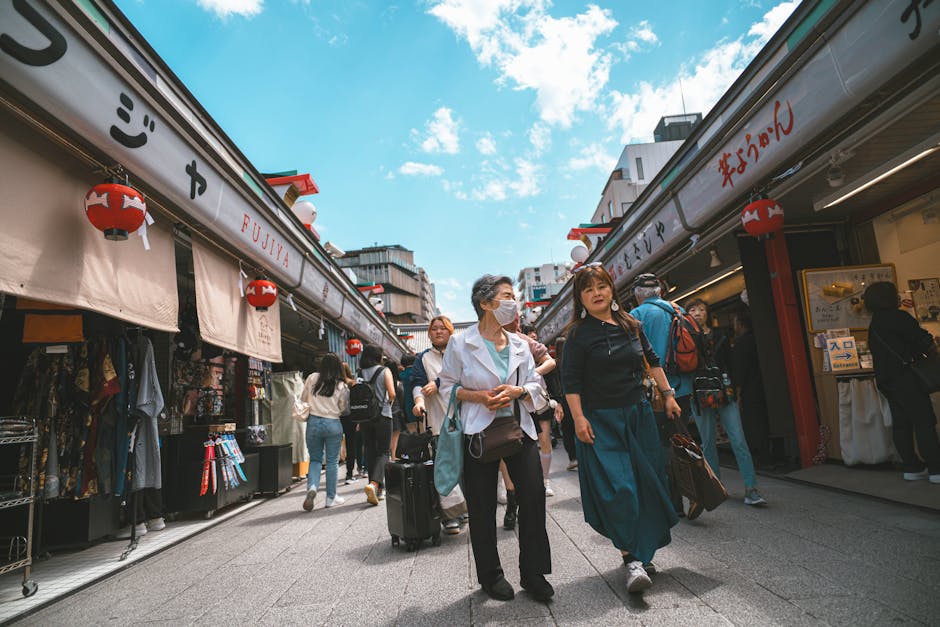
Here's what nobody who writes about Harajuku wants to admit: Takeshita Street, the narrow pedestrian lane that defined the neighborhood's global reputation for three decades, has become a tourist attraction in the purest and least flattering sense. The crepe shops still line both sides, the facades are still painted in aggressive pastels, and visitors from around the world still crowd the 350-meter street on weekends to photograph each other against backdrops of rainbow cotton candy and character-themed merchandise. But the subculture that made Takeshita Street culturally significant—the Lolitas, the visual kei devotees, the decora kids layered in plastic jewelry and neon accessories—has largely dispersed. The street now sells the memory of itself, and the gap between the Harajuku of Instagram and the Harajuku of 2025 is wide enough to walk through without touching either side.
This isn't a decline narrative. Harajuku's creative energy hasn't disappeared; it's migrated, fragmented, and matured into something that's harder to photograph but more genuinely interesting to engage with. The neighborhood that produced street fashion as a global cultural export is now producing something more nuanced: a fashion ecosystem where vintage shops, independent designers, sustainability-focused labels, and avant-garde retailers coexist in a shifting landscape that rewards exploration over spectacle. The costumes were the introduction; what's happening now is the conversation.
Cat Street and the Independent Axis
The real center of Harajuku fashion has shifted to Cat Street (Kyūya-Kaido), a meandering pedestrian path that runs parallel to Omotesando between Jingumae and Shibuya. Cat Street has always been the more interesting alternative to Takeshita—less crowded, more curated, with a mix of established brands and independent shops that changes seasonally. In 2025, the street has solidified its position as Tokyo's most important independent fashion corridor, with shops that wouldn't survive on the main avenues of Omotesando or Shibuya but thrive in Cat Street's ecosystem of fashion-literate foot traffic.
Kinsella, a shop opened in 2023 by a former pattern maker for Comme des Garçons, sells reconstructed garments—vintage pieces taken apart and reassembled into new forms that respect the original construction while creating something entirely different. A deconstructed trench coat might cost ¥45,000 ($300), a rebuilt denim jacket ¥28,000 ($187), and the craftsmanship in each piece is evident to anyone who takes the time to examine the stitching. The shop seats three customers at a time, appointments are encouraged, and the owner will explain the provenance and reconstruction process for every garment if you're genuinely interested. This is the opposite of fast fashion and the opposite of luxury fashion; it's something else entirely, and it could only exist in Harajuku.
The Vintage Economy Grows Up
Vintage and secondhand clothing has always been part of Harajuku's identity, but the market has shifted from novelty-focused thrifting to serious vintage curation that commands serious prices. Berberjin, on a side street between Cat Street and Meiji Dori, specializes in American and European vintage from the 1920s through the 1970s, with a focus on workwear, military surplus, and early sportswear that's displayed with museum-quality care. A 1940s U.S. Navy deck jacket might go for ¥120,000 ($800), a pair of 1950s Levi's 501 for ¥200,000 ($1,333), and the clientele includes professional stylists, designers researching historical garments, and collectors for whom these prices represent genuine value.
At the accessible end, Ragtag operates multiple locations around Harajuku and Omotesando, selling consigned designer pieces at 50-80% off retail. A Sacai jacket that retailed for ¥180,000 might sell for ¥55,000 here, a pair of Visvim boots for ¥35,000 instead of ¥120,000. The buying is selective enough that quality stays high, and the turnover is fast enough that visiting weekly reveals genuinely different inventory each time. For anyone interested in Japanese fashion but unwilling to pay current-season prices, Ragtag is the single most valuable shop in the neighborhood.
The New Guard: Sustainability and Androgyny
Two currents define Harajuku's fashion direction in 2025. The first is sustainability, which in Tokyo has moved past the marketing slogan phase into genuine practice. Brands like Mame Kurogouchi, whose atelier is near Harajuku station, use deadstock fabrics and traditional Japanese dyeing techniques to create women's clothing that bridges the gap between wearability and art—a difficult balance that most sustainable fashion brands can't manage. Mame's pieces are expensive (dresses start around ¥80,000) but they're also built to last decades, which reframes the cost calculation entirely. CFCL (Clothing For Contemporary Life), another Harajuku-adjacent brand, produces entire collections from recycled polyester yarn using 3D computer knitting, resulting in zero-waste garments that require no cutting or sewing. A CFCL knit dress costs ¥44,000 ($293) and weighs almost nothing, packing into a space the size of a paperback novel.
The second current is androgyny, or more precisely, the dissolution of gendered fashion categories that earlier Japanese designers like Rei Kawakubo and Yohji Yamamoto initiated decades ago. Harajuku in 2025 is full of shops where the racks aren't divided by gender—not as a political statement but as an acknowledgment that the distinction was always somewhat arbitrary. Edström Office, a gallery-shop in Jingumae, stocks pieces from international and Japanese designers without gender labels, letting the garments speak for themselves. Whether a given jacket is "menswear" or "womenswear" depends entirely on who puts it on, and the staff treats this as self-evident rather than revolutionary.
Omotesando: The Architectural Fashion Show
Omotesando, the tree-lined boulevard that runs from Harajuku station to the Aoyama-dori intersection, functions as an outdoor architecture museum where every building is also a retail space. The concentration of architectural talent per block is absurd: Tadao Ando's Omotesando Hills (a subtle, spiraling concrete structure that follows the boulevard's gentle slope), SANAA's glass-box Dior building (so transparent it appears to barely exist), Toyo Ito's Tod's building (wrapped in a concrete tree-branch pattern that casts organic shadows), and Herzog & de Meuron's Prada Aoyama (a crystalline diamond-grid facade that glows green at night). These buildings were commissioned because luxury brands understood that in Tokyo, architecture is branding, and the building itself communicates more about the brand's identity than any advertisement.
Shopping at these flagships is an experience worth having even if you don't buy anything, because the interior design, the customer service, and the product presentation achieve a level of considered beauty that most retail environments don't attempt. But the buildings themselves are the attraction. Walking Omotesando at dusk, when the zelkova trees cast long shadows and the buildings begin to glow, is one of the genuine pleasures of Tokyo—a boulevard where commerce and architecture exist in a relationship of mutual elevation rather than mutual exploitation.
What Harajuku Means Now
Harajuku in 2025 is less photogenic and more interesting than Harajuku in 2005. The spectacle has faded, but the substance has deepened. The neighborhood no longer produces the kind of viral street fashion moments that filled magazines and Tumblr blogs a decade ago, because the creative energy has moved indoors—into ateliers, into shops that seat three customers, into concept stores that change their inventory seasonally, into fabric libraries and dyeing workshops that aren't visible from the street. The teenagers in costume have largely moved online, expressing themselves through digital fashion and virtual avatars rather than physical garments on physical streets. Whether this represents a loss or an evolution depends on what you valued about Harajuku in the first place. If it was the spectacle, yes, something is gone. If it was the creative courage—the willingness to wear something ridiculous, something beautiful, something that didn't exist until you made it—that's still here. You just have to look harder, which was always part of the point.