Indie Music Scenes Across Asia That Deserve Your Attention
The global music industry is watching K-pop and J-pop. Meanwhile, in basement venues across Asian cities, something far more interesting is happening at a volume that makes conversation impossible.
The Basement Economy
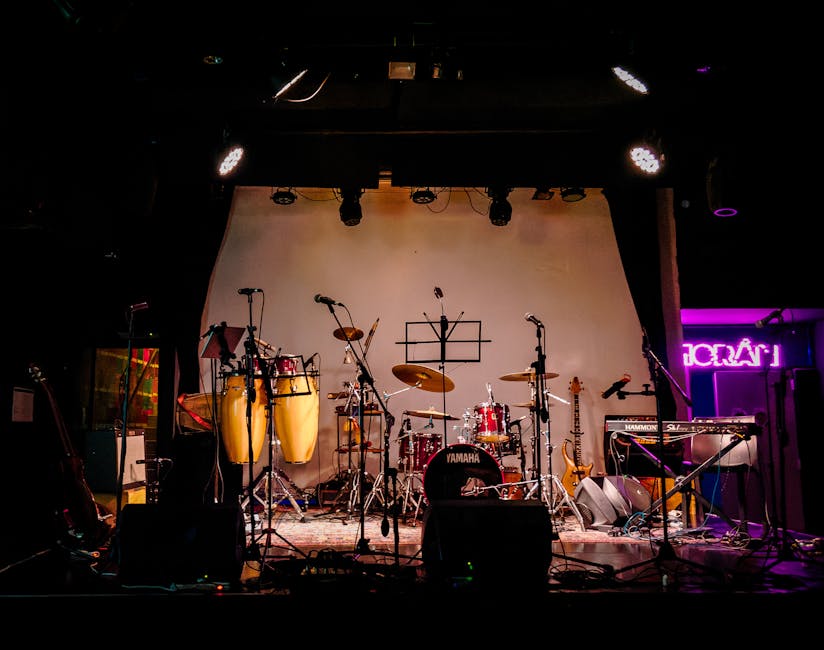
The geography of live music in Asian cities is vertical rather than horizontal. Where American and European indie scenes spread across neighborhoods—a bar here, a venue there, a record shop connecting them—Asian indie music happens underground, literally. The live houses (ライブハウス in Japanese, 라이브클럽 in Korean) that form the backbone of independent music scenes across Asia are overwhelmingly basement operations: underground rooms accessed by steep staircases, with low ceilings that concentrate the sound and capacities between 50 and 300 that enforce an intimacy between performer and audience that larger venues cannot replicate. This vertical architecture is partly economic (basement rent is cheaper than street-level rent in dense Asian cities) and partly cultural (noise complaints from residential neighbors are easier to manage when the music is literally below ground). The result is a live music ecosystem that exists parallel to the street-level city, connected to it by staircases and neon signs that you'd walk past without noticing unless you knew to look.
Seoul: Hongdae Is Still the Center
Hongdae—the neighborhood surrounding Hongik University in western Seoul—has been Korea's indie music epicenter since the 1990s, and despite rising rents, gentrification pressure, and the relocation of some venues to neighboring Mangwon and Hapjeong, it retains a critical mass of live houses, recording studios, and music-adjacent businesses that no other Korean neighborhood matches. The density is remarkable: within a ten-minute walk of Hongdae station, you can access Mudaeruk, Club FF, DGBD, and Rolling Hall—four venues with distinctly different programming, audiences, and sound profiles that collectively cover the spectrum from shoegaze to hip-hop to noise rock to Korean folk fusion.
Club FF (originally "Freebird Freedom"), in a basement on Wausan-ro 29-gil, is the standard-bearer for Hongdae indie music. The room holds about 150 people, the sound system is better than it has any right to be for a venue this size, and the booking policy prioritizes Korean indie bands that are good enough to fill the room but not yet big enough to graduate to larger venues. A typical Friday night might feature three bands—an opening act of noisy, distorted art-rock; a middle act of Korean indie pop with surprisingly sophisticated vocal harmonies; and a headliner that could be anything from post-punk to math rock to a solo singer-songwriter with an acoustic guitar and a voice that stops conversations. Cover charges run ₩10,000-15,000 ($7.50-$11.30), usually including one drink, and the crowd is primarily Korean university students and twentysomethings who know the bands' names and sing along to songs that haven't been released on any streaming platform.
The Korean indie scene's relationship with K-pop is more complicated than the narrative of opposition suggests. Some indie musicians genuinely despise the idol system and everything it represents. Others admire its craftsmanship while choosing a different path. And a growing number move fluidly between worlds—writing songs for idol groups while performing in their own indie bands, or appearing on variety shows that introduce their music to audiences who would never enter Club FF. This permeability, rather than a rigid boundary between "indie" and "mainstream," is distinctly Korean and increasingly productive for both sides.
Mangwon: The Overflow
As Hongdae's rents climbed, a portion of the music scene migrated one neighborhood west to Mangwon, where smaller, newer venues like Lowrise and Comrade have opened in spaces that benefit from proximity to Hongdae's audience base while paying significantly lower rent. Mangwon's music scene is younger and more experimental than Hongdae's, with a higher proportion of electronic music, ambient, and genre-defying projects that don't fit neatly into the band format. A night at Lowrise might feature a modular synthesizer performance followed by a DJ set of deconstructed club music, with a cover of ₩8,000 and an audience of maybe forty people, all of whom are genuinely listening rather than socializing.
Tokyo: Depth Over Everything
Tokyo's live music infrastructure is the deepest in Asia and possibly the world, with an estimated 3,000 live performance venues across the city ranging from Nippon Budokan (14,000 capacity) to tiny basement bars where the "stage" is a cleared corner and the "audience" is whoever happens to be drinking. The indie scene concentrates in Shimokitazawa, Koenji, and Shinjuku, each neighborhood hosting dozens of venues that operate nightly with minimal promotion—if you know the venue, you know what to expect; if you don't, take the stairs down and find out.
Shimokitazawa has been covered extensively in these pages, but its live music dimension deserves specific attention. Shelter, Three, and Basementbar form a triangle of venues within five minutes' walk that together could program your entire music education in Japanese indie. Shelter leans toward louder, more aggressive music—punk, noise, hardcore—with a sound system tuned for impact and a pit-friendly floor layout. Three books more experimental acts—improvised music, art-rock, electroacoustic projects—in a room with an unusually good monitor system that allows nuanced performances. Basementbar splits the difference with indie pop, folk-rock, and the occasional jazz trio, all in a room that holds 120 and feels packed at 60.
Koenji, two stops west on the Chuo Line, is Tokyo's music underground in the most literal sense. The neighborhood's live houses—Showboat, Penguin House, Dom—are deeper underground, cheaper, stranger, and more committed to music that makes no commercial sense whatsoever. A night at Showboat (capacity: 100, cover: ¥2,000-2,500 including one drink) might feature a psychedelic rock band that plays the same 20-minute improvisation at every show, a noise artist who performs with contact microphones attached to metal objects, and a folk singer who sounds like she was born in the wrong century. This is not music designed to attract a broad audience. It's music designed to satisfy the musicians making it, and the audience that shows up is self-selected for curiosity and tolerance.
Bangkok and Taipei: Growing Scenes
Bangkok's indie music scene has grown significantly since 2018, driven by a generation of Thai musicians who grew up with global streaming access and produced music that draws from Western indie rock, Thai folk traditions, and electronic production in equal measure. The live venue infrastructure is thinner than Seoul or Tokyo—Lido Connect, Speakerbox, and Brownstone are the primary spaces—but the quality of the music emerging from Bangkok is disproportionate to the scene's size. Bands like Phum Viphurit (who went viral internationally with "Lover Boy"), Milli, and Safeplanet represent the visible tip of a scene that includes dozens of acts playing to small but devoted audiences in bars and converted warehouses across the city.
Taipei's indie scene, anchored by the Legacy venue in Huashan 1914 Creative Park and the smaller Revolver Bar in Da'an, benefits from Taiwan's cultural openness and a government that actively supports live music through venue subsidies and festival funding. The annual Golden Melody Awards, Taiwan's equivalent of the Grammys, includes categories for independent music that legitimize the scene and provide visibility that indie scenes in other Asian countries lack. Sunset Rollercoaster, an indie pop band from Taipei that has toured internationally to growing audiences, exemplifies the Taiwanese approach: polished production, melodic sophistication, and a visual aesthetic that's distinctly Taiwanese without being ethnically self-conscious.
Why This Matters
The indie music scenes across Asian cities matter for the same reason they matter anywhere: they're where the next generation of musical ideas are being developed, tested, and refined. K-pop and J-pop dominate global perception of Asian music, and their commercial achievements are genuine. But the music being made in basements in Hongdae, in living rooms in Shimokitazawa, and in converted warehouses in Bangkok is the music that will shape what K-pop and J-pop sound like in ten years—because the mainstream always, eventually, incorporates what the underground invented, packages it, and sells it to people who would never have descended those stairs.
If you're visiting any of these cities and you care about music at all—not as background, not as content, but as an art form that requires your presence and attention—go to a live house. Pick a venue, check the schedule, pay the cover, and stand in a basement with fifty strangers who chose to be there because the music matters to them. The band might be terrible. The band might change how you think about music. You won't know until you take the stairs.