Itaewon After the Headlines: Seoul's Most Misunderstood Neighborhood
Every city has a neighborhood that the rest of the city can't decide whether to embrace or avoid. In Seoul, that neighborhood is Itaewon, and it has never been more interesting.
The Weight of a Name
Itaewon carries more history per square meter than almost any neighborhood in Seoul, and much of that history is complicated. Originally the area surrounding the Yongsan U.S. military garrison, Itaewon spent decades as Seoul's most international district by default—the place where American soldiers, migrant workers, English teachers, and anyone who didn't fit neatly into Korean social categories ended up. It became Seoul's de facto multicultural zone, with halal restaurants, Nigerian suya joints, Indian spice shops, and Filipino grocery stores lining streets that also held the city's most prominent LGBTQ+ nightlife strip. The neighborhood was simultaneously celebrated for its diversity and stigmatized for the same reason, existing in a state of permanent tension between what Seoul wanted to be and what it was comfortable being.
The October 2022 crowd crush that killed 159 people during Halloween celebrations in the narrow alley beside Hamilton Hotel changed Itaewon's identity in ways that are still being processed. The neighborhood's nightlife, already damaged by COVID-19 closures, suffered further as visitors associated the area with tragedy. Many bars and clubs closed permanently. The Hamilton Hotel itself, one of the neighborhood's most recognizable buildings, stood empty for months. Foot traffic dropped by an estimated 40% in the year following the disaster, and the vacancy rate for commercial spaces along the main strip climbed to levels not seen since the 2008 financial crisis.
What's Growing Back
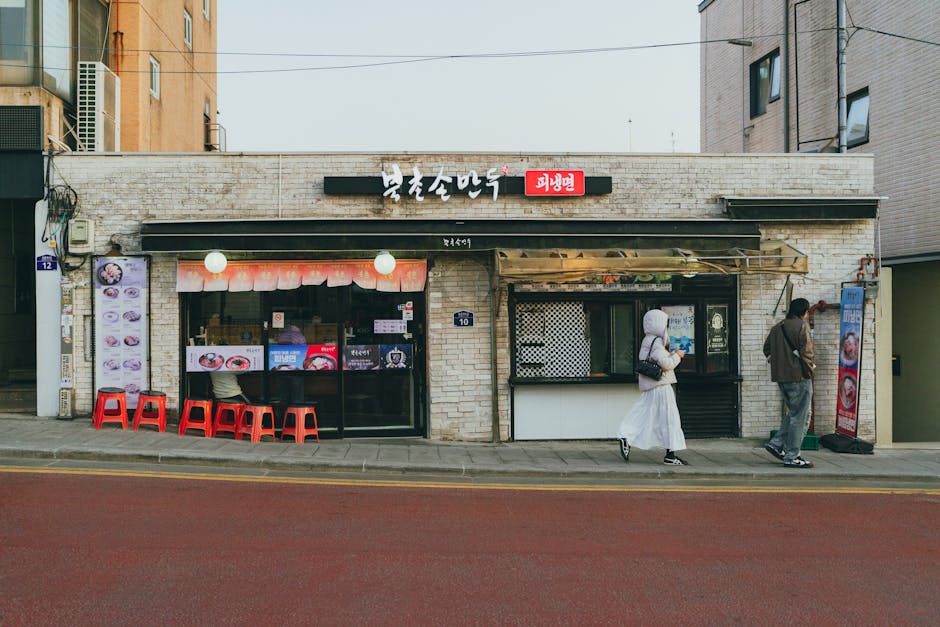
Walk through Itaewon in 2025 and you see a neighborhood in active transformation rather than decline. The storefronts along the main road between Itaewon station and Noksapyeong station are filling again, but with a different character than before. Where nightclubs and sports bars once dominated, independent restaurants, specialty food shops, and design studios have moved in, drawn by rents that dropped 30-40% after 2022 and a landlord class that became more flexible about lease terms when the alternative was sustained vacancy.
The food scene is Itaewon's strongest argument for relevancy. Linus' BBQ, which has served Texas-style brisket from a tiny space on the main road since 2015, survived the neighborhood's worst years and now anchors a stretch of restaurants that would hold their own in any global food city. A brisket plate costs ₩22,000 ($16.50) and the 14-hour smoke ring is legitimate—this isn't Korean-adapted barbecue but the real thing, operated by a pitmaster who trained in Austin. Casablanca Sandwicherie, a Moroccan-French sandwich shop on one of the back streets, makes merguez sandwiches on house-baked bread for ₩12,000 that are spicy, messy, and exceptional. Petra, in the neighboring Haebangchon area that's technically a separate neighborhood but functions as Itaewon's quieter extension, does Jordanian mansaf and falafel in a warmly decorated space that feels like someone's apartment kitchen, with mains between ₩15,000 and ₩25,000.
The Antique Furniture Alley
One of Itaewon's least-known assets is the cluster of antique and vintage furniture shops on Itaewon-ro 27-ga-gil, a narrow street between the main road and Haebangchon. Over a dozen shops line this street, selling everything from mid-century Korean wooden chests (bandaji) starting around ₩500,000 to European art deco furniture, Japanese tansu, and salvaged industrial pieces. The concentration is unusual for Seoul, where antique shops typically cluster in Insa-dong or Janghanpyeong, and the prices are generally lower than both areas because Itaewon's foot traffic hasn't yet recovered to the point where shops can charge a premium. For anyone furnishing an apartment or simply interested in the material culture of Korea's past, this street is worth an entire afternoon.
Haebangchon: The Village Above
Haebangchon—HBC to residents—occupies the hill above Itaewon station and functions as the neighborhood's more intimate, residential counterpart. The streets are steep, narrow, and mostly inaccessible to cars, which gives the area a village-like quality that the main Itaewon strip lacks. HBC was historically a settlement for North Korean refugees (haebang means liberation, referring to the post-Korean War era), and its low-rise buildings and winding alleys retain a texture that's disappearing elsewhere in Seoul's relentless redevelopment cycle.
The cafe and restaurant scene in HBC is excellent and unpretentious. Bonny's, a tiny coffee shop on the main uphill road, serves pour-over coffee and baked goods in a space decorated with vintage radios and plants. The coffee is ₩5,500 and the banana bread is ₩4,000, and the combined experience of sitting in Bonny's window seat watching the neighborhood go about its morning is worth considerably more than the ₩9,500 total. Phillies, a cheese steak shop opened by a Philadelphia native who married a Korean woman and decided to stay, does an authentic Philly cheese steak for ₩14,000 that uses imported Amoroso rolls and Cheez Whiz, because authenticity in this case means committing to the processed cheese rather than substituting something more respectable.
The LGBTQ+ Scene Persists
Itaewon's role as Seoul's primary LGBTQ+ nightlife district has been diminished but not eliminated. The strip along "Homo Hill" (the nickname for the cluster of bars on the hill between Itaewon station and Hooker Hill, which itself is being rebranded as various things none of which have stuck) still operates, though with fewer venues than its pre-pandemic peak. Bars like Soho, Queen, and Trunk remain open and draw steady crowds on weekends. The drag scene, centered around venues like Rabbit Hole, has actually grown more visible and more creative, with monthly drag brunches and performances that draw audiences beyond the LGBTQ+ community.
The broader significance of Itaewon for Seoul's queer community extends beyond nightlife. In a city where LGBTQ+ visibility remains limited by social conservatism, Itaewon functions as a physical space where queer Koreans and expats can be visible without the constant negotiation required elsewhere in the city. This role isn't replaceable by another neighborhood, because the critical mass of queer-friendly businesses, the tolerance of the local community, and the historical precedent all took decades to establish and couldn't be transplanted to Gangnam or Hongdae without losing what makes the space meaningful.
The Next Itaewon
Itaewon's future depends on variables that nobody fully controls: the timeline for returning the Yongsan garrison land to the city, the pace of commercial rent recovery, the degree to which nightlife returns versus gives way to daytime-oriented businesses, and whether the Korean government follows through on plans to develop the garrison site into a park and cultural complex that could transform the area's character entirely. The most likely trajectory—already visible in the current mix of businesses—is a neighborhood that's less party-focused and more community-oriented than pre-pandemic Itaewon, with a food scene that draws visitors for dinner rather than drinks, a growing number of independent shops and creative businesses, and a residential population that values the area's walkability and diversity.
The people who write Itaewon off as "over" are confusing a specific version of the neighborhood with the neighborhood itself. Itaewon has reinvented itself repeatedly over seventy years—from military town to party district to multicultural enclave to tragedy site to whatever it's becoming now. The constant is adaptation, and the neighborhoods that adapt are the ones worth paying attention to, especially when nobody else is.