Monsoon Season in Mumbai: Finding Beauty in the Downpour
For three months every year, Mumbai becomes a city of water. The streets flood, the trains halt, and something extraordinary happens to the light.
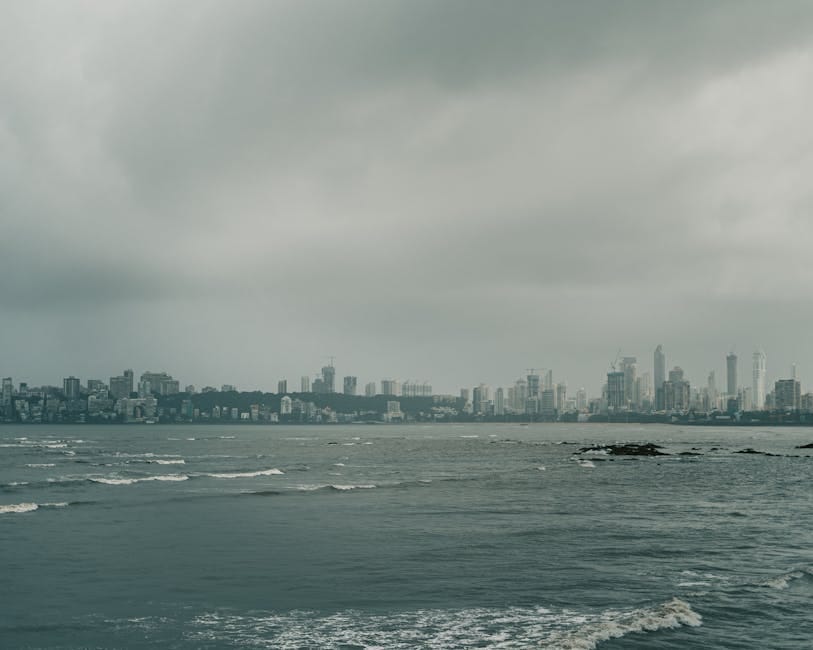
When the City Becomes Water
The Mumbai monsoon arrives in early June with the subtlety of a freight train. One day the city bakes under a pre-monsoon heat that's been building since March, the air thick and still, the Arabian Sea flat as metal. The next day—sometimes the next hour—the sky turns the color of a bruise, the wind shifts, and the rain falls with a force that makes you understand why the word "monsoon" comes from the Arabic mausim, meaning season: this isn't weather, it's a temporal event, a three-month alteration of the fundamental conditions of life. Between June and September, Mumbai receives roughly 2,400 millimeters of rain, most of it falling in concentrated bursts that can dump 200 millimeters in a single day. The city's infrastructure, designed for a population one-third its current size, cannot handle this volume, and the flooding that results is annual, predictable, and life-disrupting in ways that range from inconvenient (cancelled trains, waterlogged streets) to dangerous (structural collapses, electrocution from fallen power lines, waterborne disease).
This is not a travel article that romanticizes poverty or infrastructure failure. The monsoon causes genuine hardship for millions of Mumbaikars, particularly in the low-lying slums of Dharavi, Kurla, and Sion where flooding can submerge ground-floor homes to waist height. But the monsoon is also, for the city's residents and for visitors willing to engage with it, one of the most extraordinary urban experiences in Asia—a season when Mumbai's relationship with its environment becomes viscerally, unavoidably present in a way that no other city's weather can match.
Marine Drive in the Rain
Marine Drive—the curved, three-kilometer seafront promenade that Mumbaikars call the Queen's Necklace for the arc of its streetlights at night—is the city's most iconic public space, and during the monsoon it becomes something almost mythological. The waves that build during monsoon storms crash over the sea wall with explosive force, sending spray twenty feet into the air and drenching anyone within range. On the heaviest rain days, the promenade fills not with people fleeing the weather but with people running toward it: families, couples, groups of friends, strangers—all standing at the sea wall, faces turned toward the storm, getting soaked and shouting with a joy that's part adrenaline, part relief from the pre-monsoon heat, and part recognition that this is one of those moments when a city becomes larger than the sum of its infrastructure and its problems.
The experience of standing on Marine Drive during a monsoon storm, when the rain is horizontal and the waves are taller than you and the entire visible world is water and concrete and the silhouettes of people who chose to be here, is difficult to translate into words but impossible to forget. It costs nothing, it's available to anyone who can reach the waterfront, and it produces a shared emotional experience—strangers laughing together, helping each other over the worst puddles, sharing chai from a vendor who's set up a stall specifically because he knows this crowd will come—that Mumbai's class-stratified daily life rarely permits.
The Chai Economy
Monsoon creates its own micro-economy, and the most visible manifestation is the surge in chai consumption. Mumbai's chai vendors, already among the most numerous and skilled in India, enter monsoon season the way professional athletes enter tournament season: prepared, energized, and operating at peak capacity. The standard Mumbai cutting chai—a small glass of heavily sweetened, spiced, milky tea served piping hot—costs ₹15-20 ($0.18-$0.24) and achieves a significance during monsoon that transcends its humble composition. Standing under an awning with a glass of hot chai while rain hammers the pavement two feet away is one of the fundamental Mumbai experiences, not because the chai is exceptional (though at the best stalls, it is) but because the combination of warmth, sweetness, and shelter creates a momentary perfection that the city's daily grind otherwise makes scarce.
What to Eat During Monsoon
Mumbai's monsoon food traditions are specific, deeply ingrained, and genuinely delicious. The bhajiya—battered and deep-fried vegetable fritters, typically made with potato, onion, or chili—becomes the city's dominant street food during rain season, with vendors appearing on every block as if summoned by the humidity. A plate of bhajiyas costs ₹40-80 ($0.48-$0.96) and is eaten with green chutney and a fried green chili on the side, standing up, usually while rain drips from whatever overhead surface you've found shelter under. The combination of crispy, spiced batter and the wet chill of a rainy afternoon is so perfect that bhajiyas eaten in any other season taste like an approximation of themselves.
Vada pav, Mumbai's signature street food—a spiced potato fritter in a bread roll with garlic chutney and fried green chili—also reaches peak consumption during monsoon, though vada pav is a year-round staple in a way that bhajiyas aren't. Pav bhaji, a thick vegetable curry served with buttered bread rolls, is monsoon comfort food of the highest order, particularly at Cannon Pav Bhaji in Girgaon or Ashok Vada Pav near Kirti College, where the quality of the cooking transforms inexpensive ingredients into something that fancy restaurants try and fail to replicate. Hot Maggi noodles, the MSG-laden two-minute Indian instant noodle that functions as the country's unofficial comfort food, ascends to religious significance during monsoon—the Maggi stalls at Bandra Bandstand and Juhu Beach serve plates for ₹50-70 ($0.60-$0.84) that the rain and the sea air elevate beyond what any reasonable assessment of instant noodles should allow.
Getting Around (Or Not)
Mumbai's local train network—the lifeline that carries 7.5 million passengers daily—operates during monsoon on a spectrum from "delayed" to "suspended." Heavy rain floods the tracks, particularly at low-lying points in Sion, Matunga, and Kurla, where water accumulation can halt service for hours. The contingency plan for most Mumbaikars is patience: you wait at the station, check Twitter for updates from the Central and Western Railway accounts, and accept that your commute might take three hours instead of one. The acceptance is genuine, not performative—monsoon delays are so deeply integrated into Mumbai life that workplaces, schools, and businesses tacitly adjust their expectations during the season.
For visitors, the practical advice is to avoid relying on the trains during heavy rain, use auto-rickshaws or taxis (which continue operating but at surge prices and slower speeds), and build flexibility into any schedule. The Uber and Ola apps show surge pricing during heavy rain that can reach 3-4x normal fares, so setting a budget limit before ordering prevents sticker shock. Walking is sometimes faster than any motorized option during flooding, but requires waterproof footwear (Bata rubber chappals are the local standard), knowledge of which streets flood (Hindmata and Milan Subway are notorious), and a willingness to wade through water of uncertain composition when no alternative exists.
Why Come During Monsoon
The argument for visiting Mumbai during monsoon is not that it's comfortable—it isn't—but that it's true. The monsoon strips away the carefully maintained surfaces that cities present to visitors and reveals the machinery underneath: the infrastructure straining, the communities cooperating, the food culture adapting, the public spaces being reclaimed by an environmental force that no amount of development can override. You see Mumbai's resilience during monsoon not as an abstraction but as a lived practice—millions of people making daily decisions about how to get to work, feed their families, and maintain normalcy in conditions that are, by objective measure, extraordinary.
You also see Mumbai's beauty in a register that fair weather conceals. The light during monsoon—filtered through cloud cover that can range from pearlescent gray to almost green—gives the city a softness that its harsh equatorial sunshine usually denies. The Art Deco buildings of Marine Drive, the Gothic Revival architecture of CST station, the crumbling grandeur of South Mumbai's colonial-era structures all look different in monsoon light, their details emerging rather than being flattened by direct sun. And the greenery—Mumbai's parks and street trees explode in monsoon, turning a city that looks dusty and exhausted in May into something approaching tropical lushness by August.
Bring waterproof everything. Eat bhajiyas in the rain. Stand on Marine Drive when the waves come over. Get stuck somewhere and drink chai until the rain stops. This is Mumbai at its most honest, its most difficult, and its most extraordinary.