Outdoor Gyms and Calisthenics Parks: Asia's Free Fitness Revolution
While Western cities charge $200 a month for gym memberships, Asian cities have been quietly building world-class outdoor fitness infrastructure that costs exactly nothing.
The Gym That Nobody Owns
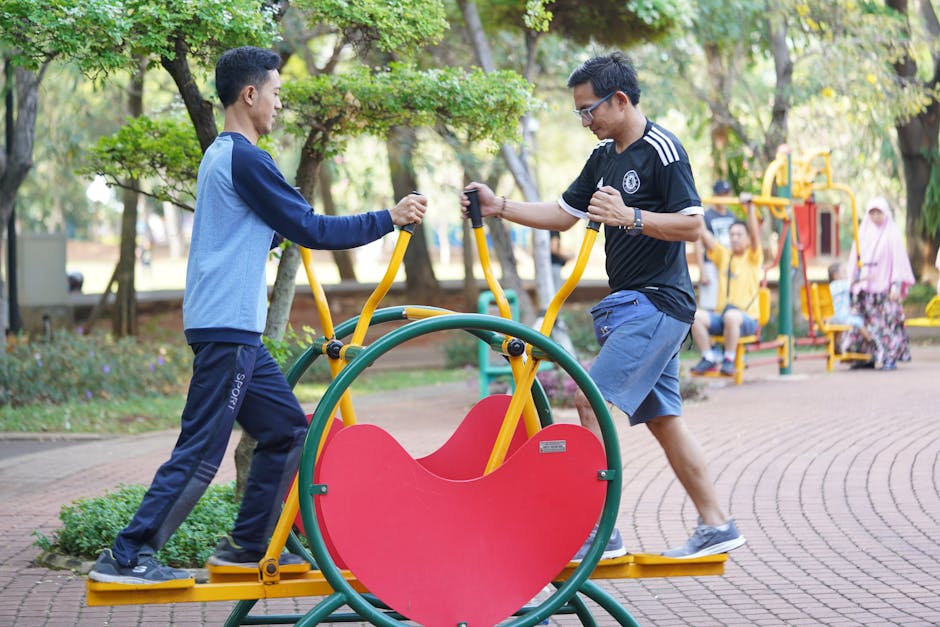
At 5:30 AM in Bangkok's Lumpini Park, before the heat reaches its daily crescendo of hostility, a population emerges that the city's rooftop bars and co-working spaces never see. Elderly Thai women in matching tracksuits perform synchronized aerobics to music blasting from a portable speaker. A shirtless man in his sixties does pull-ups on a bar with the controlled form of someone who's been doing this for decades. A group of young Muay Thai fighters shadowbox in a clearing, their movement sharp and practiced, while a woman nearby performs yoga poses on a mat she's placed directly on the grass without apparent concern for insects, moisture, or the opinions of others. None of these people paid an admission fee. None of them signed a liability waiver. None of them are wearing moisture-wicking performance fabrics that cost more than a dinner out. They're using equipment that the city installed and maintains, in a park that the public owns, engaging in the radical act of exercising for free.
Across Asia, outdoor fitness infrastructure has evolved from a scattering of rusty pull-up bars in public parks to purpose-built exercise zones with equipment that rivals commercial gyms. Singapore's Active Health Labs, installed in parks across the island, feature resistance machines, cable systems, and guided workout stations with QR codes linking to exercise tutorials. Seoul's Han River parks include over 30 dedicated fitness zones with calisthenics equipment, rubber-surfaced flooring, and lighting that allows training after dark. Tokyo's Yoyogi Park and Komazawa Olympic Park have been unofficial outdoor gyms for decades, with pull-up bars, parallel bars, and running tracks that draw thousands of daily users. This isn't a trend; it's a public health strategy that Asian cities have invested in for years while Western cities debated whether public parks should even have trash cans.
Bangkok: Lumpini and Beyond
Lumpini Park is Bangkok's Central Park equivalent, a 57-hectare green space in the heart of the Silom-Sathorn business district that serves as the city's primary outdoor fitness venue. The park's fitness infrastructure includes a rubberized running track (2.5 kilometers, flat, well-maintained), multiple calisthenics stations with pull-up bars, parallel bars, and dip stations, an outdoor weightlifting area with concrete dumbbells and barbells that look like they were made during the Cold War and function perfectly, and several open areas where group fitness classes operate on an informal, pay-what-you-want basis.
The morning scene at Lumpini, from 5:00 to 7:30 AM, is one of Bangkok's great spectacles. The park fills with thousands of people exercising in every conceivable style: tai chi groups, aerobics classes, solo runners, power walkers in groups of six or eight moving at conversational pace, bodyweight fitness enthusiasts doing muscle-ups and human flags on the calisthenics bars, and elderly couples performing the gentle stretching routines that Thai health authorities promote through signage posted at regular intervals. The social dynamics are interesting—there's an implicit scheduling system where different groups claim different zones at different times, negotiated through years of daily repetition rather than any formal booking system. The tai chi practitioners have the lawn near the main lake from 5:30 to 6:30; the aerobics groups take the area near the clock tower from 6:00 to 7:00; the calisthenics crowd uses the bars whenever they want because the bars are always available and the calisthenics crowd is too focused on their training to negotiate territorial boundaries.
Benjakitti Park: The Upgrade
Benjakitti Park, a ten-minute walk from Lumpini toward Sukhumvit, has undergone a massive expansion that's made it arguably the superior fitness park. The newly completed section, designed by landscape architecture firm Turenscape, features a 1.8-kilometer elevated boardwalk through a restored urban wetland, multiple fitness stations with modern equipment, and a design philosophy that treats exercise as a primary use rather than an afterthought. The running and cycling path extends 5 kilometers and is wide enough to accommodate both activities without the territorial conflicts that plague narrower paths. At 6 PM on weekdays, the park hosts free group fitness classes organized by sporting goods brands—Nike, Adidas, and local brands rotate—that draw 50 to 100 participants and require no registration beyond showing up.
Seoul: Infrastructure as Statement
Seoul's approach to outdoor fitness reflects the city's broader belief that public infrastructure should be excellent, accessible, and aesthetically considered. The Han River parks—a network of green spaces stretching along both banks of the river from east to west—contain fitness zones that would be impressive in a commercial gym and are astonishing in a public park. The Banpo Hangang Park fitness area, on the south bank near Banpo Bridge, includes a full calisthenics setup (pull-up bars at three heights, parallel bars, monkey bars, ring stations), a rubber-surfaced floor area suitable for stretching and bodyweight exercises, and a 400-meter running loop marked with distance indicators every 100 meters.
The equipment is standardized, well-maintained, and designed with enough variety to support a complete upper-body and core workout without any additional gear. A typical calisthenics session at Banpo might include pull-ups, dips, hanging leg raises, muscle-ups, and bodyweight rows using the bars at various heights—a workout that covers every major muscle group and costs exactly ₩0. The views of the river and the city skyline during an evening workout are difficult to value in monetary terms but easy to appreciate in experiential ones: watching the Banpo Bridge Rainbow Fountain activate its 10,000 LED water jets while you're hanging from a pull-up bar is a Seoul experience that no gym can replicate.
Singapore: Gamified Fitness
Singapore has taken outdoor fitness infrastructure further than any city in Asia, possibly any city in the world, by treating it as a public health intervention rather than a parks amenity. The National Parks Board (NParks) maintains over 350 fitness corners across the island, ranging from simple equipment clusters in neighborhood parks to elaborate Active Health Labs with guided workout programs. The newest installations, identifiable by their teal-and-white color scheme, include resistance machines (chest press, lat pulldown, leg press) that use body weight and mechanical advantage rather than weight stacks, eliminating the maintenance issues that plague outdoor equipment in tropical climates.
East Coast Park, stretching 15 kilometers along Singapore's southeastern coast, is the city's premier outdoor fitness destination. The park contains multiple fitness zones, a dedicated calisthenics area near the East Coast Lagoon, and a continuous cycling and running path that's flat, smooth, and well-lit until 10 PM. The calisthenics community at East Coast Park is organized, social, and skilled—the regulars include competitive calisthenics athletes who train for national and international events, and watching a group session involves feats of strength and control (full planches, back levers, one-arm pull-ups) that would justify a gym membership just to witness.
The Economics of Free
The economic argument for outdoor fitness infrastructure is straightforward and compelling. A commercial gym membership in Singapore costs S$150-300 ($112-$224) per month. A calisthenics park costs the city approximately S$50,000-100,000 to install and S$5,000-10,000 per year to maintain. If the park serves 100 daily users over a 10-year lifespan, the per-user cost works out to roughly S$0.04 per session. This isn't just cheap; it's functionally free, and it eliminates the financial barrier that keeps lower-income residents out of commercial fitness facilities.
The public health returns are significant. A 2023 study by the Singapore Sports Institute found that neighborhoods with outdoor fitness equipment showed 23% higher rates of regular physical activity compared to similar neighborhoods without such equipment, and the effect was strongest among residents aged 50 and above—the demographic most likely to benefit from regular exercise and least likely to join a gym. Similar studies in Seoul and Bangkok have produced comparable findings, suggesting that the simple act of putting fitness equipment in public spaces, free and visible, changes behavior in ways that health campaigns and gym subsidies do not.
The next time someone tells you that staying fit requires a gym membership, a personal trainer, or equipment that costs more than a used car, point them toward Lumpini Park at sunrise, or the Han River at sunset, or East Coast Park on a Saturday morning. The best gym in every Asian city is the one with no walls, no membership fee, and no closing time. It's been there all along, waiting for you to show up.