Running Clubs in Tokyo, Seoul, and Singapore Are Replacing Nightlife
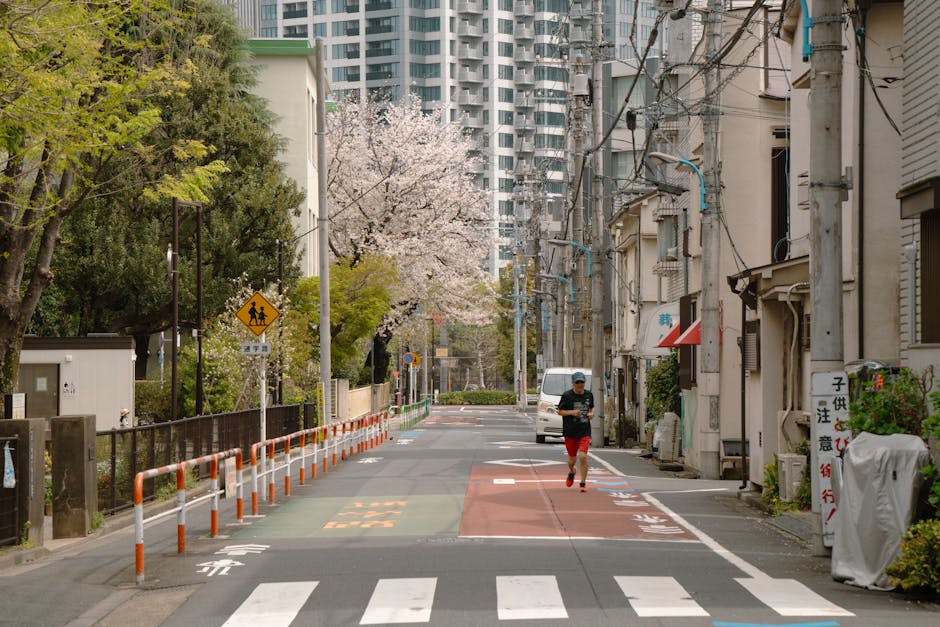
At 7 PM on a Wednesday in Tokyo, 200 people are gathering not for drinks or dinner but for a 10K run through Shibuya. The after-party has kombucha.
The Sober Social Shift
Something changed in Asian cities around 2022, and the clearest evidence isn't in bar receipts or restaurant bookings—it's on the streets at 7 PM on weeknights, where organized groups of thirty, fifty, sometimes two hundred people gather to run together through downtown districts that were designed for cars and commerce, not cardiovascular exercise. Running clubs have become the dominant social infrastructure for a generation of young Asian professionals who've decided, with varying degrees of consciousness, that their social lives don't need alcohol as a prerequisite. The numbers are staggering: Adidas Runners Tokyo has over 8,000 members, Seoul's Run Crew Seoul draws 300 to its weekly group runs, and Singapore's Minus-Six Running Club regularly fills its 150-person cap within hours of posting a session. These aren't training groups for marathon preparation—though some members do race—they're community organizations that use running as the framework for friendships, romantic connections, and a social identity that previous generations built around bars and clubs.
Tokyo: Where Running Became Fashion
Tokyo's running club scene operates at the intersection of fitness and fashion in a way that feels uniquely Japanese. The standard uniform at a Wednesday evening group run isn't moisture-wicking technical gear but coordinated outfits: matching New Balance 990v6 sneakers, Satisfy Running shorts, a vintage band tee, and a Patagonia cap worn backward. The aesthetic matters here not because it's superficial but because Tokyo has always understood that how you present an activity shapes how people engage with it. Running in Tokyo isn't just exercise; it's a lifestyle choice with its own visual language, its own brands, and its own social codes.
Joglis, a running station in Kanda that provides shower facilities and locker storage, has become the de facto hub for Tokyo's running community. For ¥880 ($5.90) you get a locker, towel, and shower access, which solves the fundamental logistical problem of urban running: where to put your stuff and how to not show up to dinner afterward looking like you've been exercising. Joglis opens at 6:30 AM for the pre-work crowd and stays open until 10 PM for the after-work runners, and the atmosphere inside is social in a low-key way that Japanese culture excels at—people nod, exchange brief words about routes and pace, and occasionally form spontaneous running groups without the forced networking energy of Western fitness communities.
The route that defines Tokyo running culture follows the Imperial Palace's 5-kilometer perimeter moat, a nearly flat loop that passes through Chiyoda's government district and offers views of the palace walls and surrounding gardens. On any given evening, you'll share the path with hundreds of runners spanning the entire performance spectrum, from elite athletes training for Hakone Ekiden qualifiers to absolute beginners shuffling through their first kilometer. The etiquette is counterclockwise, the pace is your own, and the vending machines selling Pocari Sweat at the Takebashi corner provide mid-run hydration for ¥130. It's the most democratic running route in Asia, requiring no club membership, no registration, and no particular ability beyond the willingness to put one foot in front of the other.
After the Run
What separates Tokyo's running clubs from pure fitness organizations is the after-run culture, which is elaborate, ritualized, and genuinely fun. Most organized group runs end at a designated meeting point—often a park or a plaza near a station—where the group stretches together before dispersing to a restaurant or izakaya that's been reserved in advance. The food is the reward, and Tokyo being Tokyo, the quality is exceptional. Coco Ichibanya curry, yakiniku, or a ramen shop that the run leader knows personally—the post-run meal is planned with nearly as much care as the route itself. Alcohol is available but rarely the focus; most runners order highballs or beer, but a growing number opt for non-alcoholic options without anyone commenting on the choice. This casual acceptance of sobriety, or semi-sobriety, is perhaps the most significant cultural shift that running clubs represent.
Seoul: Community as Competition
Seoul's running culture is more overtly social and more competitive than Tokyo's, reflecting a city that approaches leisure with the same intensity it applies to K-pop auditions and university entrance exams. Run Crew Seoul, founded in 2017, operates like a hybrid of a running club and a social club, with weekly group runs that include pace groups (from 5:30/km to 7:30/km), a DJ playing K-pop and hip-hop from a portable speaker, and post-run hangouts at cafes in Hannam-dong or Seongsu-dong. The energy is high, the Instagram documentation is thorough, and the community is tight enough that members regularly travel together to races in Tokyo, Osaka, and even New York.
What distinguishes Seoul's running scene is the infrastructure that's grown around it. Running-focused concept stores like The Run Lab in Gangnam stock curated selections of shoes, apparel, and accessories from brands like Hoka, On, and Tracksmith, with staff who are themselves competitive runners and can advise on gear with genuine expertise. Seoul Running Crew hosts monthly time trials along the Han River, with chip-timed results posted online and a competitive atmosphere that pushes participants to improve. The Han River bike path, stretching over 40 kilometers along both banks, provides one of Asia's great urban running environments—flat, well-lit, with convenience stores and public restrooms at regular intervals and views of the city skyline that make training feel less like obligation and more like privilege.
Singapore: Precision and Heat Management
Singapore's running clubs face a challenge that Tokyo and Seoul do not: the equatorial climate, which delivers temperatures between 28°C and 33°C (82°F to 91°F) with humidity rarely dropping below 75%. This makes running in Singapore a fundamentally different physical experience from running in temperate cities, and the clubs have adapted by scheduling most group runs at 6 AM or 7 PM, when the heat is marginally less punishing. Minus-Six Running Club, whose name references the six-minute-per-kilometer pace target, organizes Tuesday and Thursday evening runs from various locations around the city, with routes designed to maximize shade and minimize sun exposure—a practical consideration that shapes the running geography of the entire city.
The Marina Bay area is Singapore's running epicenter, with a well-maintained loop that passes the Esplanade, the Merlion, and Gardens by the Bay before crossing the Helix Bridge and returning along the Bayfront. The full loop is roughly 5.5 kilometers, the surface is smooth and flat, and the scenery—particularly after dark when the Supertree Grove and Marina Bay Sands are illuminated—is spectacular enough to distract from the humidity that makes every kilometer feel like two. Parkrun Singapore, the local chapter of the global free timed 5K movement, operates weekly events at East Coast Park, Bishan-Ang Mo Kio Park, and West Coast Park, drawing between 100 and 400 runners each Saturday morning at 7:30 AM. It's the easiest entry point into Singapore's running community: show up, register online for free, run or walk the 5K, and receive a time that gets logged to your personal profile.
Why This Matters Beyond Fitness
The rise of running clubs in Asian cities reflects something larger than a fitness trend. In societies where work hours are long, social circles can be narrow, and traditional community institutions (religious organizations, neighborhood associations, extended family networks) hold less influence over younger generations, running clubs have filled a gap that nobody designed them to fill. They provide structure without bureaucracy, community without obligation, physical challenge without competition (unless you want it), and a reason to be outdoors in cities that increasingly design their public spaces for consumption rather than inhabitation.
The demographics are telling. Most running club members in Tokyo, Seoul, and Singapore are between 25 and 40, work in professional or creative industries, and live alone or with a partner—the exact demographic that sociologists worry about when they discuss loneliness epidemics and social atomization. The running club doesn't solve these structural problems, but it offers a twice-weekly antidote: sixty minutes of shared physical effort followed by food and conversation, repeated enough to transform strangers into friends. In an era when an alarming number of young professionals report having no close friends outside of work, that's not a fitness fad. It's a lifeline disguised as exercise.