Tiong Bahru: Where Singapore's Past Meets Its Cappuccino Present
The art deco apartment blocks of Tiong Bahru have witnessed the neighborhood's transformation from working-class housing estate to Singapore's most photogenic postcode.
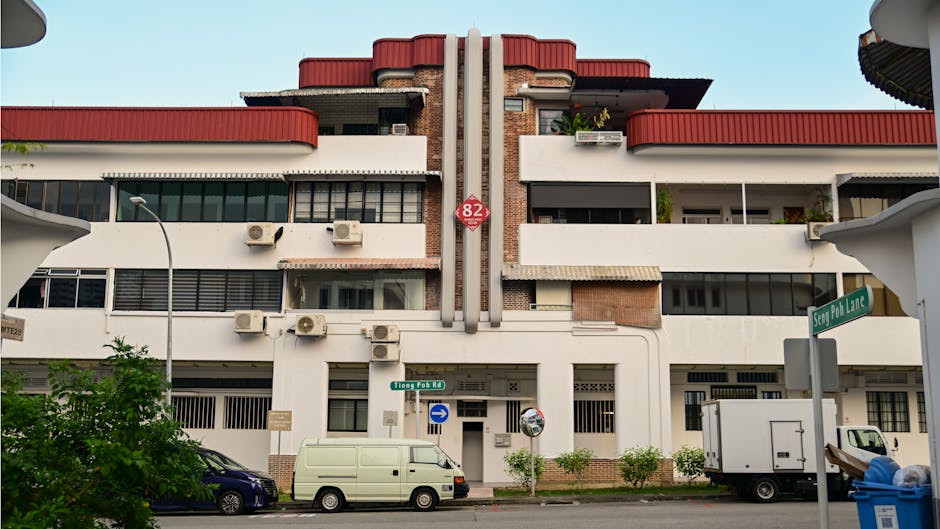
Art Deco and Hawker Smoke
The first thing you smell in Tiong Bahru isn't coffee—though the neighborhood has enough specialty roasters to caffeinate a small country. It's the char of wok hei drifting from Tiong Bahru Market, the two-story hawker center that has anchored this neighborhood since 1951. Upstairs, the wet market vendors have been selling fish and vegetables to the same families for generations. Downstairs, a line of fifteen people snakes past Jian Bo Shui Kueh, where steamed rice cakes topped with preserved radish cost S$1.50 for three pieces and taste exactly as they did forty years ago. Across the aisle, Zhong Yu Yuan Wei serves lor mee—thick yellow noodles in a starchy, vinegary gravy topped with braised pork and a fried egg—for S$4, and the uncle running the stall has been doing it since before most of his customers were born.
Walk two blocks south from the hawker center and you enter a different Singapore entirely. Forty Hands, one of the coffee shops that kickstarted the neighborhood's gentrification around 2010, pours flat whites for S$6.50 in a converted shophouse where the furniture is Scandinavian, the playlist is ambient, and the clientele splits evenly between remote workers, design professionals, and tourists consulting neighborhood guides that all mention this exact cafe. The tension between these two Tiong Bahrus—the hawker heritage and the hipster overlay—defines the neighborhood's character and, depending on who you ask, either enriches it immeasurably or threatens to sanitize it beyond recognition.
Walking the Blocks
Tiong Bahru's physical layout is its greatest asset. The neighborhood occupies a compact area roughly bounded by Tiong Bahru Road to the west, Outram Road to the north, and the railway corridor to the south. You can walk the entire area in forty minutes, though doing so without stopping is nearly impossible because every block offers something worth examining. The residential architecture is the star attraction: pre-war art deco apartment blocks built by the Singapore Improvement Trust in the late 1930s, with curved balconies, porthole windows, and spiral staircases that have survived decades of tropical humidity with remarkable grace. These were among Singapore's first public housing estates, designed for workers and their families, and they carry a kind of utilitarian elegance that contemporary HDB blocks, for all their efficiency, cannot replicate.
The best stretch for architectural appreciation runs along Moh Guan Terrace, where the SIT flats face a row of two-story shophouses now occupied by bookshops, bakeries, and a letterpress studio called The Gentlemen's Press. BooksActually, perhaps Singapore's most beloved independent bookstore, operated from these streets for years before relocating—its absence still stings, though the literary spirit persists at other shops in the area. The mural of a Samsui woman on the corner of Eu Chin Street, painted in 2016, has become the neighborhood's unofficial mascot, commemorating the female construction workers who built much of Singapore's infrastructure in the early twentieth century.
The Bird Corner
At the junction of Tiong Bahru and Seng Poh roads, elderly men gather every morning to hang ornate wooden birdcages from hooks outside a kopitiam. The birds—mostly Jambul and Shama thrushes—sing competitively while their owners drink kopi-o and compare notes on feeding regimens and plumage quality. This bird-singing corner has existed informally for decades, and while it's now marked on tourist maps, the regulars treat visitors with benign indifference. The birds are the audience that matters. Watching this ritual at 7:30 in the morning, with the market already humming and the coffee shops still setting up chairs, gives you a version of Tiong Bahru that no Instagram account can capture.
The Coffee and Bakery Circuit
Singapore's specialty coffee movement essentially started in Tiong Bahru, and the density of quality cafes here remains unmatched in Southeast Asia on a per-block basis. Beyond Forty Hands, the essential stops include Nylon Coffee Roasters on Everton Park, a tiny operation run by Dennis Tang that sources single-origin beans and roasts in micro-batches. A pour-over costs S$7 and the brewing is treated with the seriousness of a laboratory experiment. The space seats maybe eight people, and conversations with Dennis about origin farms and processing methods come free with your order. Tiong Bahru Bakery, a collaboration between Singaporean owners and a French baker named Gontran Cherrier, does croissants that rival anything in Paris—the kouign-amann at S$4.50 is flaky, buttery, and caramelized in a way that makes the calorie count irrelevant.
The cafe culture has a shadow side worth acknowledging. Rising rents driven by the neighborhood's popularity have pushed out older businesses—a cobbler here, a provision shop there—and replaced them with establishments that charge more for a single brunch dish than some residents spend on food in a week. The median household income in the original SIT flats is considerably lower than what the cafes seem to assume about their customers. This isn't unique to Tiong Bahru or to Singapore, but the contrast is sharper here because the pre-war architecture creates an illusion of timelessness while the commercial reality changes quarterly.
Beyond Brunch: Actual Meals
Tiong Bahru's dining options extend well past the cafe circuit, and some of the best meals in the neighborhood require no reservation and cost under S$10. Hua Bee, inside the market, has been serving mee pok tah—dry, thin egg noodles tossed in vinegar and chili with minced pork—since the 1940s, and it appeared in the film "12 Storeys" as a location precisely because it looks like a place where actual people eat actual food. At the Tiong Bahru Yong Tau Foo stall, also in the market, you pick your own combination of tofu, vegetables, and fish paste items, and the whole bowl costs between S$4 and S$6 depending on how ambitious your selections are.
For dinner, the options get more interesting. Sin Hoi Sai Seafood Restaurant on the edge of the neighborhood does zi char—Chinese home-style cooking—that draws families from across the island. The cereal prawns at S$28 are ludicrously good: giant prawns coated in a crispy, buttery cereal mixture seasoned with curry leaves and chili. Bincho, hidden above a shophouse on Moh Guan Terrace, serves Japanese yakitori and whisky in a dark, woody space that feels transported from a Tokyo alley, with skewers starting at S$3 each and a whisky list that could occupy an entire evening.
Living in Tiong Bahru
Rental prices for the SIT flats have climbed steadily, with a two-bedroom unit now commanding around S$3,000 to S$4,000 per month—expensive by Singapore standards for a flat without a pool or gym, but cheap compared to a condo in the same area. The newer condominiums surrounding the heritage core start at S$5,000 for comparable sizes. What you get for the premium is walkability that's almost unheard of in Singapore: groceries at the wet market, coffee in three directions, the MRT station five minutes away, and a neighborhood where people actually walk places rather than taking Grab rides to the next air-conditioned interior.
The Tiong Bahru MRT station, on the East-West Line, puts you at Raffles Place in twelve minutes and Bugis in eighteen. The Green Corridor, a former railway line converted into a walking and cycling path, runs along the neighborhood's southern edge and stretches all the way to the old Tanjong Pagar railway station—a seven-kilometer walk through jungle-like greenery that feels impossible in a city this dense. On weekend mornings, the corridor fills with joggers, dog walkers, and couples who appear to have discovered it independently and are mildly annoyed that others had the same idea.
Tiong Bahru won't stay frozen in its current form—no neighborhood in Singapore does. Plans for the Greater Southern Waterfront development will eventually reshape the area south of the railway corridor, bringing new housing and commercial spaces that could either complement the existing character or overwhelm it. For now, the neighborhood occupies a rare middle ground: old enough to feel authentic, new enough to feel relevant, and small enough that you can know it intimately within a few weeks of walking its streets.